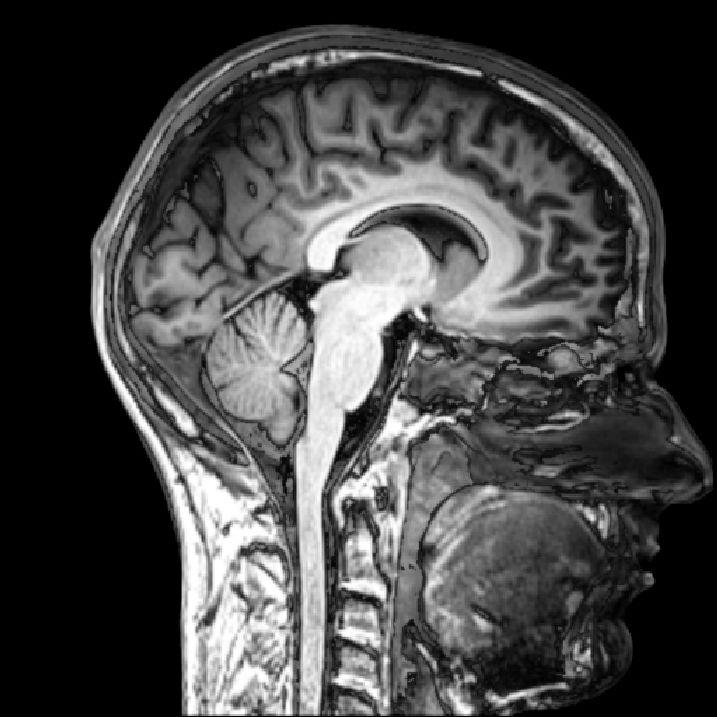
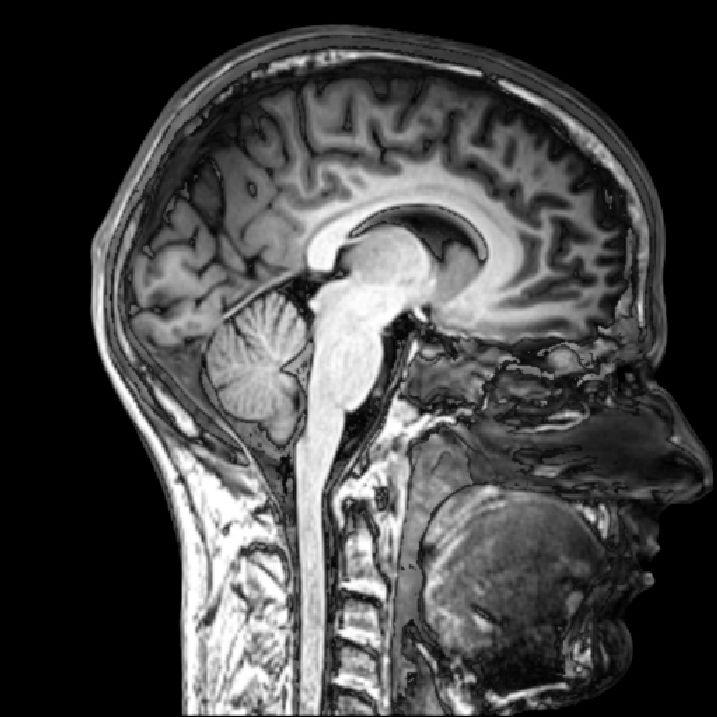
Credit: deradrian via Flickr Creative Commons
The National Science Foundation (NSF) has awarded funding to 18 cross-disciplinary projects to conduct innovative research on neural and cognitive systems.
The awards contribute to NSF's investments in support of Understanding the Brain and the BRAIN Initiative, a coordinated research effort that seeks to accelerate the development of new neurotechnologies.
"The teams will integrate multiple disciplines to look at fundamental questions about the brain in new ways," said Shubhra Gangopadhyay, NSF program director in the Engineering Directorate. "The research will tackle problems that were previously intractable for neuroscience and cognitive science and will open up new avenues for future research. We are excited to see where these high-risk, high-reward proposals take us as a field."
The 18 funded projects will advance the frontiers of foundational research in four focus areas:
- Neuroengineering and brain-inspired concepts and designs
- Individuality and variation
- Cognitive and neural processes in realistic, complex environments
- Data-intensive neuroscience and cognitive science
The projects will leverage advanced research within and across these focus areas to investigate how neural and cognitive systems interact with education, engineering and computer science, as part of the NSF Integrative Strategies for Understanding Neural and Cognitive Systems (NCS) program. The NCS program supports innovative, boundary-crossing efforts to push the frontiers of brain science.
Funded proposals will develop new methods such as closed loop systems to measure and manipulate neuronal activity, create tools for studying the nervous systems of difficult-to-study organisms, use new approaches to understand the brain by integrating information across many levels of analysis, and merge computer science and neuroimaging to discover new insights into learning.
Four NSF directorates — Computer and Information Science and Engineering; Education and Human Resources; Engineering; and Social, Behavioral and Economic Sciences — are co-funding the interdisciplinary approaches intended to advance fundamental research in neuroscience as well as the fields of engineering, behavioral science and education that benefit from further neuroscientific understanding.
The 18 newly awarded projects are:
- Modeling individual differences in cognitive control as variation in neural activation trajectories: ShiNung Ching, Washington University
- Discovering dynamics in massive-scale neural datasets using machine learning: Chethan Pandarinath, Emory University; Lee Miller, Northwestern University at Chicago; and Matthew Kaufman, University of Chicago
- Analyzing synapses, motifs and neural networks for large-scale connectomics: Hanspeter Pfister, Harvard University
- Closed-loop neuromodulation for chronic pain: Zhe Chen, NYU Langone Health
- Optoelectronic tools for closed-loop neuron ensemble recording and control during complex behaviors: Guangyu Xu, University of Massachusetts; and Ethan Meyers, Hampshire College
- Distributed neural organization of sensorimotor dynamics: Daniel Margoliash, University of Chicago
- Unraveling cortical circuits for auditory scene analysis: Kamal Sen, Boston University
- Individual variation in the fine-grained structure of distributed cortical systems for cognition: Maria Gobbini, Dartmouth College
- Human decision-making in complex environments: Ernst Niebur, Johns Hopkins University, and Jorge Gonzalez-Martinez, Cleveland Clinic Foundation
- Electrocortical processes in real-world locomotion: Daniel P. Ferris, University of Florida
- Integrating non-invasive neuroimaging and educational data mining to improve understanding of robust learning processes: Erin Solovey, Worcester Polytechnic Institute; and Erin Walker, Arizona State University
- Leveraging deep probabilistic models to understand the neural bases of subjective experience: Jan-Willem van de Meent, Northeastern University
- Spatial intelligence for swarms based on hippocampal dynamics: Kechen Zhang, Johns Hopkins University
- How ecology induces cognition: Paleontology, machine learning and neuroscience: Malcolm A. MacIver, Northwestern University
- Developing underwater EEG electrodes for octopus research: Peter Tse, Dartmouth College; Walter Besio, University of Rhode Island; and Gideon Caplovitz, University of Nevado, Reno
- Engineering living neural networks for learning: Xiaochen Guo, Lehigh University
- How real-world interaction networks shape and are shaped by neural information processing: Carolyn M. Parkinson, UCLA
- Using fMRI to revise psychological variables: Ralph Adolphs, Caltech
###
Media Contact
Ivy Kupec
[email protected]
703-292-8796
@NSF
http://www.nsf.gov
Original Source
http://bit.ly/2MikobH