• HOME
  • NEWS
  • EXPLORE
    • CAREER
      • Companies
      • Jobs
    • EVENTS
    • iGEM
      • News
      • Team
    • PHOTOS
    • VIDEO
    • WIKI
  • BLOG
  • COMMUNITY
    • FACEBOOK
    • INSTAGRAM
    • TWITTER
Saturday, February 7, 2026
BIOENGINEER.ORG
No Result
View All Result
  • Login
  • HOME
  • NEWS
  • EXPLORE
    • CAREER
      • Companies
      • Jobs
        • Lecturer
        • PhD Studentship
        • Postdoc
        • Research Assistant
    • EVENTS
    • iGEM
      • News
      • Team
    • PHOTOS
    • VIDEO
    • WIKI
  • BLOG
  • COMMUNITY
    • FACEBOOK
    • INSTAGRAM
    • TWITTER
  • HOME
  • NEWS
  • EXPLORE
    • CAREER
      • Companies
      • Jobs
        • Lecturer
        • PhD Studentship
        • Postdoc
        • Research Assistant
    • EVENTS
    • iGEM
      • News
      • Team
    • PHOTOS
    • VIDEO
    • WIKI
  • BLOG
  • COMMUNITY
    • FACEBOOK
    • INSTAGRAM
    • TWITTER
No Result
View All Result
Bioengineer.org
No Result
View All Result
Home NEWS Science News Biology

Discovery of two new Chinese dinosaurs by international research team

Bioengineer by Bioengineer
August 23, 2018
in Biology
Reading Time: 2 mins read
0
Share on FacebookShare on TwitterShare on LinkedinShare on RedditShare on Telegram
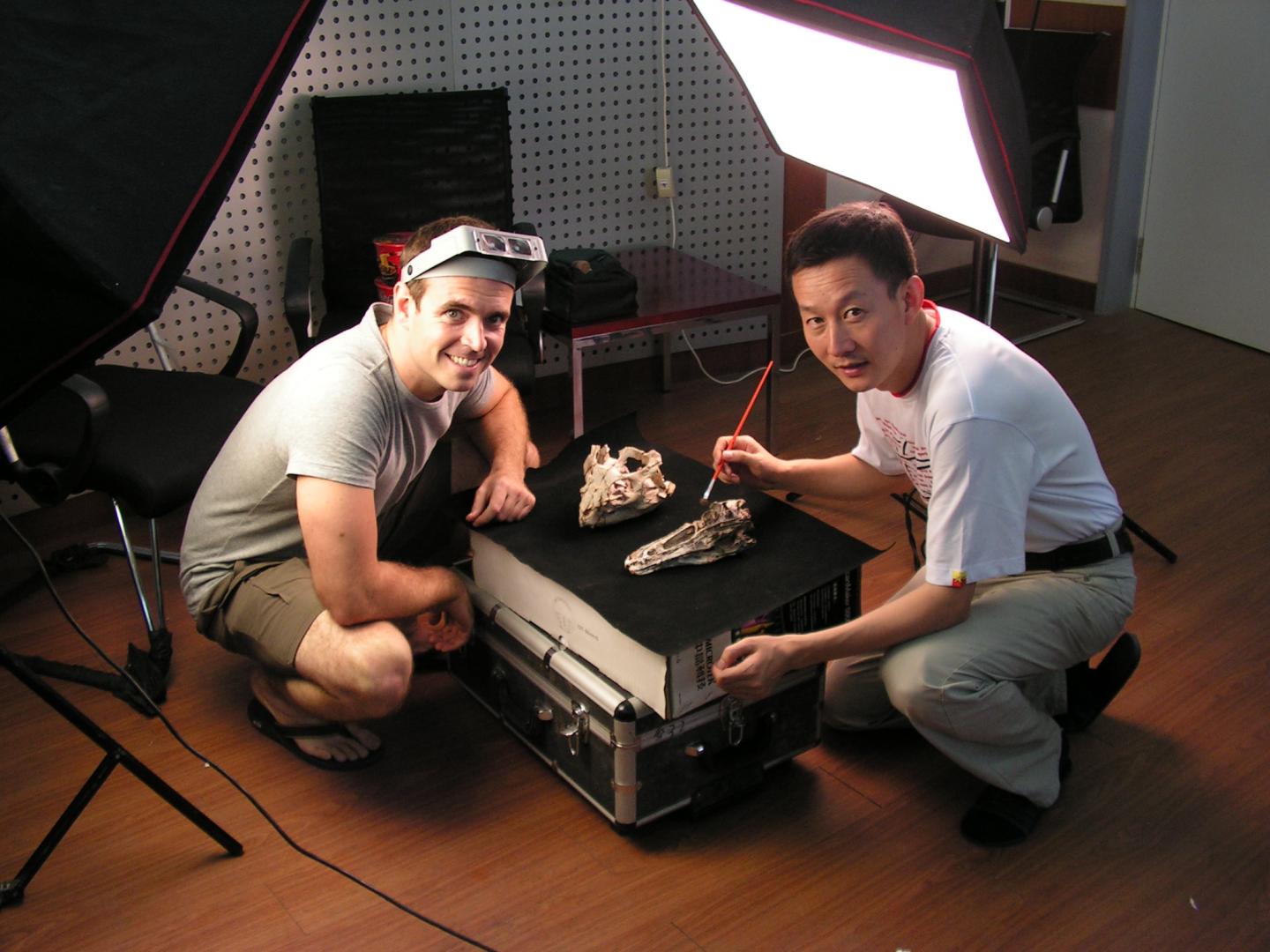
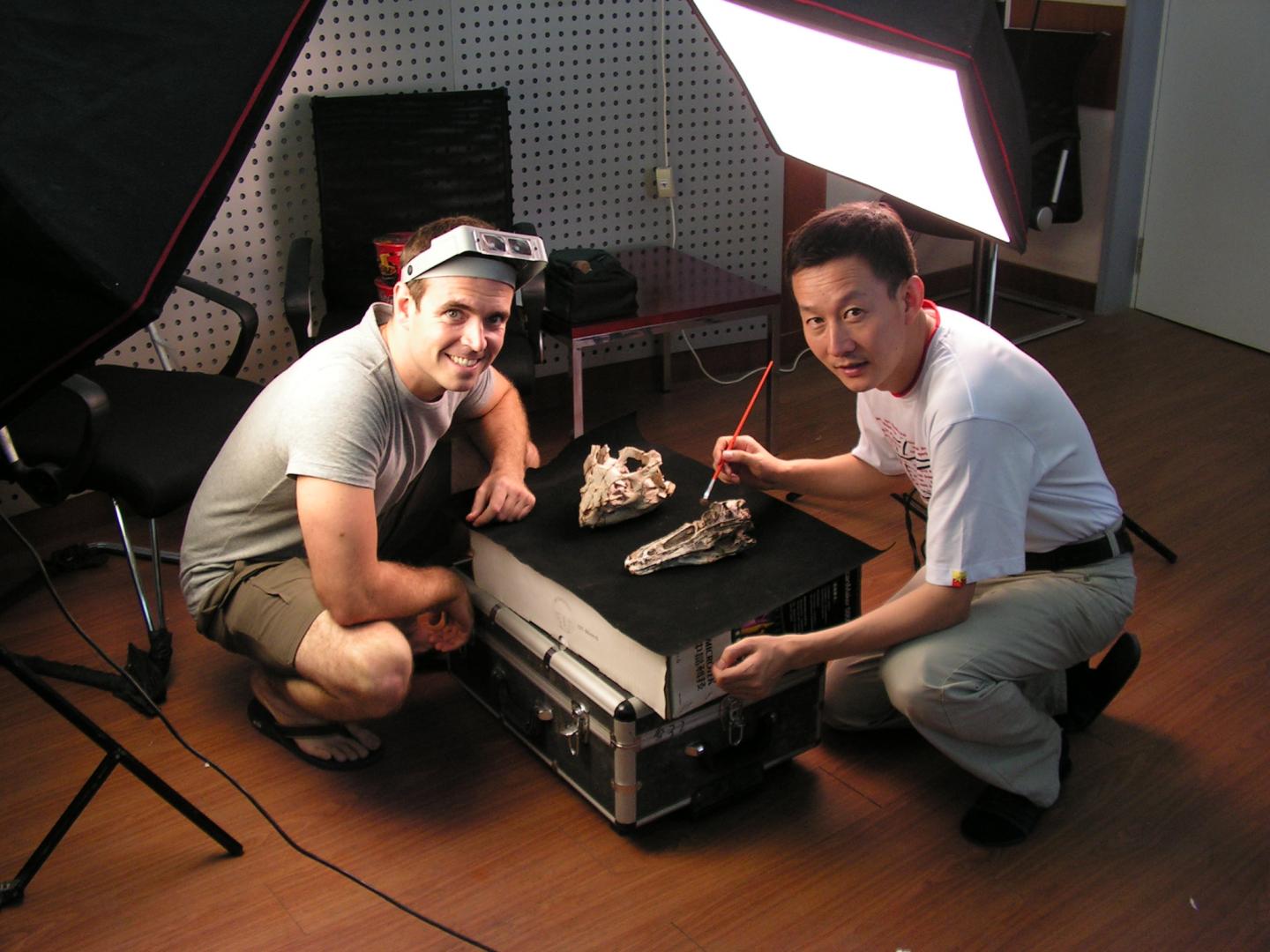
IMAGE

Credit: Professor Jonah Choiniere

Professor Jonah Choiniere from the University of the Witwatersrand, Johannesburg, South Africa was a leading member of the team and is a co-author on the research.

The dinosaurs are both alvarezsaurs, an enigmatic group of theropod [meat-eating] dinosaurs, which have many similarities with birds and which show adaptations thought to be related to eating insects that live in colonies.

"Alvarezsaurs are weird animals," said Choiniere. "With their strong, clawed hands and weak jaws, they appear to be the dinosaurian analogue to today's aardvarks and anteaters."

But alvarezsaurs did not originally eat insects. The earliest members of the group had more typically meat-eating teeth and hands, useful for catching small prey. Only later-evolving members reduced their teeth and evolved a hand with a huge, single claw capable – perhaps – of tearing open rotting logs and anthills.

"The new fossils have long arms, and so show that alvarezsaurs evolved short arms only later in their evolutionary history, in species with small body sizes. This is quite different to what happens in the classic example of tyrannosaurs, which have short arms and giant size," said co-author Professor Roger Benson of Oxford University.

Bannykus and Xiyunykus are important because they show transitional steps in the process of alvarezsaurs adapting to new diets.

"The fossil record is the best source of information about how anatomical features evolve," said James Clark, co-author and an Honorary Professor at Wits University. "And like other classic examples of evolution such as the 'horse series', these dinosaurs show us how a lineage can make a major shift in its ecology over time."

The specimens were discovered during collaborative international fieldwork in China. Xiyunykus was discovered in 2005 in Xinjiang, north-western China. Bannykus was discovered a few years later, in 2009, in Inner Mongolia, north-central China.

Both research trips were joint expeditions co-led by Professors Xu Xing (Institute for Vertebrate Palaeontology and Palaeoanthropology, Beijing) and James Clark (George Washington University, Washington DC).

"Our international field teams have been tremendously productive over the years," said Xing. "And this research showcases just some of our incredible discoveries."

Once the fossils were discovered, their further study was made possible by a joint South Africa/China collaborative grant through South Africa's National Research Foundation, held by Choiniere and Xu.

"The joint research programme has helped in so many ways," said Choiniere. "China and South Africa have a great deal of overlap in palaeontology, and it has been a privilege to cross-train students over the last two years."

###

Media Contact

Jonah Choiniere
[email protected]
27-799-063-169
@Wits_News

http://www.wits.ac.za

Share12Tweet8Share2ShareShareShare2

Related Posts

Florida Cane Toad: Complex Spread and Selective Evolution

Florida Cane Toad: Complex Spread and Selective Evolution

February 7, 2026
New Study Uncovers Mechanism Behind Burn Pit Particulate Matter–Induced Lung Inflammation

New Study Uncovers Mechanism Behind Burn Pit Particulate Matter–Induced Lung Inflammation

February 6, 2026

DeepBlastoid: Advancing Automated and Efficient Evaluation of Human Blastoids with Deep Learning

February 6, 2026

Navigating the Gut: The Role of Formic Acid in the Microbiome

February 6, 2026
Please login to join discussion

POPULAR NEWS

  • Robotic Ureteral Reconstruction: A Novel Approach

    Robotic Ureteral Reconstruction: A Novel Approach

    82 shares
    Share 33 Tweet 21
  • Digital Privacy: Health Data Control in Incarceration

    63 shares
    Share 25 Tweet 16
  • Study Reveals Lipid Accumulation in ME/CFS Cells

    57 shares
    Share 23 Tweet 14
  • Breakthrough in RNA Research Accelerates Medical Innovations Timeline

    53 shares
    Share 21 Tweet 13

About

We bring you the latest biotechnology news from best research centers and universities around the world. Check our website.

Follow us

Recent News

Boosting Remote Healthcare: Stepped-Wedge Trial Insights

Barriers and Boosters of Seniors’ Physical Activity in Karachi

Evaluating Pediatric Emergency Care Quality in Ethiopia

Subscribe to Blog via Email

Enter your email address to subscribe to this blog and receive notifications of new posts by email.

Join 73 other subscribers
  • Contact Us

Bioengineer.org © Copyright 2023 All Rights Reserved.

Welcome Back!

Login to your account below

Forgotten Password?

Retrieve your password

Please enter your username or email address to reset your password.

Log In
No Result
View All Result
  • Homepages
    • Home Page 1
    • Home Page 2
  • News
  • National
  • Business
  • Health
  • Lifestyle
  • Science

Bioengineer.org © Copyright 2023 All Rights Reserved.