
• HOME
  • NEWS
  • EXPLORE
    • CAREER
      • Companies
      • Jobs
    • EVENTS
    • iGEM
      • News
      • Team
    • PHOTOS
    • VIDEO
    • WIKI
  • BLOG
  • COMMUNITY
    • FACEBOOK
    • INSTAGRAM
    • TWITTER
Saturday, February 7, 2026
BIOENGINEER.ORG
No Result
View All Result
  • Login
  • HOME
  • NEWS
  • EXPLORE
    • CAREER
      • Companies
      • Jobs
        • Lecturer
        • PhD Studentship
        • Postdoc
        • Research Assistant
    • EVENTS
    • iGEM
      • News
      • Team
    • PHOTOS
    • VIDEO
    • WIKI
  • BLOG
  • COMMUNITY
    • FACEBOOK
    • INSTAGRAM
    • TWITTER
  • HOME
  • NEWS
  • EXPLORE
    • CAREER
      • Companies
      • Jobs
        • Lecturer
        • PhD Studentship
        • Postdoc
        • Research Assistant
    • EVENTS
    • iGEM
      • News
      • Team
    • PHOTOS
    • VIDEO
    • WIKI
  • BLOG
  • COMMUNITY
    • FACEBOOK
    • INSTAGRAM
    • TWITTER
No Result
View All Result
Bioengineer.org
No Result
View All Result
Home NEWS Science News Health

Movement control: how our brain responds to unexpected situations

Bioengineer by Bioengineer
August 23, 2018
in Health
Reading Time: 2 mins read
0
Share on FacebookShare on TwitterShare on LinkedinShare on RedditShare on Telegram
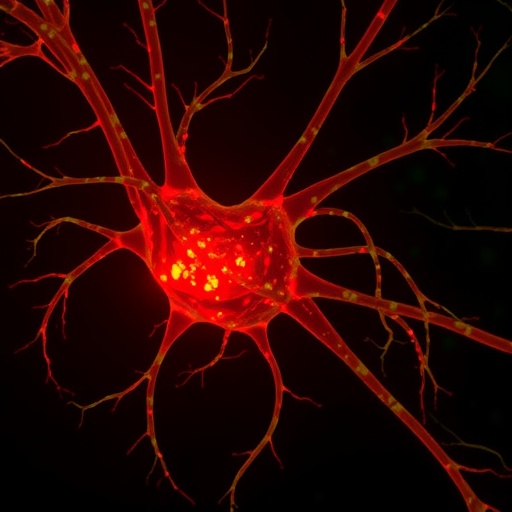
IMAGE

Credit: FMI

Scientists have demonstrated that the motor cortex is necessary for the execution of corrective movements in response to unexpected changes of sensory input but not when the same movements are executed spontaneously. Signatures of differential neuronal usage in the cortex accompany these two phenomena. The study by researchers from the University of Basel's Biozentrum and the Friedrich Miescher Institute for Biomedical Research (FMI) has recently been published in "Neuron".

In mammals, movement is controlled by circuits spanning throughout the central nervous system from the cortex to the spinal cord. The role of motor cortex in the control of movement is still unclear.

In humans, lesions to motor cortex can result in a loss of voluntary control of movement. Building on the expertise of studying motor circuits and the control of movement of the laboratory of Prof. Silvia Arber (University of Basel/FMI) and the expertise in vivo physiology and cortical processing of the laboratory of Dr. Georg Keller (FMI), the authors teamed up to shed new light on the function of motor cortex.

Movement control in response to unexpected situations

The aim of the study was to test how and under which conditions motor cortex is required for movement control. The authors developed an assay in which they trained mice to navigate a virtual tunnel, a task requiring the adjustment of the heading direction by spontaneous turning on a spherical treadmill.

They also probed the response to unexpected changes in visual feedback that mice had to correct for – for example by suddenly shifting the direction the mouse is running in in the virtual environment. This allowed them to compare the same movements mice executed either spontaneously or as induced by unexpected changes to the visual feedback.

The authors found that motor cortex is only necessary for movement control when movements are executed in response to unexpected sensory feedback.

Specific activity patterns in the motor cortex

Recording neuronal activity in motor cortex as mice corrected for unpredicted sensory perturbations, the authors found that the activity patterns observed during the resultant motor corrections were different from those when the mouse executed the same movement spontaneously. This is consistent with a role of motor cortex in the corrective motor response, where it is required to engage in triggering an appropriate movement in response to the unexpected event.

"We believe that these findings change the way we think about how motor cortex functions from a view that it 'simply' controls movement to a role in which motor cortex is needed for sensory-guided control of movement in instances where the sensory processing is also cortically dependent," says Matthias Heindorf, first author and former PhD student in the Arber and Keller laboratory.

###

Media Contact

Dr. Silvia Arber
[email protected]
41-612-072-057
@UniBasel_en

http://www.unibas.ch/

Related Journal Article

http://dx.doi.org/10.1016/j.neuron.2018.07.046

Share12Tweet8Share2ShareShareShare2

Related Posts

Evaluating Pediatric Emergency Care Quality in Ethiopia

February 7, 2026

TPMT Expression Predictions Linked to Azathioprine Side Effects

February 7, 2026

Improving Dementia Care with Enhanced Activity Kits

February 7, 2026

Decoding Prostate Cancer Origins via snFLARE-seq, mxFRIZNGRND

February 7, 2026
Please login to join discussion

POPULAR NEWS

  • Robotic Ureteral Reconstruction: A Novel Approach

    Robotic Ureteral Reconstruction: A Novel Approach

    82 shares
    Share 33 Tweet 21
  • Digital Privacy: Health Data Control in Incarceration

    63 shares
    Share 25 Tweet 16
  • Study Reveals Lipid Accumulation in ME/CFS Cells

    57 shares
    Share 23 Tweet 14
  • Breakthrough in RNA Research Accelerates Medical Innovations Timeline

    53 shares
    Share 21 Tweet 13

About

We bring you the latest biotechnology news from best research centers and universities around the world. Check our website.

Follow us

Recent News

Evaluating Pediatric Emergency Care Quality in Ethiopia

TPMT Expression Predictions Linked to Azathioprine Side Effects

Improving Dementia Care with Enhanced Activity Kits

Subscribe to Blog via Email

Success! An email was just sent to confirm your subscription. Please find the email now and click 'Confirm' to start subscribing.

Join 73 other subscribers
  • Contact Us

Bioengineer.org © Copyright 2023 All Rights Reserved.

Welcome Back!

Login to your account below

Forgotten Password?

Retrieve your password

Please enter your username or email address to reset your password.

Log In
No Result
View All Result
  • Homepages
    • Home Page 1
    • Home Page 2
  • News
  • National
  • Business
  • Health
  • Lifestyle
  • Science

Bioengineer.org © Copyright 2023 All Rights Reserved.