• HOME
  • NEWS
  • EXPLORE
    • CAREER
      • Companies
      • Jobs
    • EVENTS
    • iGEM
      • News
      • Team
    • PHOTOS
    • VIDEO
    • WIKI
  • BLOG
  • COMMUNITY
    • FACEBOOK
    • INSTAGRAM
    • TWITTER
Monday, August 17, 2026
BIOENGINEER.ORG
No Result
View All Result
  • Login
  • HOME
  • NEWS
  • EXPLORE
    • CAREER
      • Companies
      • Jobs
        • Lecturer
        • PhD Studentship
        • Postdoc
        • Research Assistant
    • EVENTS
    • iGEM
      • News
      • Team
    • PHOTOS
    • VIDEO
    • WIKI
  • BLOG
  • COMMUNITY
    • FACEBOOK
    • INSTAGRAM
    • TWITTER
  • HOME
  • NEWS
  • EXPLORE
    • CAREER
      • Companies
      • Jobs
        • Lecturer
        • PhD Studentship
        • Postdoc
        • Research Assistant
    • EVENTS
    • iGEM
      • News
      • Team
    • PHOTOS
    • VIDEO
    • WIKI
  • BLOG
  • COMMUNITY
    • FACEBOOK
    • INSTAGRAM
    • TWITTER
No Result
View All Result
Bioengineer.org
No Result
View All Result
Home NEWS Science News Biology

Pointy eggs more likely to stay put in birds’ cliffside nests, study finds

Bioengineer by Bioengineer
August 22, 2018
in Biology
Reading Time: 2 mins read
0
Share on FacebookShare on TwitterShare on LinkedinShare on RedditShare on Telegram
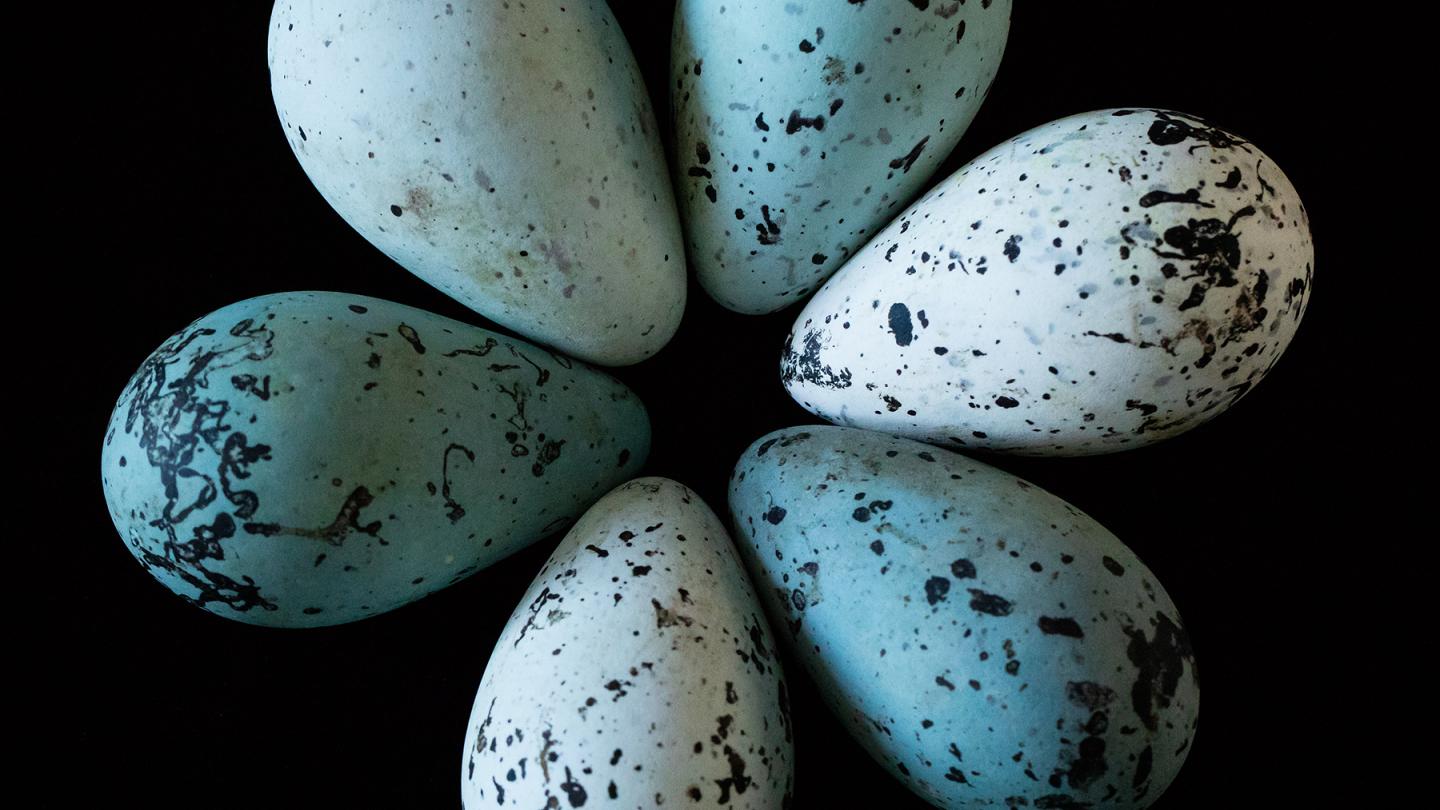
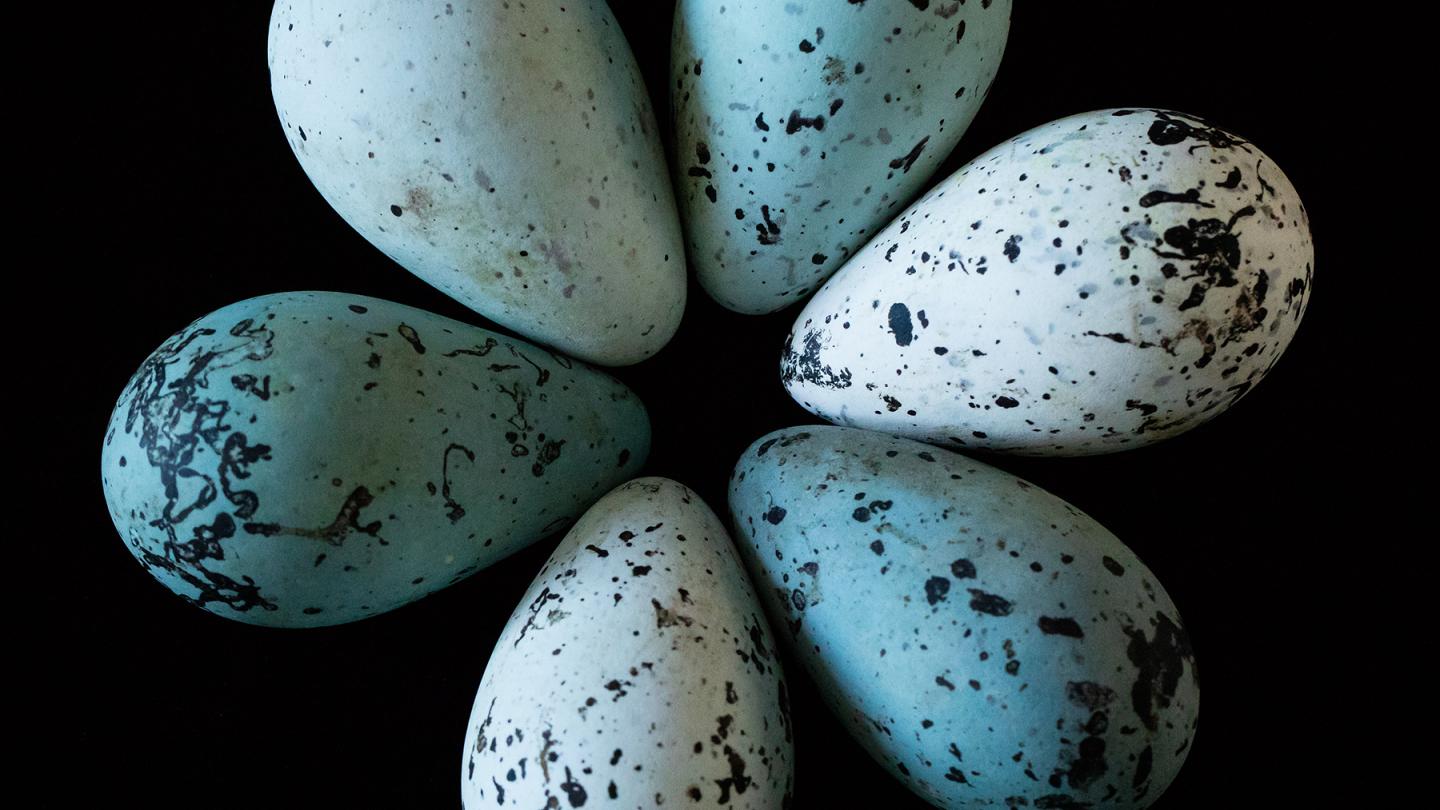
IMAGE

Credit: L. Brian Stauffer

CHAMPAIGN, Ill. — Natural selection – that merciless weeder-outer of biological designs that are out of step with the times – also is a wily shaper of traits. Exhibit A is the pointy murre egg, according to new research published in the Journal of Experimental Biology.

Common murres and thick-billed murres tend to nest in tightly packed colonies on craggy seaside cliffs. The ledges on which they lay their eggs can be quite narrow, sometimes "as shallow as the egg is long," the authors of the new study wrote.

"Very little is known about how the murre egg shape affects its stability and viability in this setting," said University of Illinois animal biology professor Mark Hauber, who conducted the study with former Hunter College graduate student Ian Hays. Many have theorized that the shape makes the eggs less likely to roll off of cliff ledges, he said. "But earlier studies failed to isolate specific features of the eggs – such as elongation, asymmetry and conicality – to robustly test this hypothesis."

To put the theory to the test, Hauber and Hays turned to a 3D printer that can manufacture fake eggs in a variety of shapes and sizes. By altering individual shape variables and testing them singly or in combination in an "egg-roll" test, the researchers were able to determine which factors were most likely to keep the egg from straying far from its original position.

"We found that conicality – the degree to which the pointed end of the egg mimicked a cone – suppressed egg displacement on surfaces inclined more than 2 degrees," Hauber said. At lower inclines, however, conicality only mildly increased egg displacement.

Increasing the length of the egg relative to its girth increased its tendency to roll further from its original position, the researchers found. And, as the distance from the fattest part of the egg to the narrow end increased relative to its overall length, so did its tendency to roll.

"In general, an egg's conicality was the most reliable predictor of its likelihood of staying put on inclined surfaces," Hauber said. "This finding provides experimental support for natural selection shaping the unique form of murre eggs amongst all bird eggs."

###

Editor's notes:

To reach Mark Hauber, call 217-300-7127; email [email protected].

The paper "A morphological analysis of avian egg shape in the context of displacement dynamics" is available from the U. of I. News Bureau.

Media Contact

Diana Yates
[email protected]
217-333-5802
@NewsAtIllinois

http://www.illinois.edu
Share12Tweet8Share2ShareShareShare2

Related Posts

TikTok Video Helps Scientists Discover Rare Underground Eel in India

TikTok Video Helps Scientists Discover Rare Underground Eel in India

August 17, 2026
Strubbelig–NHL3 Receptor Complex Helps Arabidopsis Respond to Cellulose Deficiency

Strubbelig–NHL3 Receptor Complex Helps Arabidopsis Respond to Cellulose Deficiency

August 15, 2026

Bombyx mori Satellitome Analysis Reveals Evolutionary Stability, Dispersed Chromosomal Organization, Transposon Origins

August 15, 2026

Synthetic pyrenoid reconstruction reveals EPYC1-driven carbon concentration mechanisms and evolution

August 15, 2026
Please login to join discussion

POPULAR NEWS

  • TikTok Video Helps Scientists Discover Rare Underground Eel in India

    29 shares
    Share 12 Tweet 7
  • Smart demand management could accelerate electricity decarbonization in megacities

    29 shares
    Share 12 Tweet 7
  • PD-1 Balances Brain Viral Control and Neuroinflammation by Regulating T Cell Responses

    29 shares
    Share 12 Tweet 7
  • Digital Twins Accelerate Oxide Transistor Optimization, Overcoming Performance–Reliability Trade-offs

    29 shares
    Share 12 Tweet 7

About

We bring you the latest biotechnology news from best research centers and universities around the world. Check our website.

Follow us

Recent News

TikTok Video Helps Scientists Discover Rare Underground Eel in India

Smart demand management could accelerate electricity decarbonization in megacities

PD-1 Balances Brain Viral Control and Neuroinflammation by Regulating T Cell Responses

Subscribe to Blog via Email

Enter your email address to subscribe to this blog and receive notifications of new posts by email.

Join 85 other subscribers
  • Contact Us

Bioengineer.org © Copyright 2023 All Rights Reserved.

Welcome Back!

Login to your account below

Forgotten Password?

Retrieve your password

Please enter your username or email address to reset your password.

Log In
No Result
View All Result
  • Homepages
    • Home Page 1
    • Home Page 2
  • News
  • National
  • Business
  • Health
  • Lifestyle
  • Science

Bioengineer.org © Copyright 2023 All Rights Reserved.