Credit: Lou Corpuz-Bosshart / UBC
The deadly Nipah virus and others like it assemble themselves in a much more haphazard manner than previously thought, new UBC research has found. The discovery could allow scientists to develop more effective vaccines and rule out many approaches to fighting these viruses.
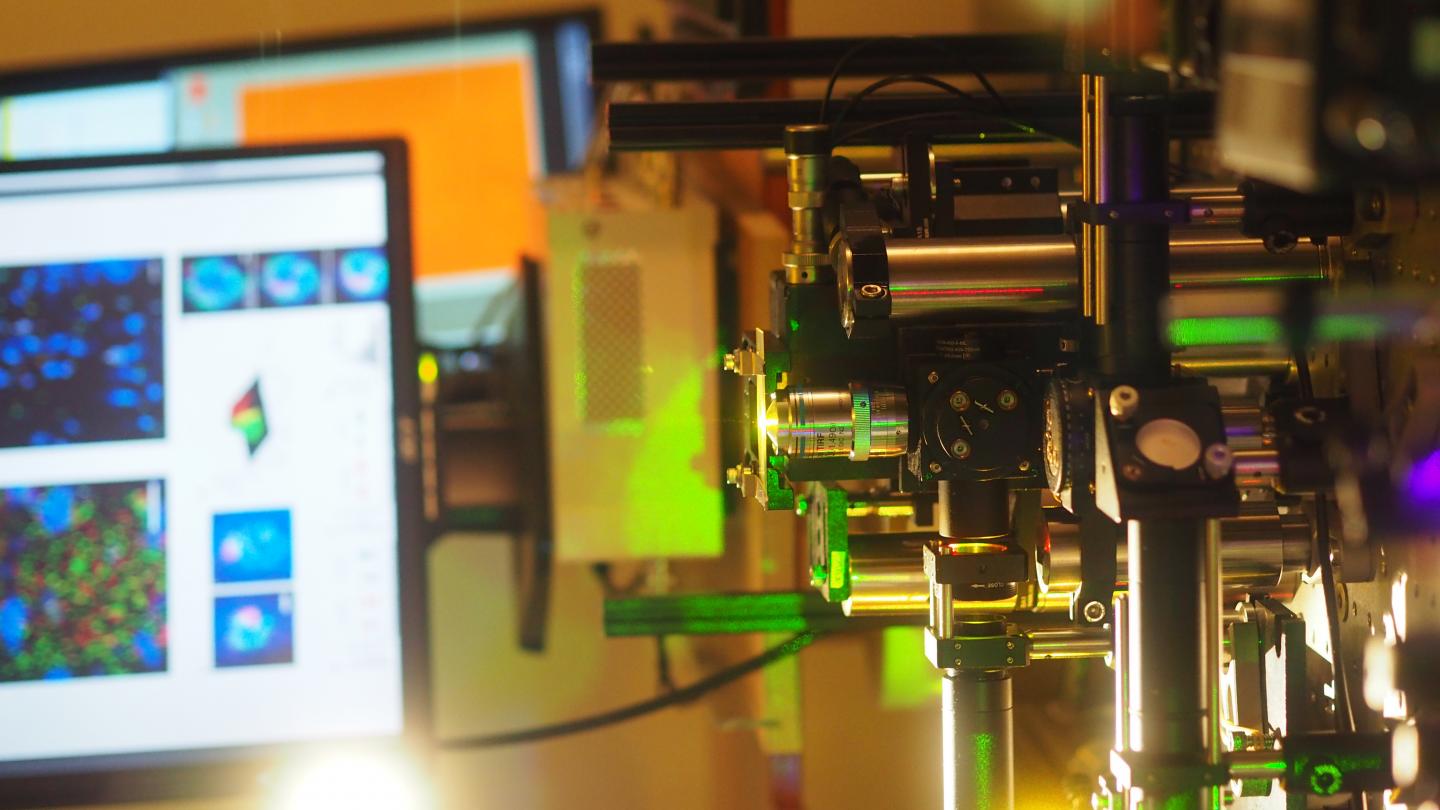
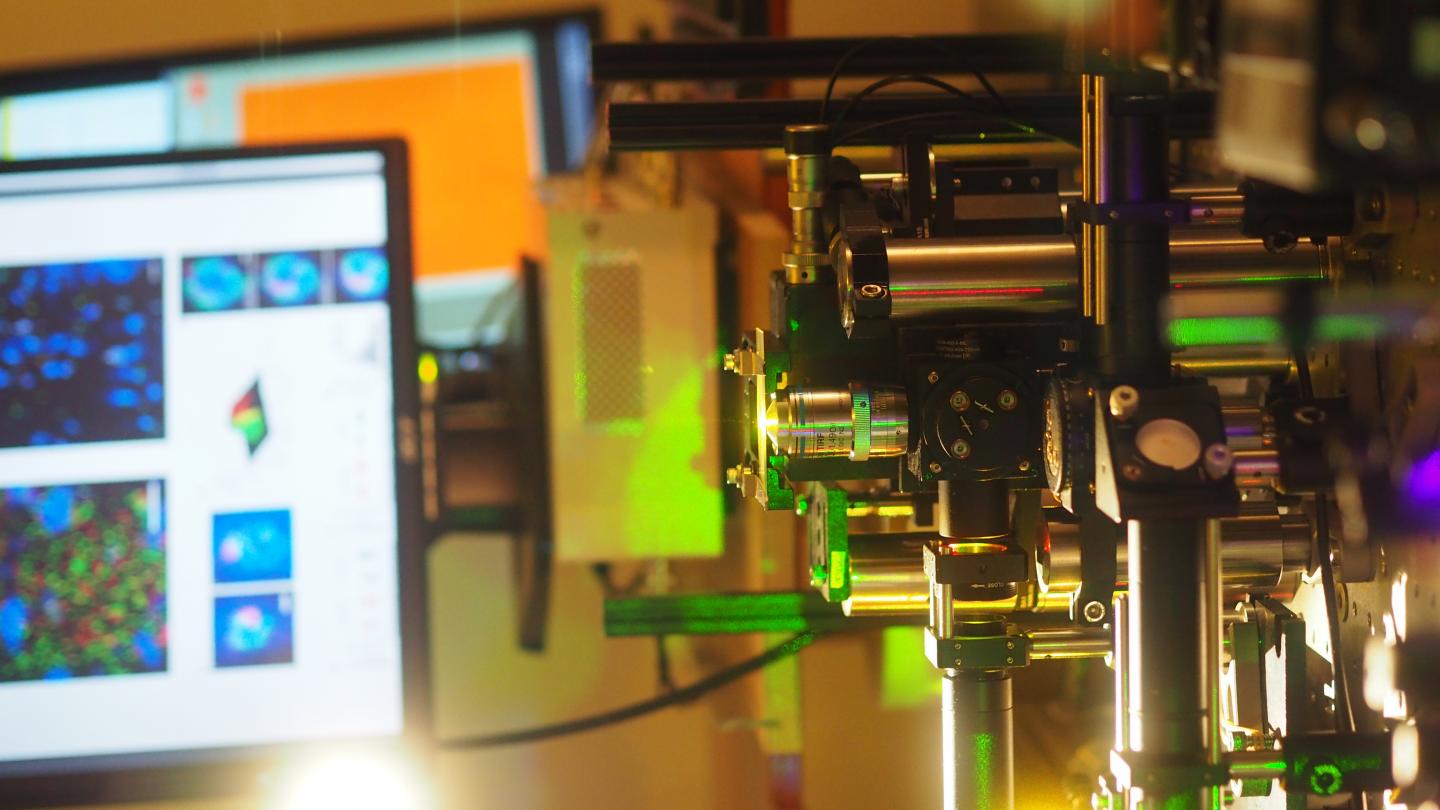
Chemistry professor Keng Chou and his team of researchers from UBC and Cornell University used a super-resolution microscope patented by UBC to observe whether viruses actually assemble in the way scientists have hypothesized.
"We looked at hundreds of images, and we couldn't find anything that supported the current model," said Chou. "For some of these deadly viruses, the replication process is actually not as complicated as some thought."
Nipah is an example of an "enveloped" virus, which gets its outer wrapping from the infected host cell, much like the viruses that cause influenza, rabies, measles and AIDS. Nipah can cause severe diseases and fatal brain swelling in both humans and animals. Yearly outbreaks in southeast Asia kill 40 to 90 per cent of those infected. In 2018, only two out of 19 people infected by Nipah in India survived an outbreak.
Nipah virus has three structural proteins: a matrix protein that provides structure, and two envelope proteins that enable the virus to attach and fuse with host cells. Scientists have believed that matrix proteins "recruit" envelope proteins, sending out some sort of signal so they can all join together on the cell membrane and become a functional virus. Researchers have tried to identify this signal in hopes of finding ways to disrupt the process.
However, Chou and his team observed that envelope proteins tend to be scattered randomly on the cell membrane. They now believe these proteins are picked up purely by chance when they are incorporated into a virus. This produces virus particles more quickly than previously envisioned, but many matrix proteins don't pick the envelope proteins up at all, and don't become functional viruses.
This observation has implications for vaccination, not just against Nipah but potentially against influenza, HIV and other enveloped viruses. Vaccines work by exposing a person to a small amount of modified virus or viral proteins, which rallies the body's natural defense. Currently, there is no Nipah vaccine approved for human use. One of the potential strategies under development is to use virus-like-particles, which are protein-based structures that mimic viruses, to stimulate immune response.
"If a vaccine contains a large percentage of virus-like particles that have only the matrix protein but not the envelope proteins, it won't trigger a strong immune response to the proteins that are most essential for helping a virus enter cells," said Qian Liu, a postdoctoral fellow in UBC's chemistry department who was lead author of the study. "Vaccines could be made more effective if we find a way to exclude those non-functional particles from the mix."
###
The study, supported by the Natural Sciences and Engineering Research Council of Canada and the Canada Foundation for Innovation, was published earlier this month in Nature Communications.
Media Contact
Erik Rolfsen
[email protected]
604-209-3048
@UBCnews
http://www.ubc.ca
Original Source
https://news.ubc.ca/2018/08/16/super-resolution-microscope-reveals-secrets-of-deadly-nipah-virus/ http://dx.doi.org/10.1038/s41467-018-05480-2