

• HOME
  • NEWS
  • EXPLORE
    • CAREER
      • Companies
      • Jobs
    • EVENTS
    • iGEM
      • News
      • Team
    • PHOTOS
    • VIDEO
    • WIKI
  • BLOG
  • COMMUNITY
    • FACEBOOK
    • INSTAGRAM
    • TWITTER
Saturday, February 7, 2026
BIOENGINEER.ORG
No Result
View All Result
  • Login
  • HOME
  • NEWS
  • EXPLORE
    • CAREER
      • Companies
      • Jobs
        • Lecturer
        • PhD Studentship
        • Postdoc
        • Research Assistant
    • EVENTS
    • iGEM
      • News
      • Team
    • PHOTOS
    • VIDEO
    • WIKI
  • BLOG
  • COMMUNITY
    • FACEBOOK
    • INSTAGRAM
    • TWITTER
  • HOME
  • NEWS
  • EXPLORE
    • CAREER
      • Companies
      • Jobs
        • Lecturer
        • PhD Studentship
        • Postdoc
        • Research Assistant
    • EVENTS
    • iGEM
      • News
      • Team
    • PHOTOS
    • VIDEO
    • WIKI
  • BLOG
  • COMMUNITY
    • FACEBOOK
    • INSTAGRAM
    • TWITTER
No Result
View All Result
Bioengineer.org
No Result
View All Result
Home NEWS Science News Health

Common Wifi can detect weapons, bombs and chemicals in bags

Bioengineer by Bioengineer
August 15, 2018
in Health
Reading Time: 2 mins read
0
Share on FacebookShare on TwitterShare on LinkedinShare on RedditShare on Telegram
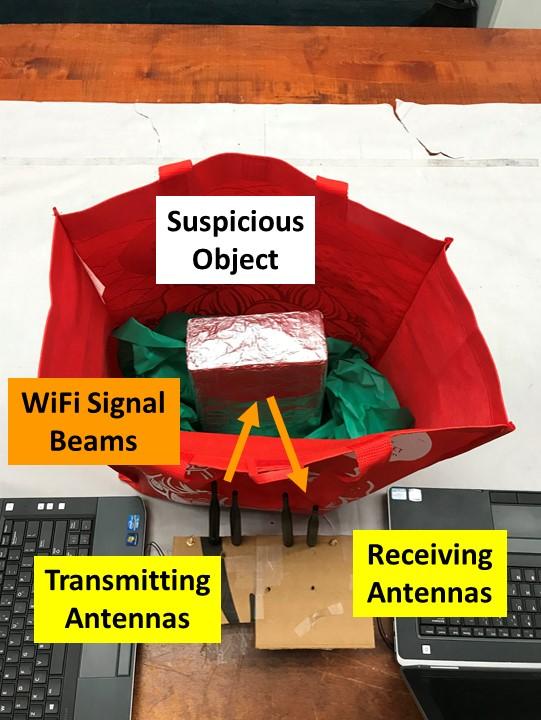
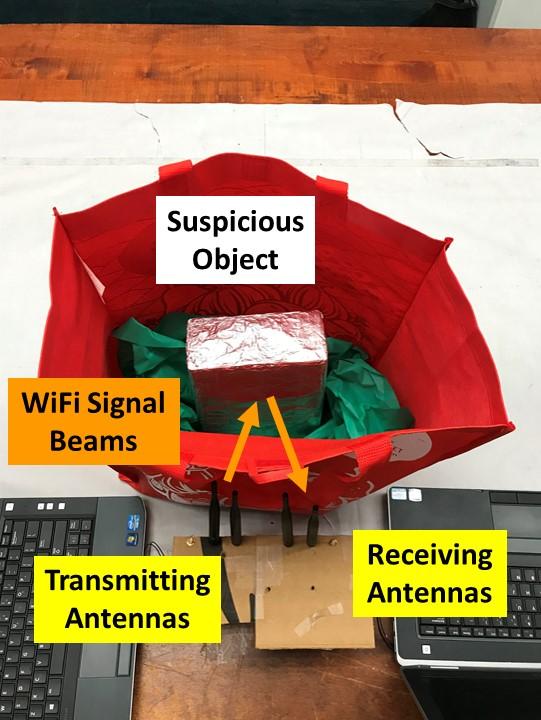
IMAGE

Credit: Data Analysis and Information Security (DAISY) Lab led by Professor Yingying Chen

Ordinary WiFi can easily detect weapons, bombs and explosive chemicals in bags at museums, stadiums, theme parks, schools and other public venues, according to a Rutgers University-New Brunswick-led study.

The researchers' suspicious object detection system is easy to set up, reduces security screening costs and avoids invading privacy such as when screeners open and inspect bags, backpacks and luggage. Traditional screening typically requires high staffing levels and costly specialized equipment.

"This could have a great impact in protecting the public from dangerous objects," said Yingying (Jennifer) Chen, study co-author and a professor in the Department of Electrical and Computer Engineering in Rutgers-New Brunswick's School of Engineering. "There's a growing need for that now."

The peer-reviewed study received a best paper award at the 2018 IEEE Conference on Communications and Network Security on cybersecurity. The study – led by researchers at the Wireless Information Network Laboratory (WINLAB) in the School of Engineering – included engineers at Indiana University-Purdue University Indianapolis (IUPUI) and Binghamton University.

WiFi, or wireless, signals in most public places can penetrate bags to get the dimensions of dangerous metal objects and identify them, including weapons, aluminum cans, laptops and batteries for bombs. WiFi can also be used to estimate the volume of liquids such as water, acid, alcohol and other chemicals for explosives, according to the researchers.

This low-cost system requires a WiFi device with two to three antennas and can be integrated into existing WiFi networks. The system analyzes what happens when wireless signals penetrate and bounce off objects and materials.

Experiments with 15 types of objects and six types of bags demonstrated detection accuracy rates of 99 percent for dangerous objects, 98 percent for metal and 95 percent for liquid. For typical backpacks, the accuracy rate exceeds 95 percent and drops to about 90 percent when objects inside bags are wrapped, Chen said.

"In large public areas, it's hard to set up expensive screening infrastructure like what's in airports," Chen said. "Manpower is always needed to check bags and we wanted to develop a complementary method to try to reduce manpower."

Next steps include trying to boost accuracy in identifying objects by imaging their shapes and estimating liquid volumes, she said.

###

Media Contact

Todd Bates
[email protected]
848-932-0550
@RutgersU

http://www.rutgers.edu

Original Source

https://news.rutgers.edu/common-wifi-can-detect-weapons-bombs-and-chemicals-bags/20180813#.W3HjsShKi70


Share12Tweet7Share2ShareShareShare1

Related Posts

Evaluating Pediatric Emergency Care Quality in Ethiopia

February 7, 2026

TPMT Expression Predictions Linked to Azathioprine Side Effects

February 7, 2026

Improving Dementia Care with Enhanced Activity Kits

February 7, 2026

Decoding Prostate Cancer Origins via snFLARE-seq, mxFRIZNGRND

February 7, 2026
Please login to join discussion

POPULAR NEWS

  • Robotic Ureteral Reconstruction: A Novel Approach

    Robotic Ureteral Reconstruction: A Novel Approach

    82 shares
    Share 33 Tweet 21
  • Digital Privacy: Health Data Control in Incarceration

    63 shares
    Share 25 Tweet 16
  • Study Reveals Lipid Accumulation in ME/CFS Cells

    57 shares
    Share 23 Tweet 14
  • Breakthrough in RNA Research Accelerates Medical Innovations Timeline

    53 shares
    Share 21 Tweet 13

About

We bring you the latest biotechnology news from best research centers and universities around the world. Check our website.

Follow us

Recent News

Evaluating Pediatric Emergency Care Quality in Ethiopia

TPMT Expression Predictions Linked to Azathioprine Side Effects

Improving Dementia Care with Enhanced Activity Kits

Subscribe to Blog via Email

Success! An email was just sent to confirm your subscription. Please find the email now and click 'Confirm' to start subscribing.

Join 73 other subscribers
  • Contact Us

Bioengineer.org © Copyright 2023 All Rights Reserved.

Welcome Back!

Login to your account below

Forgotten Password?

Retrieve your password

Please enter your username or email address to reset your password.

Log In
No Result
View All Result
  • Homepages
    • Home Page 1
    • Home Page 2
  • News
  • National
  • Business
  • Health
  • Lifestyle
  • Science

Bioengineer.org © Copyright 2023 All Rights Reserved.