• HOME
  • NEWS
  • EXPLORE
    • CAREER
      • Companies
      • Jobs
    • EVENTS
    • iGEM
      • News
      • Team
    • PHOTOS
    • VIDEO
    • WIKI
  • BLOG
  • COMMUNITY
    • FACEBOOK
    • INSTAGRAM
    • TWITTER
Saturday, February 7, 2026
BIOENGINEER.ORG
No Result
View All Result
  • Login
  • HOME
  • NEWS
  • EXPLORE
    • CAREER
      • Companies
      • Jobs
        • Lecturer
        • PhD Studentship
        • Postdoc
        • Research Assistant
    • EVENTS
    • iGEM
      • News
      • Team
    • PHOTOS
    • VIDEO
    • WIKI
  • BLOG
  • COMMUNITY
    • FACEBOOK
    • INSTAGRAM
    • TWITTER
  • HOME
  • NEWS
  • EXPLORE
    • CAREER
      • Companies
      • Jobs
        • Lecturer
        • PhD Studentship
        • Postdoc
        • Research Assistant
    • EVENTS
    • iGEM
      • News
      • Team
    • PHOTOS
    • VIDEO
    • WIKI
  • BLOG
  • COMMUNITY
    • FACEBOOK
    • INSTAGRAM
    • TWITTER
No Result
View All Result
Bioengineer.org
No Result
View All Result
Home NEWS Science News Biology

Scientists create biodegradable, paper-based biobatteries

Bioengineer by Bioengineer
August 8, 2018
in Biology
Reading Time: 2 mins read
0
Share on FacebookShare on TwitterShare on LinkedinShare on RedditShare on Telegram
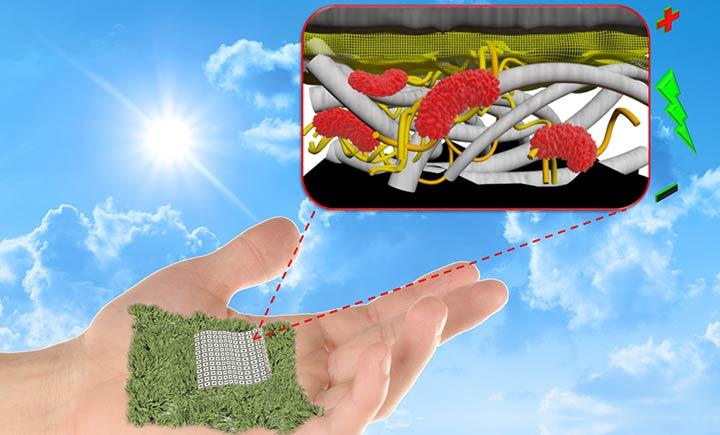
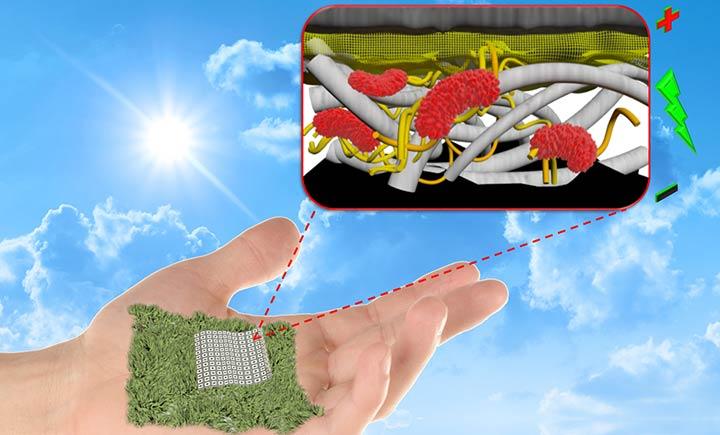
IMAGE

Credit: Seokheun 'Sean' Choi

BINGHAMTON, N.Y. – The batteries of the future may be made out of paper. Researchers at Binghamton University, State University at New York have created a biodegradable, paper-based battery that is more efficient than previously possible.

For years, there has been excitement in the scientific community about the possibility of paper-based batteries as an eco-friendly alternative. However, the proposed designs were never quite powerful enough, they were difficult to produce and it was questionable whether they were really biodegradable.

This new design solves all of those problems.

Associate Professor Seokheun "Sean" Choi from the Electrical and Computer Engineering Department and Professor Omowunmi Sadik from the Chemistry Department worked on the project together. Choi engineered the design of the paper-based battery, while Sadik was able to make the battery a self-sustaining biobattery.

"There's been a dramatic increase in electronic waste and this may be an excellent way to start reducing that," said Choi. "Our hybrid paper battery exhibited a much higher power-to-cost ratio than all previously reported paper-based microbial batteries."

The biobattery uses a hybrid of paper and engineered polymers. The polymers – poly (amic) acid and poly (pyromellitic dianhydride-p-phenylenediamine) – were the key to giving the batteries biodegrading properties. The team tested the degradation of the battery in water and it clearly biodegraded without the requirements of special facilities, conditions or introduction of other microorganisms.

The polymer-paper structures are lightweight, low-cost and flexible. Choi said that flexibility also provides another benefit.

"Power enhancement can be potentially achieved by simply folding or stacking the hybrid, flexible paper-polymer devices," said Choi.

The team said that producing the biobatteries is a fairly straightforward process and that the material allows for modifications depending on what configuration is needed.

###

The research paper, titled "Green Biobatteries: Hybrid Paper-Polymer Microbial Fuel Cells," was published in Advanced Sustainable Systems.

The work was supported by a grant from the National Science Foundation and done through the Center for Research in Advanced Sensing Technologies and Environmental Sustainability (CREATES).

Media Contact

Seokheun 'Sean' Choi
[email protected]
607-777-5913
@binghamtonu

http://www.binghamton.edu

Related Journal Article

http://dx.doi.org/10.1002/adsu.201800041

Share12Tweet8Share2ShareShareShare2

Related Posts

Florida Cane Toad: Complex Spread and Selective Evolution

Florida Cane Toad: Complex Spread and Selective Evolution

February 7, 2026
New Study Uncovers Mechanism Behind Burn Pit Particulate Matter–Induced Lung Inflammation

New Study Uncovers Mechanism Behind Burn Pit Particulate Matter–Induced Lung Inflammation

February 6, 2026

DeepBlastoid: Advancing Automated and Efficient Evaluation of Human Blastoids with Deep Learning

February 6, 2026

Navigating the Gut: The Role of Formic Acid in the Microbiome

February 6, 2026
Please login to join discussion

POPULAR NEWS

  • Robotic Ureteral Reconstruction: A Novel Approach

    Robotic Ureteral Reconstruction: A Novel Approach

    82 shares
    Share 33 Tweet 21
  • Digital Privacy: Health Data Control in Incarceration

    63 shares
    Share 25 Tweet 16
  • Study Reveals Lipid Accumulation in ME/CFS Cells

    57 shares
    Share 23 Tweet 14
  • Breakthrough in RNA Research Accelerates Medical Innovations Timeline

    53 shares
    Share 21 Tweet 13

About

We bring you the latest biotechnology news from best research centers and universities around the world. Check our website.

Follow us

Recent News

Evaluating Pediatric Emergency Care Quality in Ethiopia

TPMT Expression Predictions Linked to Azathioprine Side Effects

Improving Dementia Care with Enhanced Activity Kits

Subscribe to Blog via Email

Enter your email address to subscribe to this blog and receive notifications of new posts by email.

Join 73 other subscribers
  • Contact Us

Bioengineer.org © Copyright 2023 All Rights Reserved.

Welcome Back!

Login to your account below

Forgotten Password?

Retrieve your password

Please enter your username or email address to reset your password.

Log In
No Result
View All Result
  • Homepages
    • Home Page 1
    • Home Page 2
  • News
  • National
  • Business
  • Health
  • Lifestyle
  • Science

Bioengineer.org © Copyright 2023 All Rights Reserved.