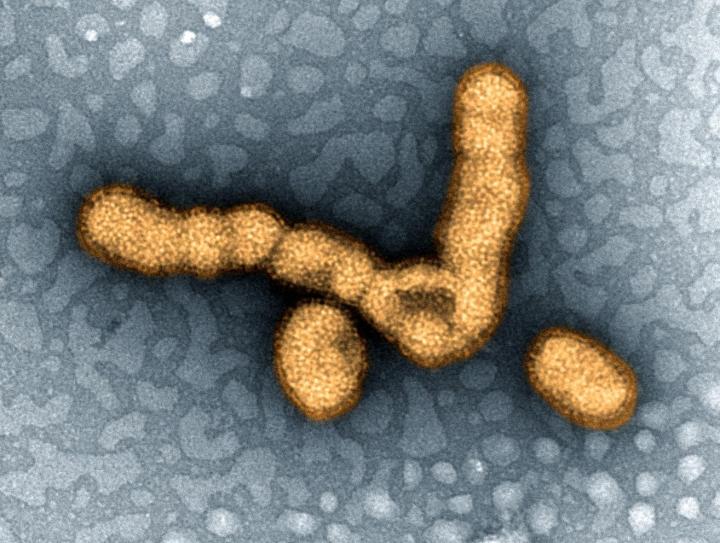
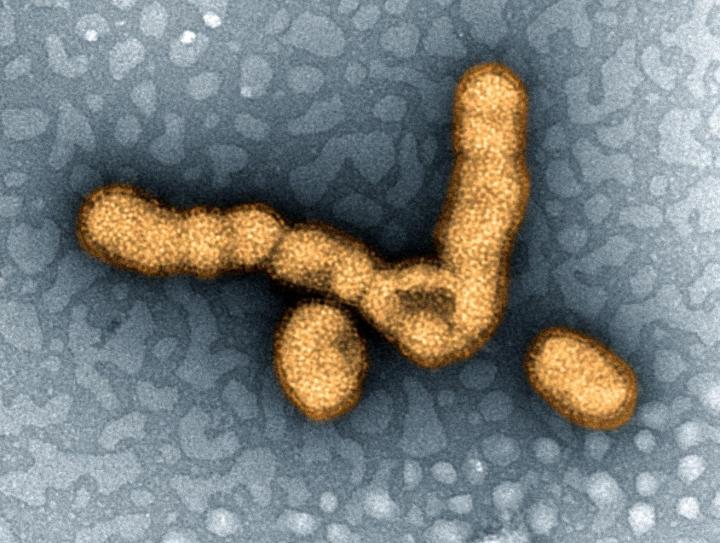
Credit: NIAID
WHAT: Obesity, which increases influenza disease severity, also extends by about 1.5 days how long influenza A virus is shed from infected adults compared to non-obese adults, according to a multi-year study of two cohorts of Nicaraguan households. The findings implicate chronic inflammation caused by obesity as well as increasing age as reasons for extended viral shedding, which puts others at risk of infection.
The National Institute of Allergy and Infectious Diseases, part of the National Institutes of Health, provided primary study funding through its Centers of Excellence for Influenza Research and Surveillance program. University of Michigan researchers coordinated the study in collaboration with colleagues at the Nicaraguan Ministry of Health, the Sustainable Sciences Institute in Nicaragua, and the University of California-Berkeley.
The researchers monitored 1,783 people from 320 households in Managua during the three flu seasons between 2015 and 2017. Overall, 87 people became ill with influenza A and 58 with influenza B. As defined by body mass, obesity was found in 2 percent of the people up to age 4, 9 percent of those ages 5-17, and 42 percent of those ages 18-92. Obese adults with two or more symptoms of influenza A (n=62) shed the virus 42 percent longer than non-obese adults–5.2 days compared to 3.7 days. Obese adults with one or no symptoms of influenza A (n=25) shed the virus 104 percent longer than non-obese adults–3.2 days compared to 1.6 days. Obesity was not a risk factor for increased viral shedding duration in children ages 5-17 or for adults with influenza B.
According to the researchers, the amount and duration of viral shedding likely affects how efficiently influenza viruses are transmitted to others. Obesity alters the immune system and leads to chronic inflammation, which also is known to increase with age. The authors propose that chronic inflammation caused by obesity may be responsible for increased influenza A viral shedding. The researchers are continuing to study the correlation between obesity, inflammation and viruses. However, they note that reducing obesity rates could be an important target to limit the spread of viral infectious diseases. The study also notes that obesity rates range widely throughout the world: in 2014 adult obesity in the United States was 35.5 percent, compared to 17.4 percent in Nicaragua and 4.4 percent in other low-income countries.
###
ARTICLE: H Maier, et al. Obesity Increases the Duration of Influenza A Shedding in Adults. Journal of Infectious Diseases DOI: 10.1093/infdis/jiy370 (2018).
WHO: NIAID Director Anthony S. Fauci, M.D., and Marciela Degrace, Ph.D., influenza project officer in the Respiratory Diseases Branch of NIAID's Division of Microbiology and Infectious Diseases, are available to comment on this study.
CONTACT: To schedule interviews, please contact NIAID Office of Communications, (301) 402-1663, [email protected].
NIAID conducts and supports research–at NIH, throughout the United States, and worldwide–to study the causes of infectious and immune-mediated diseases, and to develop better means of preventing, diagnosing and treating these illnesses. News releases, fact sheets and other NIAID-related materials are available on the NIAID website.
About the National Institutes of Health (NIH): NIH, the nation's medical research agency, includes 27 Institutes and Centers and is a component of the U.S. Department of Health and Human Services. NIH is the primary federal agency conducting and supporting basic, clinical, and translational medical research, and is investigating the causes, treatments, and cures for both common and rare diseases. For more information about NIH and its programs, visit http://www.nih.gov/.
Media Contact
NIAID Office of Communications
[email protected]
301-402-1663
@NIAIDNews
http://www.niaid.nih.gov
Related Journal Article
http://dx.doi.org/10.1093/infdis/jiy370