
• HOME
  • NEWS
  • EXPLORE
    • CAREER
      • Companies
      • Jobs
    • EVENTS
    • iGEM
      • News
      • Team
    • PHOTOS
    • VIDEO
    • WIKI
  • BLOG
  • COMMUNITY
    • FACEBOOK
    • INSTAGRAM
    • TWITTER
Saturday, February 7, 2026
BIOENGINEER.ORG
No Result
View All Result
  • Login
  • HOME
  • NEWS
  • EXPLORE
    • CAREER
      • Companies
      • Jobs
        • Lecturer
        • PhD Studentship
        • Postdoc
        • Research Assistant
    • EVENTS
    • iGEM
      • News
      • Team
    • PHOTOS
    • VIDEO
    • WIKI
  • BLOG
  • COMMUNITY
    • FACEBOOK
    • INSTAGRAM
    • TWITTER
  • HOME
  • NEWS
  • EXPLORE
    • CAREER
      • Companies
      • Jobs
        • Lecturer
        • PhD Studentship
        • Postdoc
        • Research Assistant
    • EVENTS
    • iGEM
      • News
      • Team
    • PHOTOS
    • VIDEO
    • WIKI
  • BLOG
  • COMMUNITY
    • FACEBOOK
    • INSTAGRAM
    • TWITTER
No Result
View All Result
Bioengineer.org
No Result
View All Result
Home NEWS Science News Health

Women and lupus — Tackling the debilitating connection

Bioengineer by Bioengineer
August 1, 2018
in Health
Reading Time: 2 mins read
0
Share on FacebookShare on TwitterShare on LinkedinShare on RedditShare on Telegram
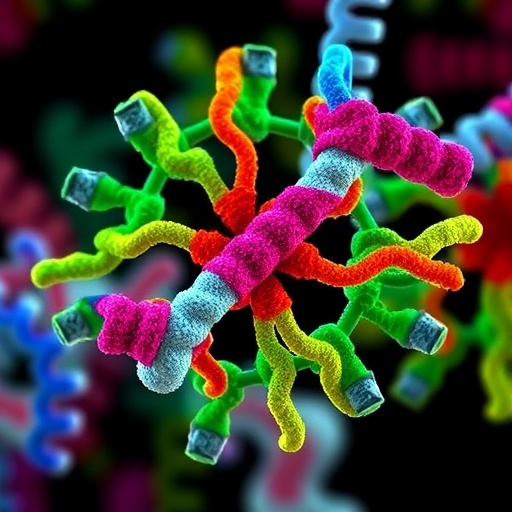
IMAGE

Credit: University of Houston

The chronic inflammatory disease systemic lupus erythematosus (known as SLE or lupus), is about nine times more common in women than men, and a University of Houston researcher now has the money to find out why. The National Institutes of Health has awarded Chandra Mohan, Hugh Roy and Lillie Cranz Cullen Endowed Professor of biomedical engineering, $2 million dollars to examine the connection.

Mohan knows just where he's taking the money – straight to the bank. Bank1, that is, a critical gene in B-Lymphocytes, immune cells which make the antibodies that cause lupus when they misguidedly attack the body's own cells.

"Bank1 exists in men and women, but in women the consequences are more drastic because the Bank1 gene and female hormones work together on the same pathway and make even higher levels of disease-causing auto antibodies," said Mohan.

Genetic studies have led to the identification of several genes involved with lupus, but how they operate is still unclear. One of these genes is the Bank1.

"We will examine how the Bank1 impacts B-cell function and disease, in concert with female sex hormones," said Mohan. "A unique aspect of this grant is its focus on unraveling why females are more prone to lupus, by factoring in the contributions of culprit genes and estrogens."

Merely having a target is a step forward in the investigation of the complex autoimmune disease that is difficult to diagnose and treat because it is a multisystem disorder typically impacting skin, joints and kidneys. The disease is characterized by high levels of anti-nuclear autoantibodies and B-cell hyperactivity. Only one treatment for lupus has been approved in nearly 60 years.

Mohan will examine the molecular mechanisms through which lupus genes and sex hormones interface to cause autoimmunity. A better understanding of the pathogenic mechanisms underlying the disease will also pave the way towards better therapeutics, he said.

Mohan is one of the leading lupus researchers in the world. For more than three decades he's been exploring the disease on different fronts.

"There are three major areas we need advances on concerning lupus," said Mohan. "We need a better understanding of the disease, we need to know if we can diagnose and monitor the disease better using better biomarkers, and we need to know superior ways to treat the disease."

On this grant Mohan is joined by Chin-Yo Lin of the UH Center for Nuclear Receptors and Cell Signaling and biologist Anne Satterthwaite of UT Southwestern Medical Center in Dallas.

###

Media Contact

Laurie Fickman
[email protected]
713-743-8454
@UH_News

http://www.uh.edu/news-events

Original Source

https://www.egr.uh.edu/news/201807/women-and-lupus-%E2%80%93-tackling-debilitating-connection
Share12Tweet7Share2ShareShareShare1

Related Posts

Personalized Guide to Understanding and Reducing Chemicals

February 7, 2026

Inflammasome Protein ASC Drives Pancreatic Cancer Metabolism

February 7, 2026

Phage-Antibiotic Combo Beats Resistant Peritoneal Infection

February 7, 2026

Boosting Remote Healthcare: Stepped-Wedge Trial Insights

February 7, 2026
Please login to join discussion

POPULAR NEWS

  • Robotic Ureteral Reconstruction: A Novel Approach

    Robotic Ureteral Reconstruction: A Novel Approach

    82 shares
    Share 33 Tweet 21
  • Digital Privacy: Health Data Control in Incarceration

    63 shares
    Share 25 Tweet 16
  • Study Reveals Lipid Accumulation in ME/CFS Cells

    57 shares
    Share 23 Tweet 14
  • Breakthrough in RNA Research Accelerates Medical Innovations Timeline

    53 shares
    Share 21 Tweet 13

About

We bring you the latest biotechnology news from best research centers and universities around the world. Check our website.

Follow us

Recent News

Personalized Guide to Understanding and Reducing Chemicals

Inflammasome Protein ASC Drives Pancreatic Cancer Metabolism

Phage-Antibiotic Combo Beats Resistant Peritoneal Infection

Subscribe to Blog via Email

Enter your email address to subscribe to this blog and receive notifications of new posts by email.

Join 73 other subscribers
  • Contact Us

Bioengineer.org © Copyright 2023 All Rights Reserved.

Welcome Back!

Login to your account below

Forgotten Password?

Retrieve your password

Please enter your username or email address to reset your password.

Log In
No Result
View All Result
  • Homepages
    • Home Page 1
    • Home Page 2
  • News
  • National
  • Business
  • Health
  • Lifestyle
  • Science

Bioengineer.org © Copyright 2023 All Rights Reserved.