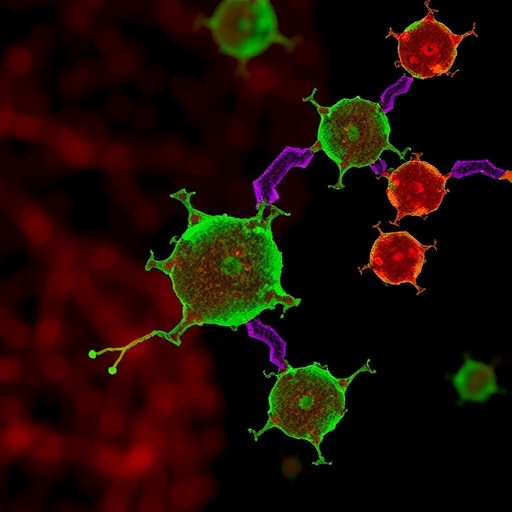
(New York, NY – August 1, 2018) — Mount Sinai researchers have discovered that certain drug cocktails help targeted therapies attack cancer more efficiently while lessening common side effects, according to a study published today in Cancer Research.
The cocktails could also help stave off cancer's ability to become resistant to drugs, by attacking from multiple angles the cancer's ability to grow. The cocktails, which include chemotherapy, anti-tumor antibiotics, and chemical compounds, are given at low doses that would normally not give a therapeutic benefit on their own. Instead, they bolster a patient's response to a separate targeted therapy drug, which blocks enzymes that help cancer cells grow.
Researchers discovered this novel way to enhance targeted cancer drugs by testing the drug cocktails on human cancer cell lines, fruit flies, and mice. They believe the cocktails can be used with a targeted therapy drug or after a failed attempt with a targeted therapy drug. The researchers found that some of these drugs can be paired together in cocktails in multiple cancer types, potentially providing a treatment option for a wide variety of cancer patients.
"Targeted therapies have revolutionized cancer treatment by targeting fewer components within a human cell, thereby promising better efficacy and lower side effects compared to chemotherapy," said Tirtha K. Das, PhD, Assistant Professor of Cell, Developmental and Regenerative Biology at The Tisch Cancer Institute at the Icahn School of Medicine at Mount Sinai. "Yet clinical trials show that targeted therapies still elicit side effects, and in many cases cancer cells develop resistance mechanisms to these therapies, eventually leading to disease progression in patients. Our work addresses the central question faced by physicians who treat cancer patients: how do targeted therapies both promote resistance in cancer cells and evoke toxic side effects in patients?"
###
This study, which created drug cocktails from targets found in genetic and drug screening, provides an innovative way to bolster current efforts at using targeted therapies to treat patients. Dr. Das and colleagues' theory could prove useful with different drug cocktails that attack cancer growth from many angles, ultimately increasing the success of other targeted therapies in patients. Ross Cagan, PhD, Senior Associate Dean of the Graduate School of Biomedical Sciences and Professor of Oncological Sciences and Cell, Developmental, and Regenerative Biology at The Tisch Cancer Institute of the Icahn School of Medicine at Mount Sinai, played a significant role in this project and served as a research advisor with Dr. Das. This research was supported by National Institutes of Health grants R01-CA170495 and R01-CA109730, Department of Defense grant W81XWH-15-1-0111 and American Cancer Society grants 120616-RSGM-11-018-01-CDD and 120886-PFM-11-137-01-DDC.
About the Mount Sinai Health System
The Mount Sinai Health System is New York City's largest integrated delivery system encompassing seven hospital campuses, a leading medical school, and a vast network of ambulatory practices throughout the greater New York region. Mount Sinai's vision is to produce the safest care, the highest quality, the highest satisfaction, the best access and the best value of any health system in the nation. The System includes approximately 6,600 primary and specialty care physicians; 10 joint-venture ambulatory surgery centers; more than 140 ambulatory practices throughout the five boroughs of New York City, Westchester, Long Island, and Florida; and 31 affiliated community health centers. The Icahn School of Medicine is one of three medical schools that have earned distinction by multiple indicators: ranked in the top 20 by U.S. News & World Report's "Best Medical Schools", aligned with a U.S. News & World Report's "Honor Roll" Hospital, No. 13 in the nation for National Institutes of Health funding, and among the top 10 most innovative research institutions as ranked by the journal Nature in its Nature Innovation Index. This reflects a special level of excellence in education, clinical practice, and research. The Mount Sinai Hospital is ranked No. 18 on U.S. News & World Report's "Honor Roll" of top U.S. hospitals; it is one of the nation's top 20 hospitals in Cardiology/Heart Surgery, Diabetes/Endocrinology, Gastroenterology/GI Surgery, Geriatrics, Nephrology, and Neurology/Neurosurgery, and in the top 50 in four other specialties in the 2017-2018 "Best Hospitals" issue. Mount Sinai's Kravis Children's Hospital also is ranked in six out of ten pediatric specialties by U.S. News & World Report. The New York Eye and Ear Infirmary of Mount Sinai is ranked 12th nationally for Ophthalmology and 50th for Ear, Nose, and Throat, while Mount Sinai Beth Israel, Mount Sinai St. Luke's and Mount Sinai West are ranked regionally. For more information, visit http://www.mountsinai.org/, or find Mount Sinai on Facebook, Twitter and YouTube.
Media Contact
Marlene Naanes
[email protected]
@mountsinainyc
http://www.mountsinai.org