Credit: Northwestern University
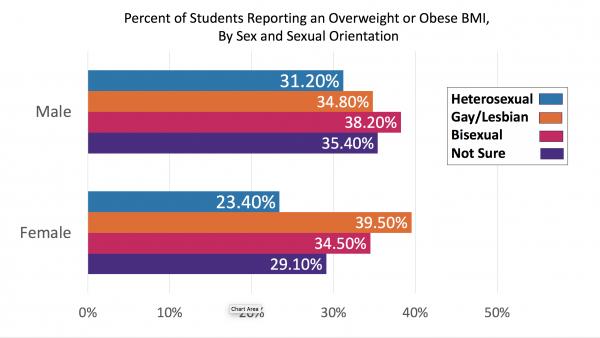
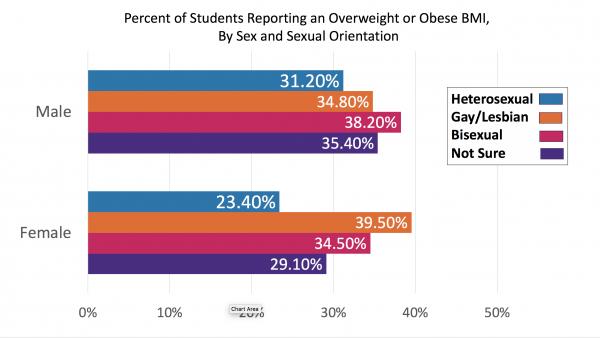
CHICAGO — Lesbian, gay, bisexual and questioning youth are more likely to develop Type 2 diabetes, be obese and engage in less physical activity and more sedentary activities than heterosexual youth, a new Northwestern Medicine study has found.
The study is among the first of its kind to examine how health behaviors linked to minority stress – the day-to-day stress faced by stigmatized and marginalized populations – may contribute to the risk of poor physical health among LGBQ youth.
"Lesbian, gay, bisexual and questioning youth may not only be at risk for worse mental health but also worse physical health outcomes compared to heterosexual youth," said lead study author Lauren Beach, a postdoctoral research fellow at Northwestern University's Institute for Sexual and Gender Minority Health and Wellbeing.
This is the largest study to date to report differences in levels of physical activity, sedentary behavior and obesity by sex and sexual orientation among high-school-aged students. The authors used national data from 350,673 United States high-school students, predominantly ranging between 14 and 18 years old, collected by the Centers for Disease Control and Prevention as part of the Youth Risk Behavior Survey (YRBS) to detect disparities in diabetes risk factors by sexual orientation.
The study was published in the journal Pediatric Diabetes.
Key study findings:
- On average, sexual minority and questioning students were less likely to engage in physical activity than heterosexual students. They reported approximately one less day per week of physical activity and were 38 to 53 percent less likely to meet physical activity guidelines than heterosexual students.
- The number of hours of sedentary activity among bisexual and questioning students was higher than heterosexual students (an average of 30 minutes more per school day than heterosexual counterparts).
- Lesbian, bisexual and questioning female students were 1.55 to 2.07 times more likely to be obese than heterosexual female students.
Obesity and sedentary activity may be higher in this population because lesbian, gay, bisexual and questioning youth are subjected to minority stress, Beach said.
"Many of these youth might be taking part in sedentary activities – like playing video games – to escape the daily stress tied to being lesbian, gay, bisexual or questioning," Beach said. "Our findings show that minority stress actually has a very broad-ranging and physical impact."
Additionally, cultural and environmental factors may be at play.
"Previous research has shown that body image and standards of beauty might be different among LGBQ compared to heterosexual populations," Beach said. "We know very little about the physical environments of LGBQ youth. Are these youth less likely to live in areas that are safe for them to be active? We just don't know."
These findings should not be viewed as a "doomsday" for this population, Beach said. Instead, she believes this is an opportunity to improve the health of sexual minority and questioning youth.
Teachers, parents and physicians should work together to ensure these youth have the tools they need to stay healthy, Beach said. Family support and identity affirmation – developing positive feelings and a strong attachment to a group – have been consistently linked to better health among LGBQ youth.
In addition to providing an overall supportive environment, parents should consider asking their children, "Have you been physically active today? Are you active in gym class? Can we do something today to be active together?" And parents should be proactive at doctor appointments and ask the doctor to screen for physical activity, screen time, diet and their child's weight, Beach said.
Beach is one of the rare researchers studying this field of physical health among sexual minority and questioning youth. Previous studies have examined diabetes and cardiovascular health among LGBTQ people, but that research has largely focused only on adults.
"This is the biggest study of its kind but it's just the tip of the iceberg," Beach said. "There's still so much we don't know, such as what is causing these disparities and what can be done about it. It's a completely untapped field of research."
###
Gregory Phillips II, assistant professor of medical social sciences and preventive medicine at Feinberg, was senior author on the study. Dylan Felt, Rachel Marro and Blair Turner of Northwestern were co-authors on the study.
The study was funded by National Institutes of Health grant R01AA024409 from the National Institute on Alcohol Abuse and Alcoholism.
Media Contact
Kristin Samuelson
[email protected]
847-491-4888
@northwesternu
http://www.northwestern.edu
Original Source
https://news.northwestern.edu/stories/2018/july/diabetes-obesity-lgbq-teens/ http://dx.doi.org/10.1111/pedi.12720