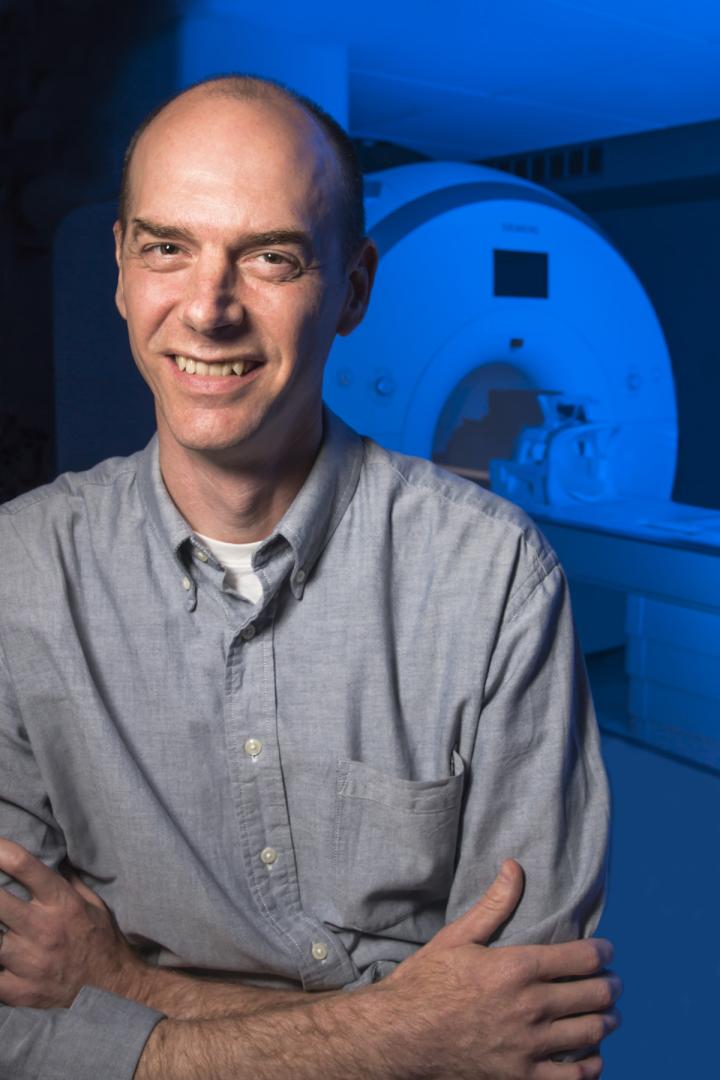
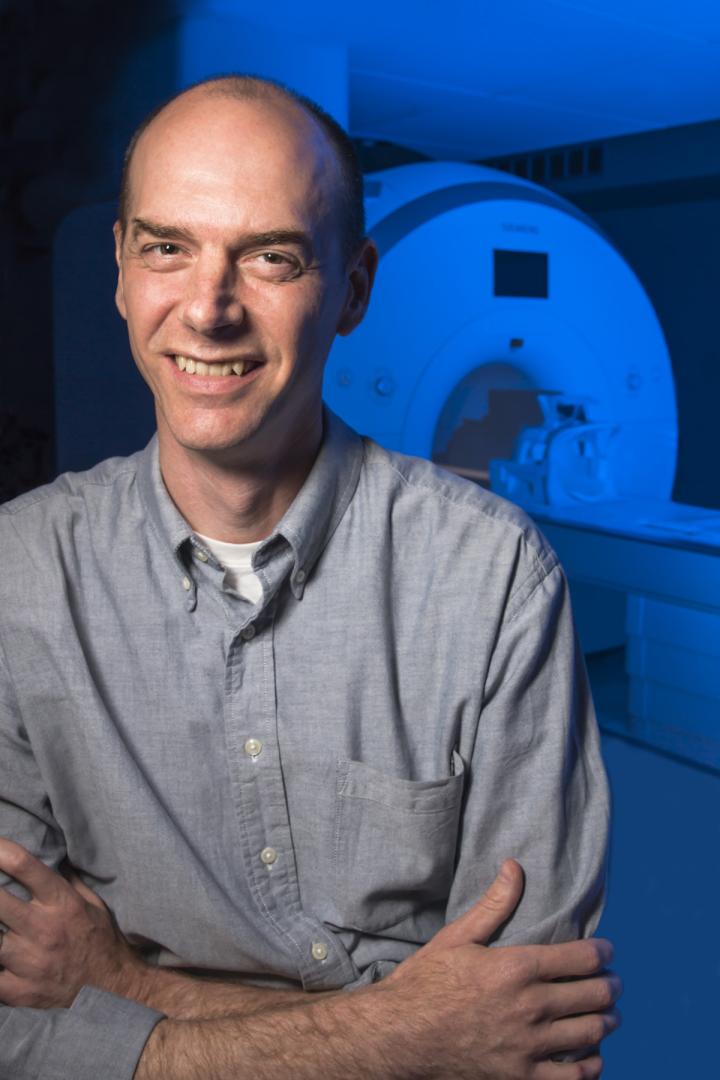
Credit: Kessler Foundation
Glenn Wylie, DPhil, and Jorge Serrador, PhD, have won an award from the Rutgers Brain Health Institute (BHI). The grant funds a collaborative study between the Department of Pharmacology, Physiology, and Neuroscience at Rutgers New Jersey Medical School and Kessler Foundation. Researchers will explore the influence of dietary nitrate supplementation–in the form of beetroot juice–on cerebral hemodynamics and cognitive function in veterans with GWI.
GWI affects approximately 25 to 32% of military personnel who were deployed to the first Gulf War. This multi-symptom condition is characterized by fatigue, headache, sleep disturbances, and cognitive impairment. Studies have established that adequate cerebral blood flow is critical for cognitive function. In veterans with GWI, cerebrovascular dysfunction due to reductions in cerebral vessel dilation has been shown. Recent discoveries indicate that beetroot juice supplementation may improve the functioning of the cerebrovascular system due to its high organic nitrate (NO3?) composition. This study will explore the influence of this dietary nitrate supplementation on cerebral hemodynamics and cognitive function in veterans with GWI.
"Beetroot juice is a particularly attractive dietary supplement as it is well tolerated with no known harmful side effects, it is inexpensive, readily available, and can potentially counteract cognitive decline with minimal risk," remarked Dr. Wylie, director of the Rocco Ortenzio Neuroimaging Center (RONIC) at Kessler Foundation and co-principal investigator of the study. "Using a range of magnetic resonance imaging and Doppler techniques, we will collect preliminary data that will serve as a launch pad for further investigation. Our goal is to explore this accessible, noninvasive intervention in veterans with Gulf War Illness as well as in other populations, such as individuals with mild cognitive impairment."
Dr. Serrador, associate professor at the Department of Pharmacology, Physiology & Neuroscience, Rutgers, The State University of New Jersey, is co-principal investigator of the study. "Given the reduced cerebral vessel dilation in veterans with GWI, it is plausible that the cognitive impairment experienced by veterans with GWI is due to diminished bioavailability of organic nitrate," noted Dr. Serrador. "Therefore, increasing cerebrovascular activity via dietary NO3? supplementation is a potentially important therapeutic tool for treating cognitive deficits in this cohort. If successful, results of this study will have important implications that go beyond improved cognitive functioning, including improvements in daily activity function and overall quality of life."
###
To learn more about this study, and other research opportunities at Kessler Foundation, contact [email protected]
About Rutgers Brain Health Institute
Brain Health Institute was established at Rutgers University to become an internationally recognized institute for basic, translational, and clinical research into the biological bases of human brain function and dysfunction. The institute is the home for the overall Rutgers neuroscience initiative, and is a growing interdisciplinary institute consisting of more than 250 principal investigators with neuroscience laboratories across various campuses of Rutgers University and Rutgers Biomedical and Health Sciences. Learn more by visiting https://brainhealthinstitute.rutgers.edu/ .
About Cognitive Rehabilitation Research at Kessler Foundation
Over the past two decades, Kessler Foundation's cognitive research has grown in depth and scope. Advances have expanded the knowledge of cognitive deficits that are major contributors to disability. The unique neuroimaging capabilities of the Rocco Ortenzio Neuroimaging Center provide objective evidence of brain activity patterns that has accelerated the pace of discovery. Under the leadership of director Nancy Chiaravalloti, PhD, developments in neurocognitive rehabilitation are improving care for persons with multiple sclerosis (MS) and traumatic brain injury (TBI) in the U.S. and abroad, and research is extending to new populations, including spinal cord injury and the elderly. Dr. Chiaravalloti also heads the Northern New Jersey TBI Model System (NNJTBIS), one of only 16 centers in the federally funded TBI Model System (TBIMS), a national network of care and research that begins with acute care and extends through the lifecycle. NNJTBIS is a collaborative project with Kessler Institute for Rehabilitation and five local trauma centers. Through NNJTBIS, scientists conduct research that benefits the TBI community, contribute research data to the national TBIMS database, translate findings into clinical care, and provide resources for individuals with TBI and their caregivers.
Kessler Foundation's cognitive rehabilitation research activities are funded by the National Institutes of Health, National Institute on Disability, Independent Living, and Rehabilitation Research (NIDILRR); Department of Veterans Affairs; Department of Defense, the National Multiple Sclerosis Society, Kessler Foundation, Rutgers Brain Health Institute, the Hearst Foundations, the New Jersey Commission for Brain Injury Research and the New Jersey Commission for Spinal Cord Injury Research.
About Kessler Foundation
Kessler Foundation, a major nonprofit organization in the field of disability, is a global leader in rehabilitation research that seeks to improve cognition, mobility and long-term outcomes, including employment, for people with neurological disabilities caused by diseases and injuries of the brain and spinal cord. Kessler Foundation leads the nation in funding innovative programs that expand opportunities for employment for people with disabilities. Learn more by visiting http://www.KesslerFoundation.org.
Stay Connected
Twitter | http://www.twitter.com/KesslerFdn
Facebook | http://www.facebook.com/KesslerFoundation
YouTube | http://www.youtube.com/user/KesslerFoundation
Instagram | http://www.instagram.com/kesslerfdn
iTunes & SoundCloud | http://www.soundcloud.com/kesslerfoundation
Media Contact
Laura Viglione
[email protected]
973-323-3675
@KesslerFdn
http://www.KesslerFoundation.org
Original Source
https://kesslerfoundation.org/content/new-jersey-researchers-investigate-effects-dietary-nitrate-cognitive-function-gulf-war