Credit: Salk Institute
LA JOLLA–(July 23, 2018) A new study from the Salk Institute has found that mice that have their microbiomes depleted with antibiotics have decreased levels of glucose in their blood and better insulin sensitivity. The research has implications for understanding the role of the microbiome in diabetes. It also could lead to better insight into the side effects seen in people who are being treated with high levels of antibiotics. The study appeared in the journal Nature Communications on July 20, 2018.
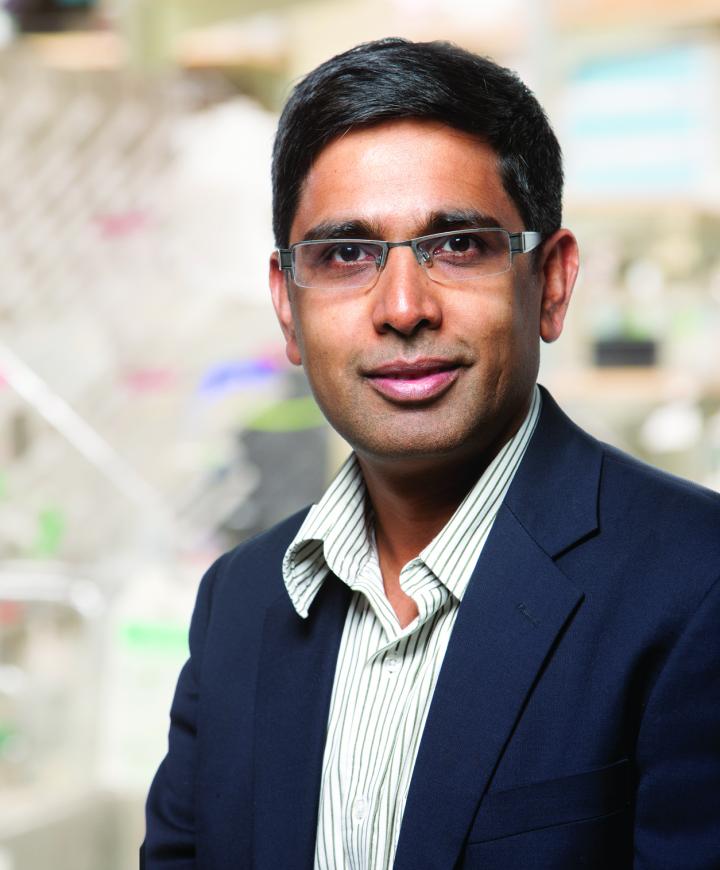
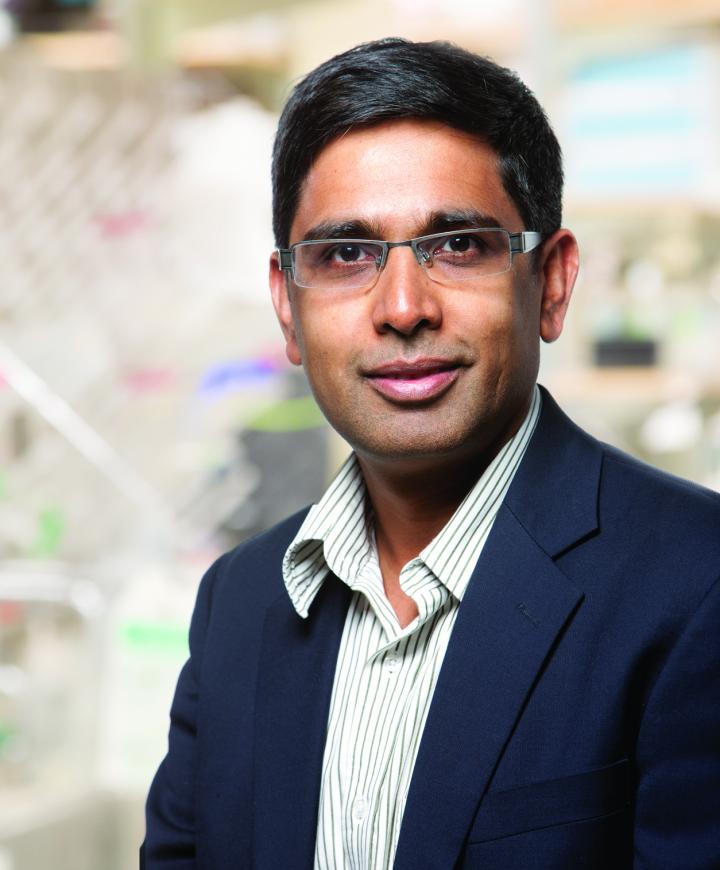
"This research is very exciting, because the situation we've created in these mice is very similar to what humans go through when they're treated with multiple antibiotics," says Satchidananda Panda, a professor in Salk's Regulatory Biology Laboratory and the paper's senior author. "Now that we know about these effects on glucose metabolism, we can look for components of the microbiome that influence them."
The microbiome is the collection of microorganisms that live in an animal's body, many of which are essential for health. Previous studies have shown that mice whose microbiomes are deficient in certain types of bacteria are more likely to develop diabetes. There is also some evidence that certain microbes may be protective against diabetes.
"Many scientists doing microbiome experiments with mice use antibiotics to clear out bacteria before their intervention," says Amir Zarrinpar, an assistant professor at UC San Diego and the paper's first author. "We show that such clearing out has a tremendous effect on the metabolism of the mouse. So some metabolic effects can be attributed to this depletion rather than the intervention."
The researchers didn't set out to look specifically at how antibiotic-induced depletion influences glucose levels. They wanted to look at the circadian (24 hour) rhythms of mouse metabolism when the microbiome is depleted. This type of research is often done with mice raised in germ-free environments.
"Because we didn't have access to these germ-free mice, we decided to instead deplete the microbiome using common antibiotics from the clinic," Panda says. The investigators used a cocktail of four different antibiotics in the mice to do so. "This weakness–not having the right kind of mice–became a strength that enabled us to make this unexpected discovery," Panda says.
After treating the mice, the investigators observed that there was a large decrease in the diversity of microorganisms present in their guts, as expected. When they looked at the metabolisms of the mice, they found that they were able to clear glucose from their blood much faster than expected.
Further studies showed that the colon tissue in the mice was acting as a kind of sink for the glucose–absorbing the extra sugar and thereby reducing its levels in the blood. This behavior fit the observation that the mice had colons that were greatly increased in size.
The researchers then discovered that these metabolic changes were actually related to changes in liver function and to the bile acids that were being released by the liver. The mice did not have changes in body fat composition or in what they ate–the two things that normally influence glucose metabolism and are known to play a role in type 2 diabetes in humans.
"We're not suggesting that type 2 diabetes be treated with antibiotics," Panda explains.
Zarrinpar adds, "It's just interesting to see that there is a way the microbiome can be manipulated to make the gut produce high levels of hormones that make the body more sensitive to insulin."
The next steps are to look at how the changes in the liver are occurring and which component of the microbiome is influencing the changes. "Perhaps we could find ways to support the growth of certain gut microbes and induce these changes in glucose regulation in humans," Panda concludes. "We are now one step closer to translating this research."
###
The paper's other authors were Amandine Chaix and Alan Saghatelian of Salk and Zhenjiang Z. Xu, Max W. Chang, Clarisse A. Marotz and Rob Knight of UC San Diego.
This work was funded by the National Institutes of Health, an American Association for the Study of Liver Diseases Liver Scholar Award, an American Heart Association Beginning Grant-in-Aid, an American Gastroenterological Association Microbiome Junior Investigator Research Award, an American Diabetes Association Mentor-Based Postdoctoral Fellowship, the Leona M. and Harry B. Helmsley Charitable Trust, and the Glenn Foundation.
About the Salk Institute for Biological Studies:
Every cure has a starting point. The Salk Institute embodies Jonas Salk's mission to dare to make dreams into reality. Its internationally renowned and award-winning scientists explore the very foundations of life, seeking new understandings in neuroscience, genetics, immunology, plant biology and more. The Institute is an independent nonprofit organization and architectural landmark: small by choice, intimate by nature and fearless in the face of any challenge. Be it cancer or Alzheimer's, aging or diabetes, Salk is where cures begin. Learn more at: salk.edu.
Media Contact
Salk Communications
[email protected]
858-453-4100
@salkinstitute
http://www.salk.edu
Original Source
https://www.salk.edu/news-release/depleting-microbiome-with-antibiotics-can-affect-glucose-metabolism/