• HOME
  • NEWS
  • EXPLORE
    • CAREER
      • Companies
      • Jobs
    • EVENTS
    • iGEM
      • News
      • Team
    • PHOTOS
    • VIDEO
    • WIKI
  • BLOG
  • COMMUNITY
    • FACEBOOK
    • INSTAGRAM
    • TWITTER
Monday, August 24, 2026
BIOENGINEER.ORG
No Result
View All Result
  • Login
  • HOME
  • NEWS
  • EXPLORE
    • CAREER
      • Companies
      • Jobs
        • Lecturer
        • PhD Studentship
        • Postdoc
        • Research Assistant
    • EVENTS
    • iGEM
      • News
      • Team
    • PHOTOS
    • VIDEO
    • WIKI
  • BLOG
  • COMMUNITY
    • FACEBOOK
    • INSTAGRAM
    • TWITTER
  • HOME
  • NEWS
  • EXPLORE
    • CAREER
      • Companies
      • Jobs
        • Lecturer
        • PhD Studentship
        • Postdoc
        • Research Assistant
    • EVENTS
    • iGEM
      • News
      • Team
    • PHOTOS
    • VIDEO
    • WIKI
  • BLOG
  • COMMUNITY
    • FACEBOOK
    • INSTAGRAM
    • TWITTER
No Result
View All Result
Bioengineer.org
No Result
View All Result
Home NEWS Science News Health

A peek into the interplay between sleep and wakefulness

Bioengineer by Bioengineer
July 20, 2018
in Health
Reading Time: 2 mins read
0
Share on FacebookShare on TwitterShare on LinkedinShare on RedditShare on Telegram
IMAGE

Credit: University of Tsukuba

Sleep is an autonomic process and is not always under our direct, voluntary control. Awake or asleep, we are basically under the regulation of two biological processes: sleep homeostasis, commonly known as 'sleep pressure', and the circadian rhythm, otherwise known as the 'body clock'. These two processes work in harmony to promote good consolidated sleep at night.

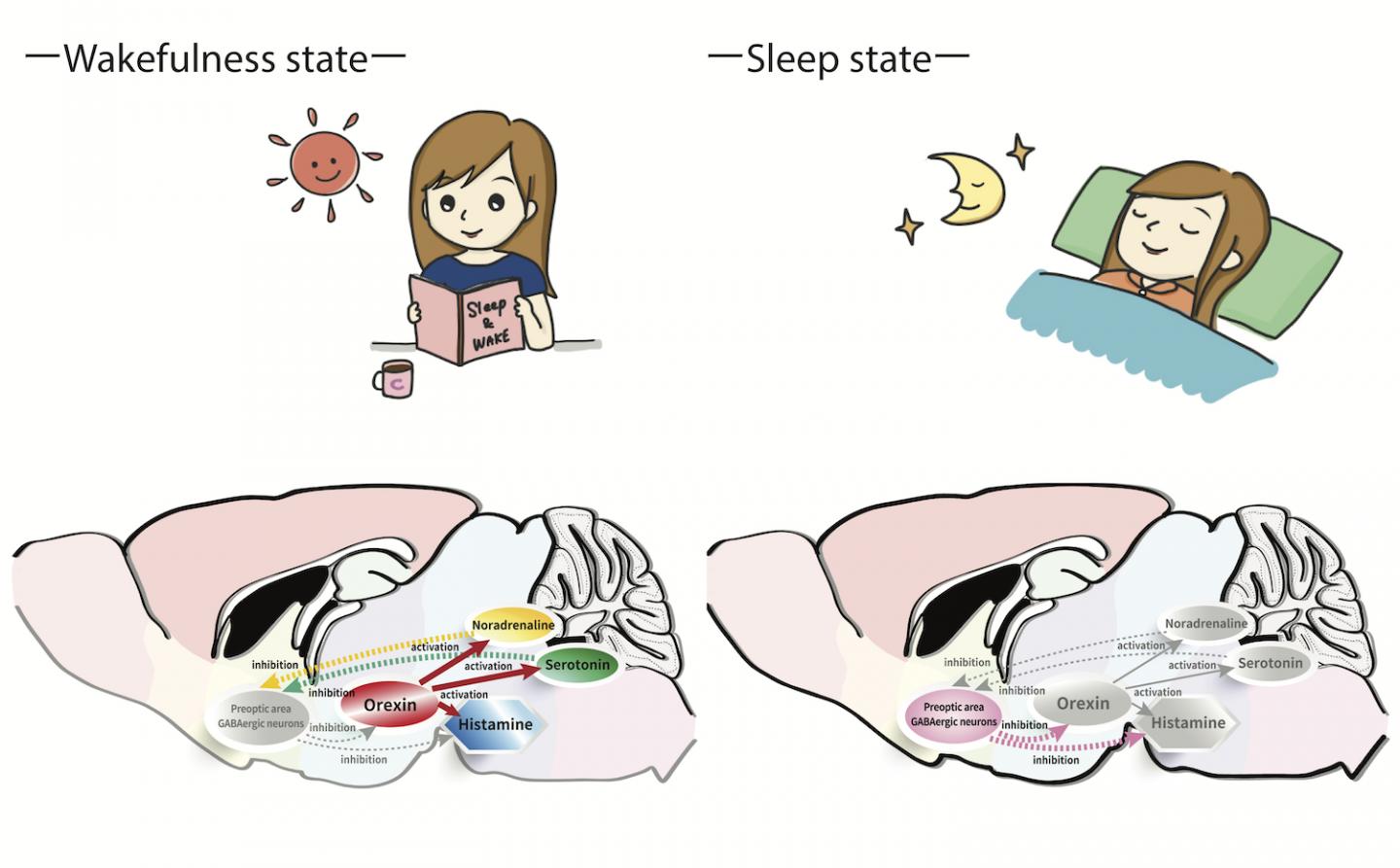
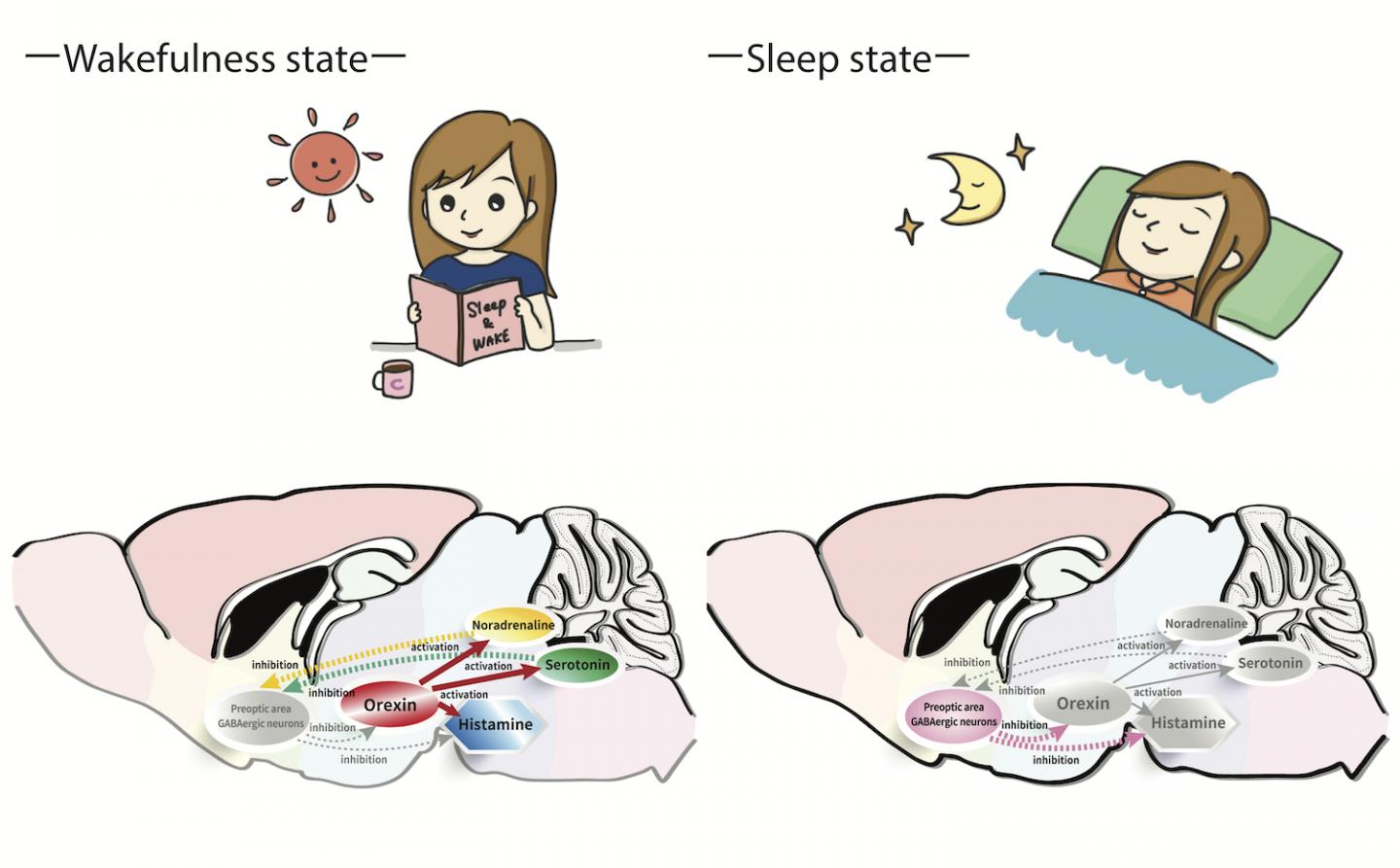
The ventrolateral preoptic nucleus (VLPO) in the brain plays a critical role in falling–and staying–asleep, while the lateral posterior part of the hypothalamus contains neurons (brain cells) that play a role in the maintenance of staying awake, including orexin neurons in the lateral hypothalamic area (LHA) and histaminergic neurons in the tuberomammillary nucleus (TMN). To date, however, the precise connectivities among these cell populations remain unclear.

"In our study, we aimed to identify the important players implicated in arousal regulation," explains Yuki Saito, who co-led a University of Tsukuba-centered study recently reported in The Journal of Neuroscience.

"To achieve the study objective, we focused on populations of hypothalamic neurons, histidine decarboxylase-positive (HDC+) histaminergic neurons (HDC neurons) in the TMN and orexin neurons in the LHA," adds co-lead author Takashi Maejima.

The team used recombinant rabies-virus-mediated trans-synaptic retrograde tracing in the mouse brain to analyze the architecture and function of hypothalamic circuits that link neuronal populations implicated in sleep/wakefulness regulation. They found that these arousal-related neurons are heavily innervated by GABAergic neurons in the preoptic area, including the VLPO.

The team further characterized GABAergic neurons in the VLPO (GABAVLPO neurons) that make direct synaptic contact with hypothalamic arousal-related neurons. These two groups of neurons were overlapped each other, and both potently inhibited by the hormones noradrenaline and serotonin, showing typical electrophysiological characteristics of sleep-promoting neurons in the VLPO.

"Taken together, our findings provide direct evidence of monosynaptic connectivity between GABAVLPO neurons and hypothalamic arousal neurons and identifies the effects of monoamines on these neuronal pathways," says study corresponding author Takeshi Sakurai. "This information is important for us to gain a deeper understanding of mechanisms that control sleep and wakefulness, which may lead to the development of reliable recommendations for a restful sleep."

###

Media Contact

Masataka Watanabe
[email protected]
81-298-532-039

Related Journal Article

http://dx.doi.org/10.1523/JNEUROSCI.2835-17.2018

Share12Tweet8Share2ShareShareShare2

Related Posts

New autism research tool reveals how nature and nurture shape children’s risk

August 24, 2026

Experimental sheep infection reveals Crimean-Congo hemorrhagic fever virus spread and diagnostic clues

August 24, 2026

Randomized Trial Tests Stochastic Vibration and Early Weight Gain in Opioid-Exposed Newborns

August 24, 2026

China Study Ranks Indoor VOC Sources by Their Attributable Disease Burden

August 24, 2026
Please login to join discussion

POPULAR NEWS

  • New autism research tool reveals how nature and nurture shape children’s risk

    29 shares
    Share 12 Tweet 7
  • How Plant-Specific and Conserved PAF1 Complex Mechanisms Respond to Replication Stress

    29 shares
    Share 12 Tweet 7
  • Experimental sheep infection reveals Crimean-Congo hemorrhagic fever virus spread and diagnostic clues

    29 shares
    Share 12 Tweet 7
  • Randomized Trial Tests Stochastic Vibration and Early Weight Gain in Opioid-Exposed Newborns

    29 shares
    Share 12 Tweet 7

About

We bring you the latest biotechnology news from best research centers and universities around the world. Check our website.

Follow us

Recent News

New autism research tool reveals how nature and nurture shape children’s risk

How Plant-Specific and Conserved PAF1 Complex Mechanisms Respond to Replication Stress

Experimental sheep infection reveals Crimean-Congo hemorrhagic fever virus spread and diagnostic clues

Subscribe to Blog via Email

Enter your email address to subscribe to this blog and receive notifications of new posts by email.

Join 85 other subscribers
  • Contact Us

Bioengineer.org © Copyright 2023 All Rights Reserved.

Welcome Back!

Login to your account below

Forgotten Password?

Retrieve your password

Please enter your username or email address to reset your password.

Log In
No Result
View All Result
  • Homepages
    • Home Page 1
    • Home Page 2
  • News
  • National
  • Business
  • Health
  • Lifestyle
  • Science

Bioengineer.org © Copyright 2023 All Rights Reserved.