Credit: University of Ottawa Heart Institute
Traditionally, frailty is thought to be a syndrome of the elderly – one which comes as a natural and inevitable side-effect of aging, gradually transforming strong, healthy bodies into weaker, more delicate frames over time. For clinicians, frailty is a concept which has long posed formidable challenges in perioperative medicine. For patients, frailty turns even the most routine operative procedures into complicated life or death undertakings.
It is well known to science that chronological frailty, that is the degradation of the human body associated with a person's actual age, is commonly linked to increased mortality, surgical site infections, length of hospital stay, increased healthcare expenditure and readmission rates in patients presenting for a variety of major non-cardiac surgeries. However, similar literature with regard to frailty in patients undergoing heart surgery remains scarce despite its rise in prevalence.
A new study conducted by researchers at the University of Ottawa Heart Institute and published in the Journal of the American Heart Association examines the prevalence of frailty and its association with long-term mortality in patients undergoing cardiac surgery. More specifically, the study, titled Association of Frailty and Long-Term Survival in Patients Undergoing Coronary Artery Bypass Grafting (CABG) followed patients over the age of 40 who underwent primary isolated CABG, a common surgical procedure in which one or more blocked coronary arteries are bypassed by a blood vessel graft to restore normal blood flow to the heart. Researchers examined administrative healthcare data from the Institute for Clinical Evaluative Science (ICES) and the clinical registry data from CorHealth Ontario to support their findings.
A total of 40,083 consecutive patients in Ontario who underwent isolated CABG between 2008 and 2015 were included in the study. It found the prevalence of frailty was markedly higher in patients undergoing isolated CABG, at 22%, compared to those undergoing a planned non-cardiac surgery, at just 3%, which suggests that patients undergoing cardiac surgery are a more complex population who are at higher risk of complications. Frailty was also associated with poor early and long-term survival rates – especially in patients between the ages of 40 and 74. The adjusted long-term frailty-related mortality risk was inversely proportional to age, meaning after taking other comorbidities into consideration, frailty had a higher impact on the survival of younger patients.
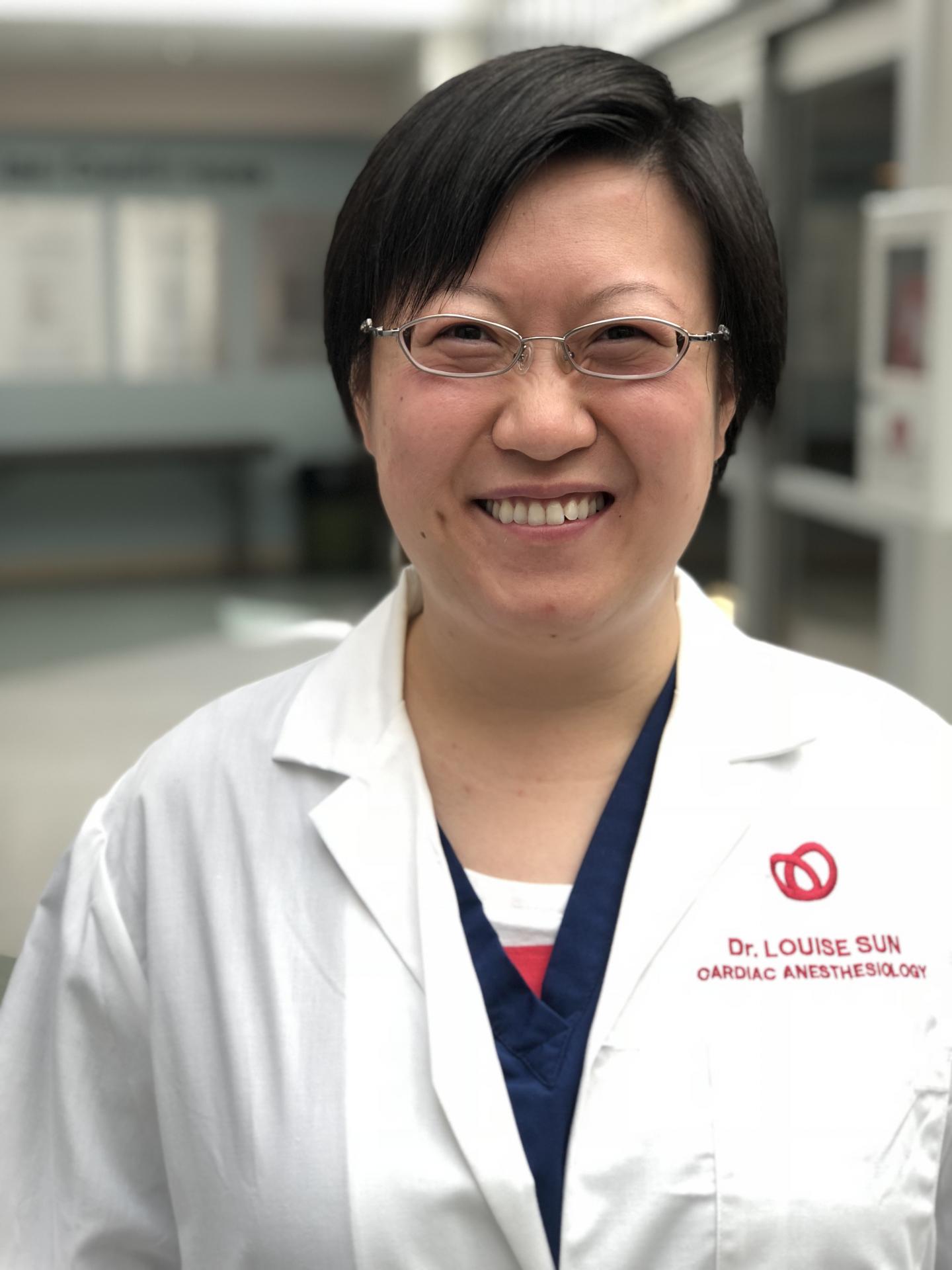
"To our knowledge, this is the largest cohort study to describe the long-term outcomes of frailty in patients undergoing CABG surgery," writes the study's principal investigator, Dr. Louise Sun, a clinician investigator and staff anesthesiologist in the Division of Cardiac Anesthesiology at the University of Ottawa Heart Institute and an adjunct ICES scientist. "Interestingly, however, our study found the presence of frailty-defining diagnoses was a stronger predictor of mortality in younger patients."
According to the study, frailty contributed to greater differences in the survival of patients between 40 and 74 years of age and smaller differences in the long-term survival of those 85 years or older, writes Dr. Sun. "What the science is telling us is that frailty poses a higher risk of mortality in younger patients and has a lower impact on older ones."
Researchers used the Johns Hopkins Adjusted Clinical Groups (ACG) frailty-defining diagnoses indicator to define frailty for the purpose of this study. This comprehensive tool provides a multi-dimensional snapshot of a patient's physical status. It assesses frailty based on 10 clusters of frailty-defining diagnoses: malnutrition, dementia, impaired vision, decubitus ulcer, incontinence of urine, loss of weight, poverty, barriers to access to care, difficulty in walking, and falls.
Dr. Sun believes these recent findings highlight the importance of the concept of chronological aging versus physiological aging (a relative measure of a person's age based on a number of physiological factors) in the prognosis of surgical patients. She says her team's findings indicate age alone does not predict outcomes and that overall physiological health matters more.
Dr. Sun and team say there is still much to learn, and that more research will be vital for improving patient outcomes with regard to frailty in years to come.
"Frailty should be incorporated into preoperative risk stratification models to assist with optimal selection of operative candidates. Effective preoperative optimization programs such as cardiac prehabilitation, nutritional augmentation and psychosocial support may improve outcomes especially in younger patients," she says.
Dr. Sun and her team wish to acknowledge and honour the memory of Dr. Jack Tu who passed away during the preparation of this manuscript for publication.
###
Media Contact
Leigh B. Morris
[email protected]
613-696-7000 x19051
@HeartInstitute
http://www.ottawaheart.ca/index-en.htm
Original Source
https://www.ottawaheart.ca/the-beat/2018/07/20/frailty-may-be-more-deadly-younger-heart-patients-study-finds http://dx.doi.org/10.1161/JAHA.118.009882