• HOME
  • NEWS
  • EXPLORE
    • CAREER
      • Companies
      • Jobs
    • EVENTS
    • iGEM
      • News
      • Team
    • PHOTOS
    • VIDEO
    • WIKI
  • BLOG
  • COMMUNITY
    • FACEBOOK
    • INSTAGRAM
    • TWITTER
Saturday, February 7, 2026
BIOENGINEER.ORG
No Result
View All Result
  • Login
  • HOME
  • NEWS
  • EXPLORE
    • CAREER
      • Companies
      • Jobs
        • Lecturer
        • PhD Studentship
        • Postdoc
        • Research Assistant
    • EVENTS
    • iGEM
      • News
      • Team
    • PHOTOS
    • VIDEO
    • WIKI
  • BLOG
  • COMMUNITY
    • FACEBOOK
    • INSTAGRAM
    • TWITTER
  • HOME
  • NEWS
  • EXPLORE
    • CAREER
      • Companies
      • Jobs
        • Lecturer
        • PhD Studentship
        • Postdoc
        • Research Assistant
    • EVENTS
    • iGEM
      • News
      • Team
    • PHOTOS
    • VIDEO
    • WIKI
  • BLOG
  • COMMUNITY
    • FACEBOOK
    • INSTAGRAM
    • TWITTER
No Result
View All Result
Bioengineer.org
No Result
View All Result
Home NEWS Science News Health

UM professor studies complexities of biodiversity, disease transmission

Bioengineer by Bioengineer
July 18, 2018
in Health
Reading Time: 2 mins read
0
Share on FacebookShare on TwitterShare on LinkedinShare on RedditShare on Telegram
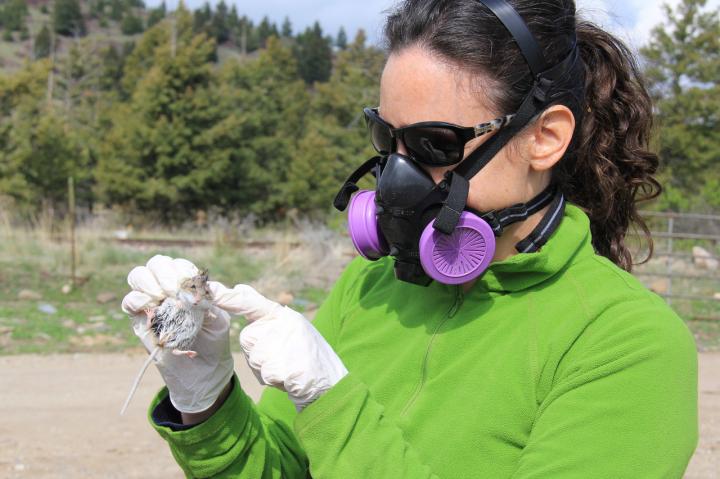
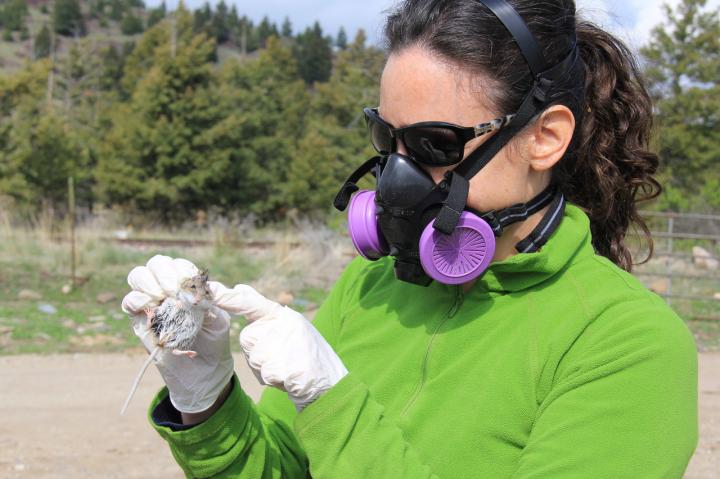
IMAGE

Credit: Angela Luis

MISSOULA – Biodiversity is disappearing at an alarming rate as infectious diseases increasingly spill over from wildlife to humans. Disease ecologists fervently debate whether biodiversity loss leads to an increased disease risk. Now, a University of Montana researcher has published a new study with some answers.

UM Assistant Professor Angela Luis shows for the first time that species diversity can have both positive and negative influences on disease transmission in the same host-pathogen system at the same time in her article published in the Proceedings of the National Academy of Sciences.

For a number of species, a more diverse community decreases infection risk, termed "the dilution effect," because biodiversity dilutes infection. If this is a widespread phenomenon, then preserving biodiversity is a win-win for both animal conservation and human health.

However, a debate rages about how general this phenomenon is since, for some systems, a more diverse community increases disease risk, termed the "amplification" effect. For other systems, biodiversity has no consistent effect, leaving its relationship to disease unidentified.

In the latest issue of PNAS, Luis, a disease ecologist, shows that the Sin Nombre hantavirus among rodents displays a significant dilution effect. Areas with a more diverse rodent community have lower hantavirus prevalence among deer mice, which are the main reservoir for the disease. When the virus spills over into humans, it causes hantavirus pulmonary syndrome, which has infected more than 700 people and killed about 1 in 3 since its discovery in 1993.

Luis' study shows deer mouse density causes the dilution effect. In more diverse communities – with more rodent species present in the same area – there tend to be fewer mice due to competition, and disease spread slows down.

However, for a given mouse density, as rodent species diversity increases, infection spreads faster in a "component amplification effect" as mice become stressed and their immunity decreases. Therefore both dilution and amplification occur in the same system at the same time.

It's not as simple as more biodiversity means less disease.

"It's been wild to see the debate among disease ecologists in the literature and at conferences. It has been heated at times," Luis said. "Although this study doesn't resolve the debate, it provides an interesting perspective – the inconsistent findings of whether diversity increases or decreases disease risk may be resolved by delving into the different mechanisms determining disease transmission."

###

The study is published online at http://www.pnas.org/content/early/2018/07/10/1807106115.

Media Contact

Angela Luis
[email protected]
406-243-6606

http://www.umt.edu

Original Source

http://news.umt.edu/2018/07/071818biod.php http://dx.doi.org/10.1073/pnas.1807106115

Share12Tweet8Share2ShareShareShare2

Related Posts

Evaluating Pediatric Emergency Care Quality in Ethiopia

February 7, 2026

TPMT Expression Predictions Linked to Azathioprine Side Effects

February 7, 2026

Improving Dementia Care with Enhanced Activity Kits

February 7, 2026

Decoding Prostate Cancer Origins via snFLARE-seq, mxFRIZNGRND

February 7, 2026
Please login to join discussion

POPULAR NEWS

  • Robotic Ureteral Reconstruction: A Novel Approach

    Robotic Ureteral Reconstruction: A Novel Approach

    82 shares
    Share 33 Tweet 21
  • Digital Privacy: Health Data Control in Incarceration

    63 shares
    Share 25 Tweet 16
  • Study Reveals Lipid Accumulation in ME/CFS Cells

    57 shares
    Share 23 Tweet 14
  • Breakthrough in RNA Research Accelerates Medical Innovations Timeline

    53 shares
    Share 21 Tweet 13

About

We bring you the latest biotechnology news from best research centers and universities around the world. Check our website.

Follow us

Recent News

Evaluating Pediatric Emergency Care Quality in Ethiopia

TPMT Expression Predictions Linked to Azathioprine Side Effects

Improving Dementia Care with Enhanced Activity Kits

Subscribe to Blog via Email

Success! An email was just sent to confirm your subscription. Please find the email now and click 'Confirm' to start subscribing.

Join 73 other subscribers
  • Contact Us

Bioengineer.org © Copyright 2023 All Rights Reserved.

Welcome Back!

Login to your account below

Forgotten Password?

Retrieve your password

Please enter your username or email address to reset your password.

Log In
No Result
View All Result
  • Homepages
    • Home Page 1
    • Home Page 2
  • News
  • National
  • Business
  • Health
  • Lifestyle
  • Science

Bioengineer.org © Copyright 2023 All Rights Reserved.