Credit: FEFU press office
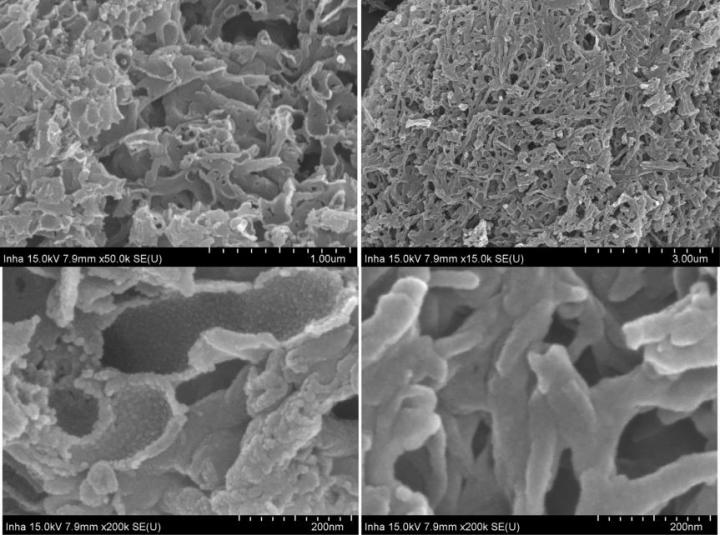
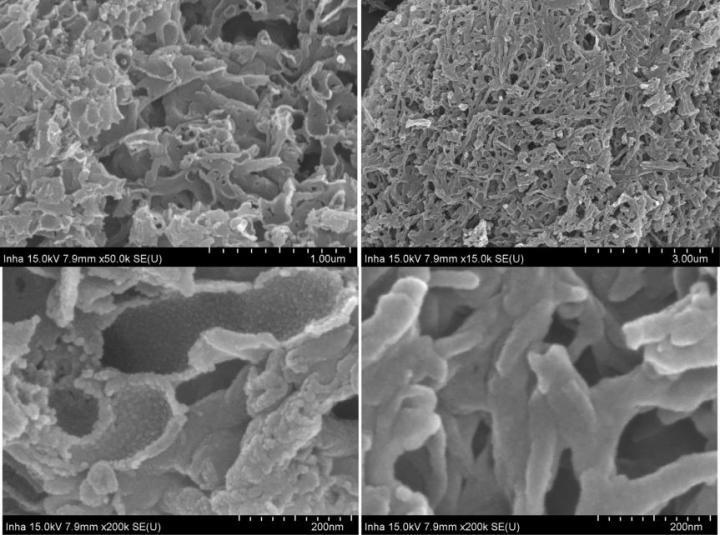
Nanoparticles with a wide range of applying, including medicine, damage cells of microalgae Heterosigma akashivo badly. This algae species is widely spread in the Russian Far East marine area. The acute toxic effect exhibited at concentrations of 100 mg/l of carbon nanotubes (CNTs) and silicon nanotubes (SiNTs) in the sea- or fresh water.
The international team of toxicologists led by scientists of Far Eastern Federal University (FEFU) has researched the environmental adverse effects of carbon nanotubes (CNTs), silicon nanotubes (SiNTs) and carbon nanofibers (CNFs) contained in the plastic materials and composites. Research outcome is published in the Environmental Research magazine.
The reason why researchers paid attention to the problem of the toxic effects of nanoparticles is the rapid growth of their applying in the different fields of the world manufacturing. It's estimated that to 2020 the world market of CNTs will reach 5,64 billion USD, i.e. it will more than doubled compared to 2000 when it was 2, 26 billion USD.
During the plastic and composites fabrication CNTs and SiNTs added in their structure to improve physical properties of the final materials. In the modern medicine nanotubes of different nature are proposed as the drugs adsorbents and drug delivery systems.
At the present time, all kinds of synthesized carbon-based nanoparticles are well described concerning their physical parameters. Nevertheless, scientists declare lack of toxicity data necessary for risk appraisal and modeling.
"From 60 to 80 percent of the world plastic materials and composites and about 10 percent of their annual production end up into the World Ocean where degradation of such materials takes several hundred years. As a rule, all these materials contain nanoparticles added for their physical properties improvement," comments on one of the article's authors Kirill Golokhavast, M.D., Ph.D., FEFU provost for science. "Marine microalgae toxicology research is of a big importance because they are widespread and constitute the basis of the food chain in the ocean."
For the nanotoxicology research purposes, scientists chose the unicellular marine microalgae Heterosigma akashiwo isolated from Peter the Great Gulf of Japan Sea. This choice was made due to the fact that this type of algae is typical for the Russian Far East and its research could be relevant for all microalgae of the local marine basin. The other important reason is that H. akashiwo has a thin cell wall that could render it rather susceptible for the chemical pollution.
The experiment performed in accordance to the guidance OECD No.201 (OECD, 2006) with minor modifications. For the criteria of nanotubes toxic effect scientist took the statistically significant reduction of the number of algal cells in experimental sample compared to control one. The toxicity tests were performed in 24-well cell culture plates.
Carbon nanotubes and nanofibers used in this research were synthesized in the Boreskov Institute of Catalysis (Novosibirsk, Russia) and their toxic effects were previously studied on rats.
Silicon nanotubes SiNTs and SiNTs INC-2 were kindly provided by the Department of Chemistry, Inha University Republic of Korea.
The research methodology is based on Raman spectroscopy to characterize samples of CNTs and confocal microscopy by optical microscope Axio Imager A2 (Carl Zeiss, Germany) with a magnification of 200 × and 600 × to image microalgae.
Algal cell analysis and counting of the propidium iodide stained cells were conducted by CytoFLEX flow cytometer (Beckman Coulter, USA) with the excitation light of 405 nm, 488 nm, and 638 nm.
Conducting the research, scientists concluded that CNTs and SiNTs toxic effect emerged when nanotubes concentration is 100 mg/l of water. The acute toxic effect revealed on the third day of the experiment and chronic intoxication took place on the seventh day. Herewith, SiNTs is much more toxic than CNTs due to the less size and hydrophilic properties of SiNTs nanotubes.
Scientists assumed that the main reason that caused the algal cells' death during the experiment is mechanical damage to cells integrity by nanoparticles. Compared to nanotubes carbon nanofibers didn't inhibit algal cells growth and didn't reveal toxicity at concentration 100 mg/l of water but influenced on the cells' shape distortion. The reason of these deformations, according to scientists, was Nickel (Ni) impurities contained in CNFs.
"The volume of nanomaterials presence in our life has increased enormously from early laboratory samples delivered in microgram quantities. Up to date, it's multi-ton production of plastic and composites contained nanoparticulate matter such as carbon and silicon nanotubes. The further the more important to know what environment burden may be caused by this particles. We already know that nanotube diameter is crucial to their toxicity. The thinner the significantly more toxic they are. Silicon nanotubes is more toxic than carbon, but carbon-based compounds could cause a series of neurodegenerative disorders, mainly due to oxidative stress accumulation and a parallel reduction in antioxidant protection mechanisms", comments on Aristidis Tsatsakis, article co-main author, D.Sc, PhD, the Director of the Department of Toxicology and Forensic Sciences of the Medical School at the University of Crete and the University Hospital of Heraklion.
###
Work was supported by Grant of the President of the Russian
Federation (MD-7737.2016.5); AK acknowledges support by Estonian
Research Agency's grant IUT 23-5
https://doi.org/10.1016/j.envres.2018.06.005
Far Eastern Federal University, Vladivostok, Russian Federation.
Boreskov Institute of Catalysis, Novosibirsk, Russian Federation.
A.V. Zhirmunsky Institute of Marine Biology of the Far Eastern Branch of the Russian Academy of Sciences, Vladivostok, Russia.
Inha University, Incheon, Republic of Korea.
National Institute of Chemical Physics and Biophysics, Tallinn, Estonia.
Estonian Academy of Sciences, Kohtu 6, 10130 Tallinn, Estonia.
Laboratory of Toxicology, Medical School, University of Crete, Heraklion, Greece.
Pacific Geographical Institute FEB RAS, Vladivostok, Russian Federation.
for press: [email protected]
Media Contact
Alexander Zverev
[email protected]
http://https://www.dvfu.ru/en/
Related Journal Article
http://dx.doi.org/10.1016/j.envres.2018.06.005