Credit: University of Miami Health System
In 2016, funded by a $16 million grant from Scythian, the multidisciplinary Miller School team embarked on a five-year study to examine the effects of combining CBD (a cannabinoid derivative of hemp) with an NMDA antagonist (an anesthetic used in animals and humans) for the treatment of traumatic brain injury and concussion. The researchers believed the combination could reduce post-injury brain cell inflammation, headache, pain and other symptoms associated with concussion.
The findings of a pre-clinical pilot study were recently released, and they show that the combination therapy improved the cognitive functions of animals, compared with those treated with a single vehicle. In addition, there were no adverse effects from either the combination therapy or the individual components.
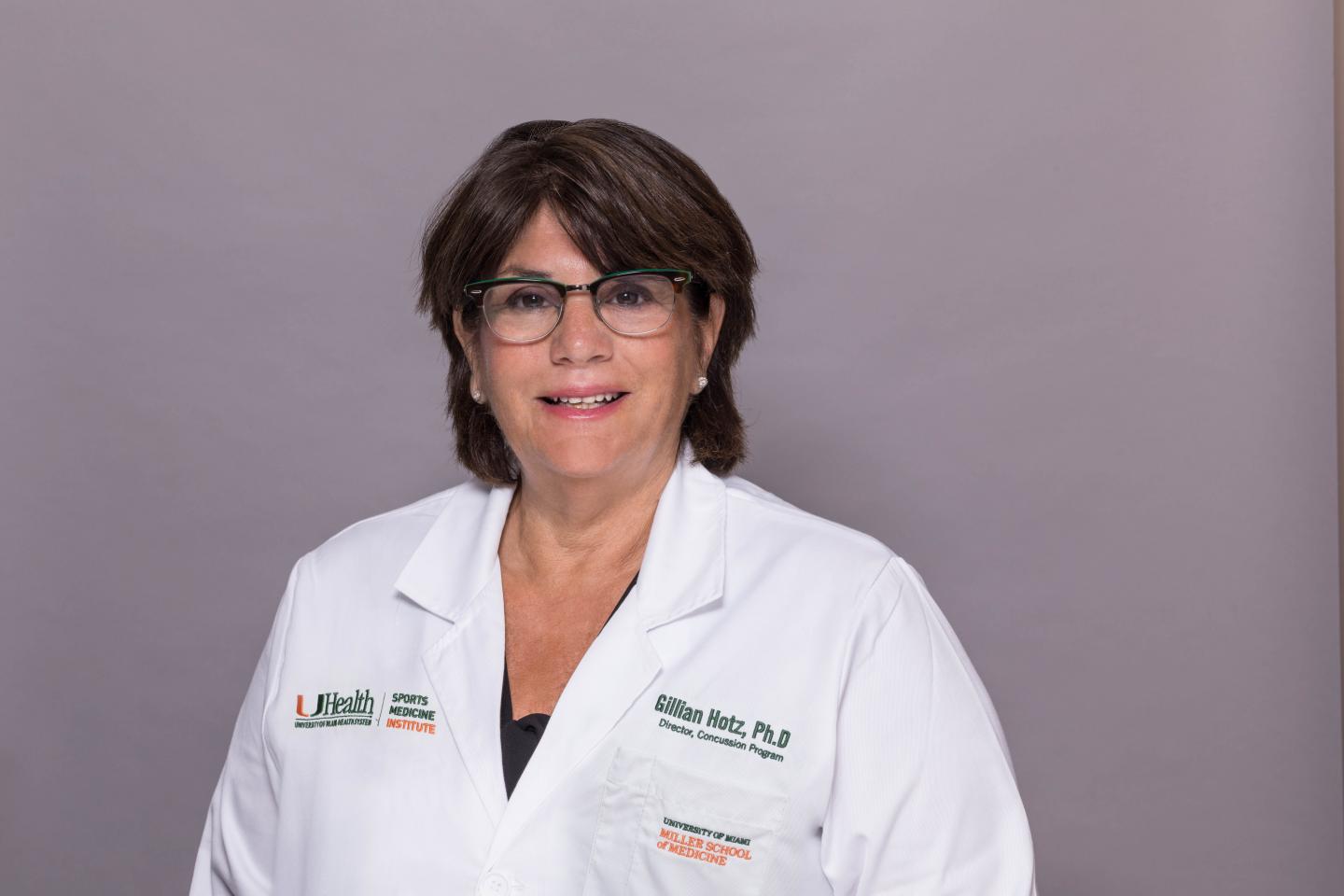
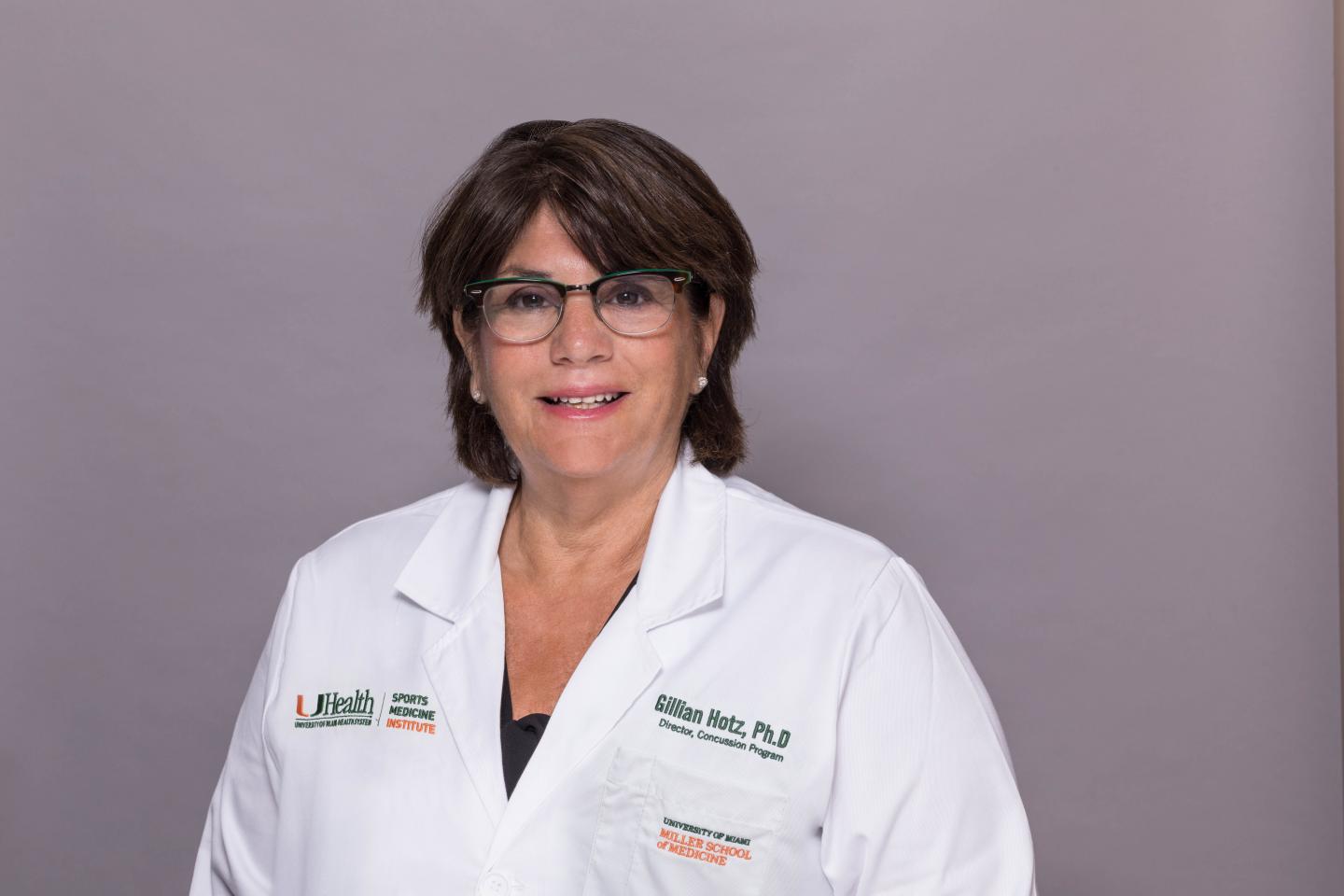
"There needs to be more systematic research in this field in order to study the neuroprotective properties of CBD, and to improve treatment for those sustaining mild-to-moderate TBI (traumatic brain injury) and concussion," said Gillian A. Hotz, Ph.D., professor of neurological surgery, and director of the KiDZ Neuroscience Center at The Miami Project and the University of Miami Sports Medicine Institute concussion program.
Hotz, the study's principal investigator, is joined on the team by Bonnie Levin, Ph.D., professor of neurology and director of the Division of Neuropsychology; Helen M. Bramlett, Ph.D., professor of neurological surgery; Michael Hoffer, M.D., professor and director of the Vestibular and Balance Program in the Department of Otolaryngology; and W. Dalton Dietrich, Ph.D., scientific director of The Miami Project and professor of neurological surgery, neurology, cell biology and biomedical engineering.
"These findings, which represent the initial results from our TBI study using this novel combination therapy, merit further investigation in other pre-clinical models of brain injury, including concussion," said Bramlett. "More work needs to be done, including evaluating the use of these compounds in other injury models and in preparing for a clinical trial of these compounds if their use is supported by the ongoing basic research."
Rob Reid, CEO of Toronto-based Scythian Biosciences, said partnering with the Miller School and funding the research was an easy decision because of UM's reputation as the nation's leading neuroscience center, with expertise in TBI and concussion research.
"We are encouraged by the initial findings of this study, which provide persuasive and encouraging evidence that warrants the continuation of this research program," said Reid. "We are just beginning to tap the potential healing power of medical cannabis and exploring its growing number of benefits."
Phase two will involve a small human pilot study, likely administering the compounds in pill form to a control group and two groups of TBI patients, acute and chronic. Researchers will use nine outcome fields — cognitive, behavioral, psychosocial, sleep, pain, sensorimotor, cardiovascular, inflammatory biomarkers, and neuroimaging studies — to evaluate the drug's efficacy. Once the study is completed, the data will be analyzed and any safety concerns will be addressed.
If the treatment is deemed safe and effective, the third phase of the research will be to begin a full-scale clinical trial over the next three years. With FDA oversight, data will reveal whether the compound is an effective therapeutic treatment for those suffering from different severities of TBI and concussion.
"The implications for the study are extraordinary," said Hoffer. "Having such a large, multidisciplinary team of neuroscience experts attaching themselves to research that could change the outcome of TBI and concussion care is the opportunity researchers have been looking for to curb the growing trend of concussion."
Traumatic brain injury is a major cause of death and disability in the United States, contributing to about 30 percent of all injury deaths and impacting about two million children and teenagers annually, according to the Centers for Disease Control and Prevention. About 345,000 cases have been diagnosed among U.S. armed forces members since 2000, and athletes including professional and amateur football and hockey players continue to be plagued at alarming rates. Most of these individuals face short-term effects such as headaches and dizziness, while others are at increased risk for longer-term chronic medical problems, including disorders of attention, memory, anxiety, depression and dementia.
"Throughout the course of my career, my team and I have developed a national model," Hotz said. "Our concussion protocol includes education and training for medical students, residents, fellows and certified athletic trainers in an effort to provide a solution to the growing concern of managing concussions in youth, high school, collegiate and professional sports athletes.
"One thing has eluded us — a clinically proven medication to treat concussion. Whether or not this study leads to a pill that could treat concussion, this type of research will pave the way for UM and other researchers to better manage concussion. It's a privilege to help lead this journey."
###
Media Contact
Joanna Palmer
[email protected]
305-335-1072
http://www.med.miami.edu/
Original Source
https://physician-news.umiamihealth.org/concussion-pill-shows-promise-in-pre-clinical-pilot-study/