• HOME
  • NEWS
  • EXPLORE
    • CAREER
      • Companies
      • Jobs
    • EVENTS
    • iGEM
      • News
      • Team
    • PHOTOS
    • VIDEO
    • WIKI
  • BLOG
  • COMMUNITY
    • FACEBOOK
    • INSTAGRAM
    • TWITTER
Tuesday, May 19, 2026
BIOENGINEER.ORG
No Result
View All Result
  • Login
  • HOME
  • NEWS
  • EXPLORE
    • CAREER
      • Companies
      • Jobs
        • Lecturer
        • PhD Studentship
        • Postdoc
        • Research Assistant
    • EVENTS
    • iGEM
      • News
      • Team
    • PHOTOS
    • VIDEO
    • WIKI
  • BLOG
  • COMMUNITY
    • FACEBOOK
    • INSTAGRAM
    • TWITTER
  • HOME
  • NEWS
  • EXPLORE
    • CAREER
      • Companies
      • Jobs
        • Lecturer
        • PhD Studentship
        • Postdoc
        • Research Assistant
    • EVENTS
    • iGEM
      • News
      • Team
    • PHOTOS
    • VIDEO
    • WIKI
  • BLOG
  • COMMUNITY
    • FACEBOOK
    • INSTAGRAM
    • TWITTER
No Result
View All Result
Bioengineer.org
No Result
View All Result
Home NEWS Science News Biology

One step closer to finding a cure for brain diseases

Bioengineer by Bioengineer
July 13, 2018
in Biology
Reading Time: 2 mins read
0
Share on FacebookShare on TwitterShare on LinkedinShare on RedditShare on Telegram
IMAGE

Credit: Daegu Gyeongbuk Institute of Science and Technology (DGIST)

A research team led by Professor Jaewon Ko and Ji Won Um from Department of Brain and Cognitive Sciences identified a new principle of formation of brain synapses through synaptic binding protein complexes.

Many nerve cells that make up the brain control the function of the brain through synapses*. Although recent studies show that synaptic binding proteins play a certain role in the formation of synapses, detailed factors or processes for collectively controlling the synapses remain unknown.

The research team has been focusing on discovering related binding proteins and finding detailed mechanisms to identify the principles of formation of excitatory synapses among synapses.

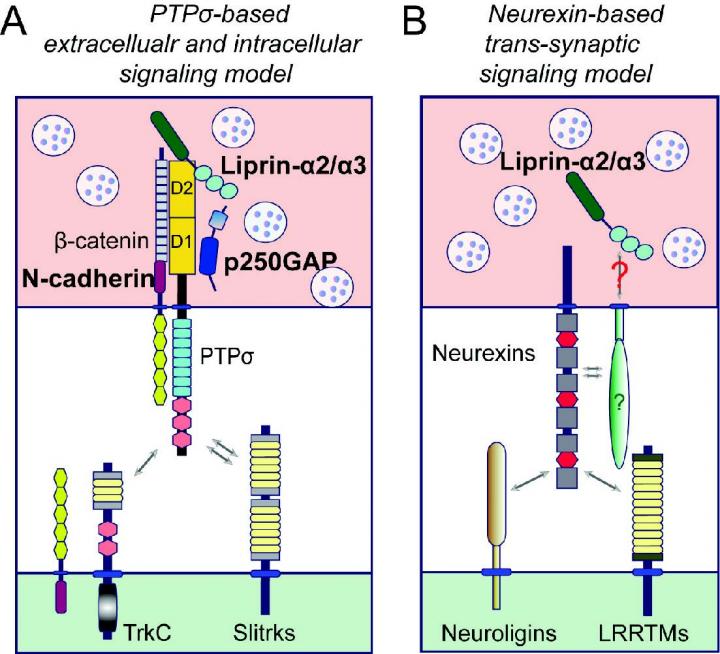
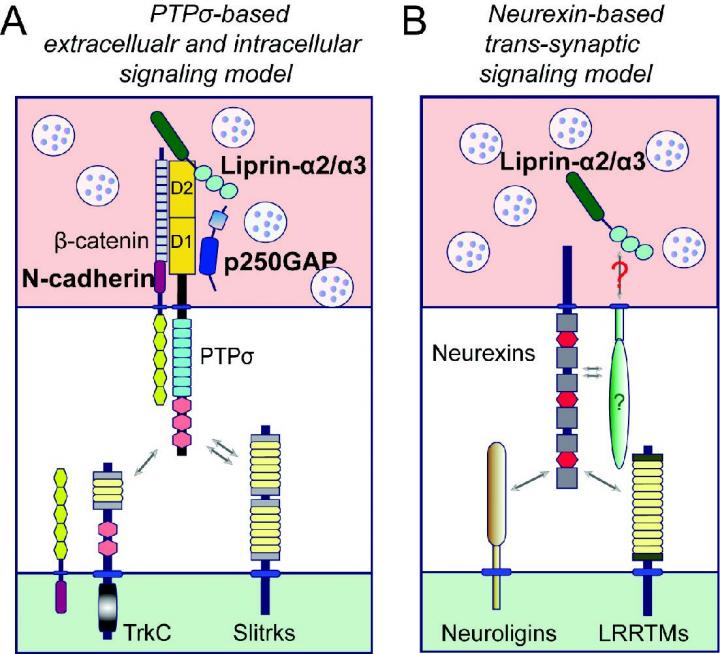
In this study, the research team found that the interaction between the PTPσ proteins and certain bone proteins among binding proteins plays a critical role in synapse formation. In particular, they have identified that the 'normal tyrosine signaling mechanism' resulting from the reaction of certain elements of the PTPσ proteins is an essential component of synapse formation.

Given the potential correlation between proteins and mental disorders such as autism, schizophrenia, and depression that recent large-scale human genetics studies have shown, the research team's experiment is expected to provide important clues to help analyze the causes of brain disorders and enable treatment through further studies of related proteins.

Professor Ko expressed his determination by saying, "As our recent study has reported, PTPσ proteins, along with neurexin, are considered key proteins responsible for the development of neural circuits. Our world-leading research team will conduct further studies to continue research on the development of synapses and neural circuits."

This research outcome was published on Friday June 22, 2018 in the online edition of The Journal of Neuroscience, an expert journal in the field of neuroscience; the research was conducted with support from a world-leading life science project by the Korean Health Industry Development Institute.

###

For more information, please contact:
Associate Professor Jaewon Ko
Department of Brain and Cognitive Sciences
Daegu Gyeongbuk Institute of Science and Technology (DGIST)
E-mail: [email protected]

Associated Links

Research Paper in the online edition of The Journal of Neuroscience

Journal Reference

Ji Won Um, Jaewon Ko, et al., "PTPσ drives excitatory presynaptic assembly via various extracellular and intracellular mechanisms," Journal of Neuroscience June 2018.

* Synapse: The two types of synapses -excitatory and inhibitory -work in a balanced manner to promote normal brain function.

Media Contact

Dajung Kim
[email protected]
82-537-851-163

http://www.dgist.ac.kr

Related Journal Article

http://dx.doi.org/10.1523/JNEUROSCI.0672-18.2018

Share21Tweet8Share2ShareShareShare2

Related Posts

Fischer’s Blue Butterflies Less Attractive on Non-Native Diet, Study Finds — Biology

Fischer’s Blue Butterflies Less Attractive on Non-Native Diet, Study Finds

May 19, 2026

How One Protein Uses Embryonic Brain Language to Maintain Plasticity in Adult Neurons

May 19, 2026

Scientists Can Now Monitor America’s Dolphin Populations Using DNA Floating in Seawater

May 19, 2026

New Insights into How Smoking Causes Lung Stiffness

May 19, 2026
Please login to join discussion

POPULAR NEWS

  • Research Indicates Potential Connection Between Prenatal Medication Exposure and Elevated Autism Risk

    845 shares
    Share 338 Tweet 211
  • New Study Reveals Plants Can Detect the Sound of Rain

    731 shares
    Share 292 Tweet 182
  • Salmonella Haem Blocks Macrophages, Boosts Infection

    62 shares
    Share 25 Tweet 16
  • Breastmilk Balances E. coli and Beneficial Bacteria in Infant Gut Microbiomes

    58 shares
    Share 23 Tweet 15

About

We bring you the latest biotechnology news from best research centers and universities around the world. Check our website.

Follow us

Recent News

Myelin Damage in Donor Skin Distinguishes Synucleinopathies

FGFR1, Not S6K1/2, Fuels BRAF Resistance

Fischer’s Blue Butterflies Less Attractive on Non-Native Diet, Study Finds

Subscribe to Blog via Email

Enter your email address to subscribe to this blog and receive notifications of new posts by email.

Join 82 other subscribers
  • Contact Us

Bioengineer.org © Copyright 2023 All Rights Reserved.

Welcome Back!

Login to your account below

Forgotten Password?

Retrieve your password

Please enter your username or email address to reset your password.

Log In
No Result
View All Result
  • Homepages
    • Home Page 1
    • Home Page 2
  • News
  • National
  • Business
  • Health
  • Lifestyle
  • Science

Bioengineer.org © Copyright 2023 All Rights Reserved.