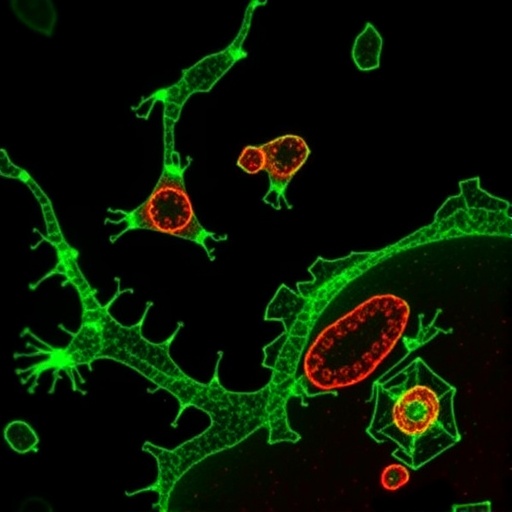
Rockville, Md. (July 12, 2018)–A review of more than 200 studies reveals that olfactory receptors–proteins that bind to odors that aid the sense of smell–perform a wide range of mostly unknown functions outside the nose. The function of extra-nasal olfactory receptors has the potential to be used in the diagnosis and treatment of health conditions such as cancer. The article is published in the July issue of Physiological Reviews.
Olfactory, or smell, receptors were originally thought to be only in the sensory nerve cells (neurons) of nasal cavity tissues. However, more recent and extensive study suggests that the receptors "occur in nearly the entire human body, [and] they appear to be substantially more functionally important than previously suggested," researchers from Ruhr-University Bochum in Germany wrote. In addition to the receptors playing a major role in the sense of smell, "several essential physiological and pathophysiological processes have been described as targeted by human [olfactory receptors], including path finding, cell growth, [cell death], migration and secretion."
The research team summarized the location and purpose of certain types of olfactory receptors, including those that may be beneficial to general health:
- Receptors present in heart muscle cells may be a metabolic regulator of heart function.
- Receptors activated in the immune system have been seen to promote the death of certain types of leukemia cells.
- Smell receptors in the liver reduce the spread of liver cancer cells.
- Receptors in the skin increase the regeneration of skin cells and help speed wound healing.
The review also reveals ways in which olfactory receptors may affect the development of disease, including:
- Receptors concentrated in the prostate tissue, especially in men with prostate cancer, contribute to the reduction or progression of the disease.
- Receptors in the colon may reduce the growth of colon cancer cells.
- Receptors in the digestive tract may cause chronic diarrhea or constipation but may also contribute to better digestion.
The existence of olfactory receptors outside the nose–either positive or negative–plays an important role in disease progression and physiological function but is not yet fully understood. Their role as a possible biomarker for disease requires more research, the authors said. Study "must be expanded to develop promising clinical strategies in the future," the researchers wrote.
Read the full article, "Human olfactory receptors: novel cellular functions outside of the nose," published inPhysiological Reviews.
###
NOTE TO JOURNALISTS: To schedule an interview with a member of the research team, please contact the APS Communications Office or 301-634-7209. Find more research highlights in the APS Press Room.
Physiology is the study of how molecules, cells, tissues and organs function in health and disease. Established in 1887, the American Physiological Society (APS) was the first U.S. society in the biomedical sciences field. The Society represents more than 10,000 members and publishes 15 peer-reviewed journals with a worldwide readership.
Media Contact
Stacy Brooks
[email protected]
301-634-7209
@APSPhysiology
http://www.the-aps.org
http://dx.doi.org/10.1152/physrev.00013.2017