• HOME
  • NEWS
  • EXPLORE
    • CAREER
      • Companies
      • Jobs
    • EVENTS
    • iGEM
      • News
      • Team
    • PHOTOS
    • VIDEO
    • WIKI
  • BLOG
  • COMMUNITY
    • FACEBOOK
    • INSTAGRAM
    • TWITTER
Thursday, April 9, 2026
BIOENGINEER.ORG
No Result
View All Result
  • Login
  • HOME
  • NEWS
  • EXPLORE
    • CAREER
      • Companies
      • Jobs
        • Lecturer
        • PhD Studentship
        • Postdoc
        • Research Assistant
    • EVENTS
    • iGEM
      • News
      • Team
    • PHOTOS
    • VIDEO
    • WIKI
  • BLOG
  • COMMUNITY
    • FACEBOOK
    • INSTAGRAM
    • TWITTER
  • HOME
  • NEWS
  • EXPLORE
    • CAREER
      • Companies
      • Jobs
        • Lecturer
        • PhD Studentship
        • Postdoc
        • Research Assistant
    • EVENTS
    • iGEM
      • News
      • Team
    • PHOTOS
    • VIDEO
    • WIKI
  • BLOG
  • COMMUNITY
    • FACEBOOK
    • INSTAGRAM
    • TWITTER
No Result
View All Result
Bioengineer.org
No Result
View All Result
Home NEWS Science News Biology

It takes a village…

Bioengineer by Bioengineer
July 9, 2018
in Biology
Reading Time: 2 mins read
0
Share on FacebookShare on TwitterShare on LinkedinShare on RedditShare on Telegram
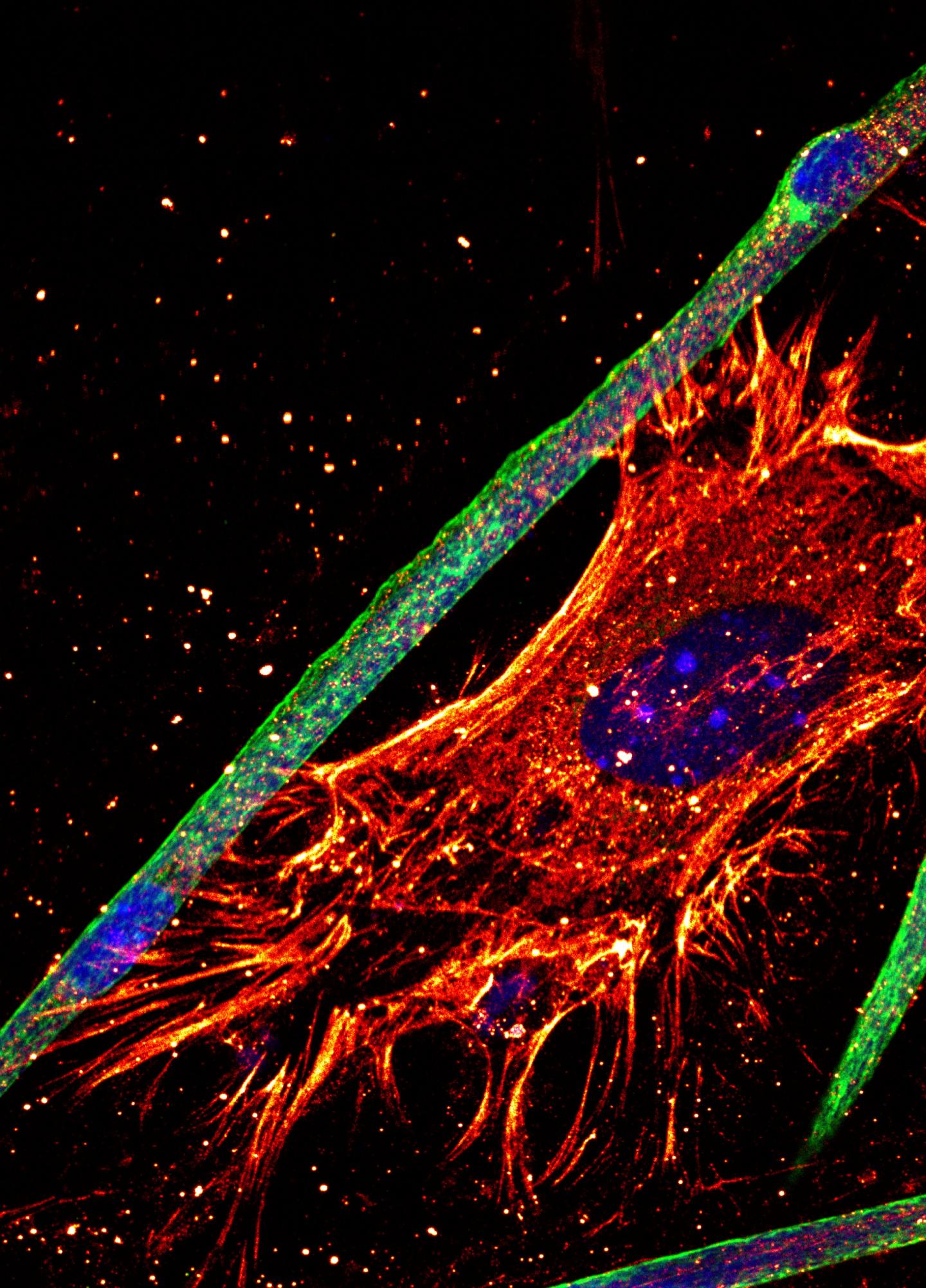
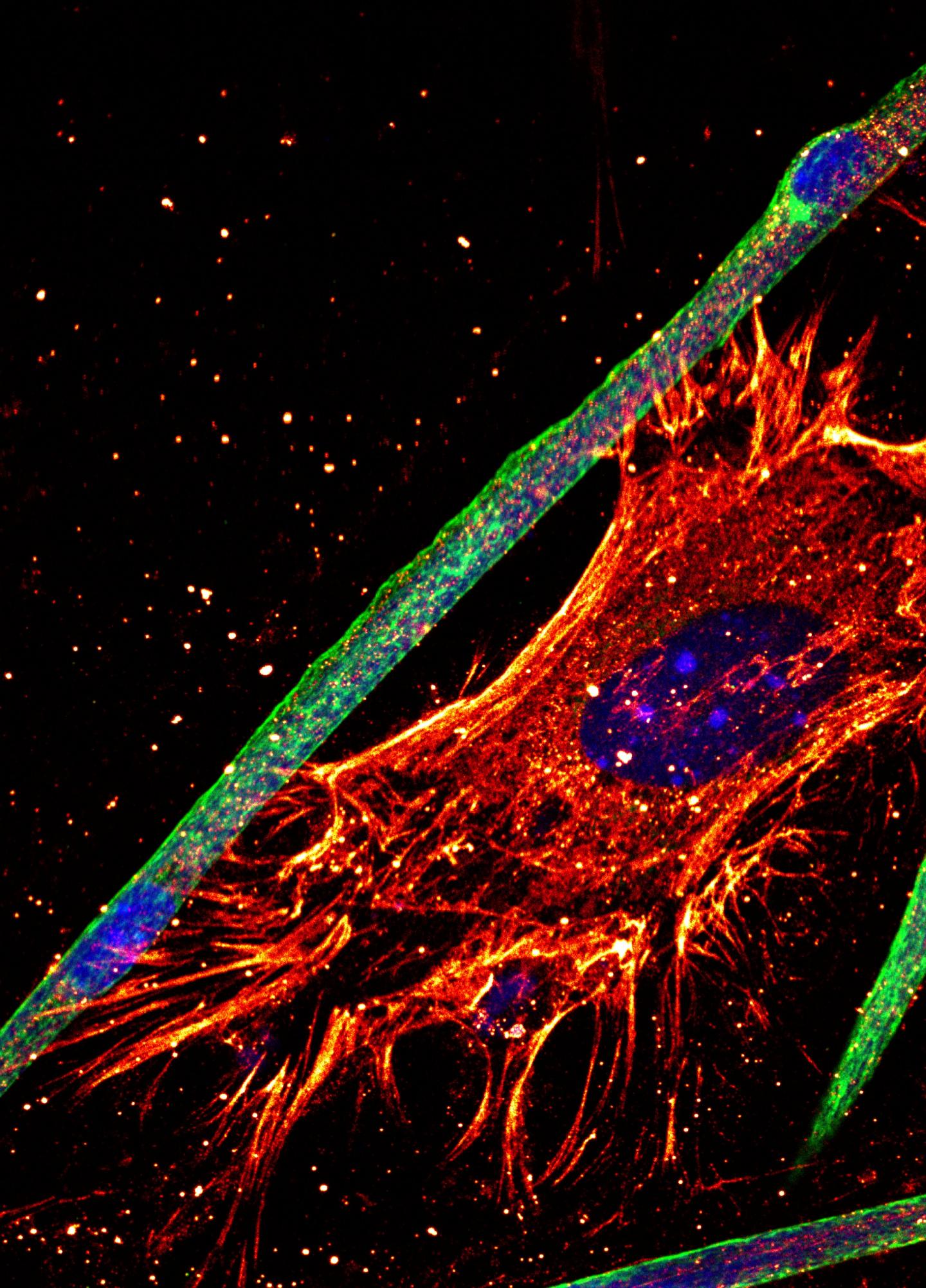
IMAGE

Credit: João Martins, iMM

A group of researchers led by Edgar Gomes, Group Leader at Instituto de Medicina Molecular João Lobo Antunes (iMM; Portugal) identifies in muscle cells a new mechanism that activates locally the movement of the nucleus to its correct position. This discovery, published in the scientific journal Developmental Cell, can have important implications in therapeutic strategies to treat muscular diseases.

A hallmark of muscle cells is the unique position of their nuclei at the cellular periphery. In multiple muscle diseases, as a result of aging, sports injuries, or genetic disorders this nuclear positioning fails to occur. Consequently, patients experience a gradual loss of muscle function that leads to a loss of autonomy.

"We have previously shown the molecular mechanisms used by muscle cells to move their own nucleus to the correct position at the periphery of the cell, but we still know very little about how this movement is activated", says Edgar Gomes, adding that "now, we built up on this mechanism and discovered that another type of cells, the myofibroblasts, contribute to the activation of the nuclear movement".

By using a combination of genetics and imaging experiments, the researchers observed that the cells that surround the muscle fiber, the myofibroblasts, locally deposit fibronectin, a component of the external cell's skeleton. "We observed a local accumulation of fibronectin at the vicinity of the muscle cells, in areas where the myofibroblasts were in contact with the muscle. It was exciting to see that this was accompanied by the movement of the nucleus to the periphery of the muscle cell", explains João Martins, co-first author of the study. "It is known that myofibroblasts produce fibronectin during muscle regeneration. We now demonstrate that the fibronectin produced by the myofibroblasts can activate the movement of the nucleus to the correct peripheral position", adds William Roman the other co-author of the study.

"We propose a mechanism by which cells can sense tissue architecture and regulate nuclear positioning in accordance with a local cue. This is of major importance to understand muscle differentiation, functionality and regeneration and might contribute to future therapeutic strategies to treat muscular diseases where the position of the nucleus is impaired", says Edgar Gomes.

###

This study was performed at iMM and funded by the European Research Council, EMBO, AIM France, POR Lisboa 2020 – Programa Operacional Regional de Lisboa, PORTUGAL 2020, and Fundação para a Ciência e a Tecnologia.

Media Contact

Inês Domingues
[email protected]
351-915-456-900

https://imm.medicina.ulisboa.pt/en/

Related Journal Article

http://dx.doi.org/10.1016/j.devcel.2018.05.031

Share12Tweet8Share2ShareShareShare2

Related Posts

From Asgard to Earth: Small Finds Unlock Secrets of Life’s Biggest Leap

From Asgard to Earth: Small Finds Unlock Secrets of Life’s Biggest Leap

April 9, 2026
Enzyme That Produces Fat Could Worsen Parkinson’s Disease, NTU Singapore Study Reveals

Enzyme That Produces Fat Could Worsen Parkinson’s Disease, NTU Singapore Study Reveals

April 9, 2026

High-Resolution DNA Methylation Mapping of MDS Stem Cells Uncovers Novel Disease Mechanism

April 9, 2026

Dragonflies and Humans Detect Red Light Using the Same Mechanism

April 9, 2026
Please login to join discussion

POPULAR NEWS

  • blank

    Revolutionary AI Model Enhances Precision in Detecting Food Contamination

    98 shares
    Share 39 Tweet 25
  • Imagine a Social Media Feed That Challenges Your Views Instead of Reinforcing Them

    1012 shares
    Share 400 Tweet 250
  • Popular Anti-Aging Compound Linked to Damage in Corpus Callosum, Study Finds

    44 shares
    Share 18 Tweet 11
  • Revolutionary Theory Transforms Quantum Perspective on the Big Bang

    40 shares
    Share 16 Tweet 10

About

We bring you the latest biotechnology news from best research centers and universities around the world. Check our website.

Follow us

Recent News

CD73high Fibroblasts Drive Keratinocyte Inflammation in Psoriasis

CPAP Devices: Architecture and Interface Impact Performance

Crystalline/Amorphous Bi-BiNiOx Electrocatalyst Drives Efficient Simultaneous Formate Production from CO2 and Methanol

Subscribe to Blog via Email

Enter your email address to subscribe to this blog and receive notifications of new posts by email.

Join 78 other subscribers
  • Contact Us

Bioengineer.org © Copyright 2023 All Rights Reserved.

Welcome Back!

Login to your account below

Forgotten Password?

Retrieve your password

Please enter your username or email address to reset your password.

Log In
No Result
View All Result
  • Homepages
    • Home Page 1
    • Home Page 2
  • News
  • National
  • Business
  • Health
  • Lifestyle
  • Science

Bioengineer.org © Copyright 2023 All Rights Reserved.