Credit: Ingolf Steffan-Dewenter
Bavaria is changing: In regions such as Lower Franconia, climate change is producing drier and hotter conditions. At the same time, extreme weather gets a boost with heavy rainfall or hail leading to flooding and soil erosion.
The landscape is changing, too: More impervious surfaces are being generated as a lot of villages built their own industrial zones. Vast monocultures of maize and rapeseed prevail on fields; this is aggravated by the widespread use of fertilizers and pesticides.
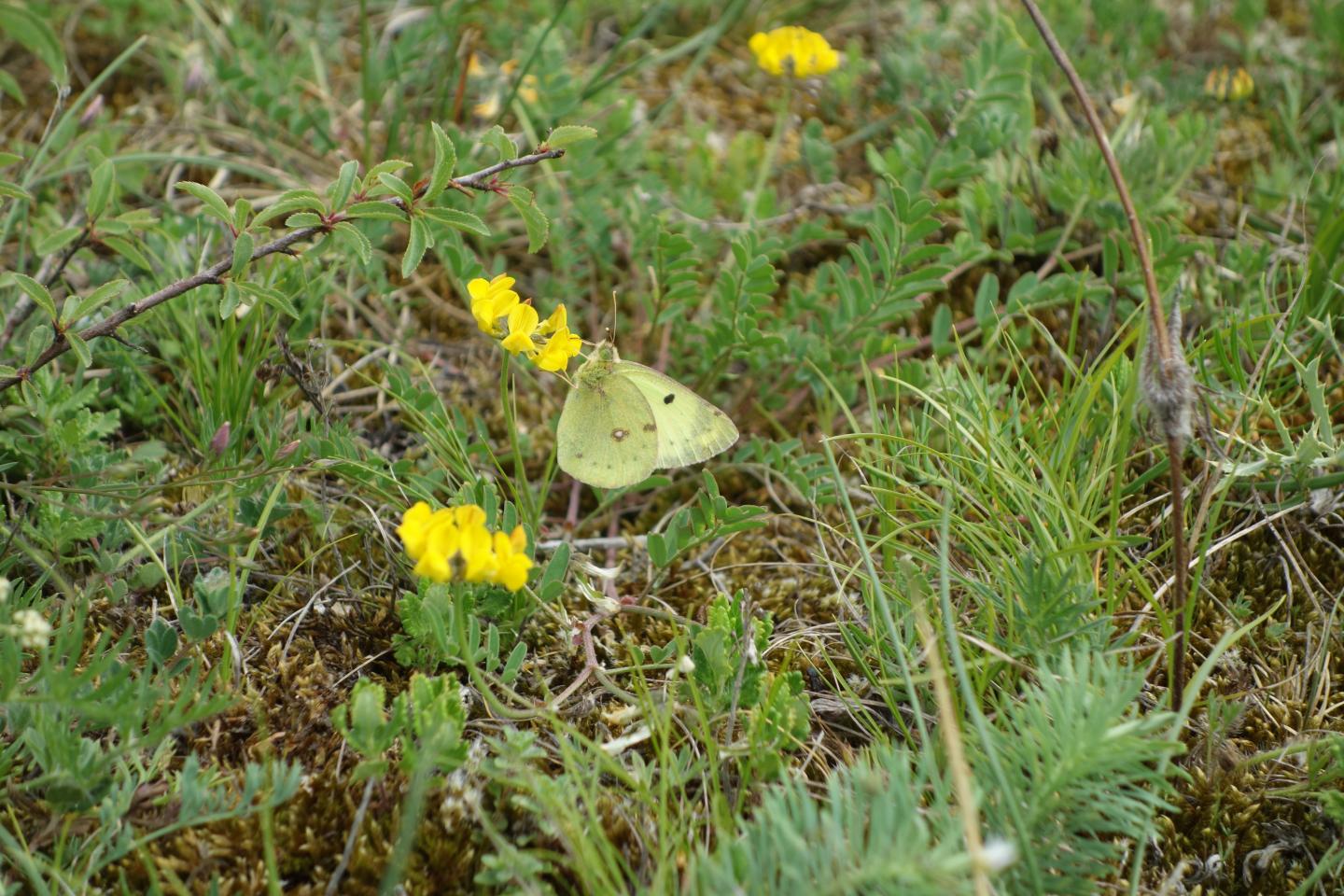
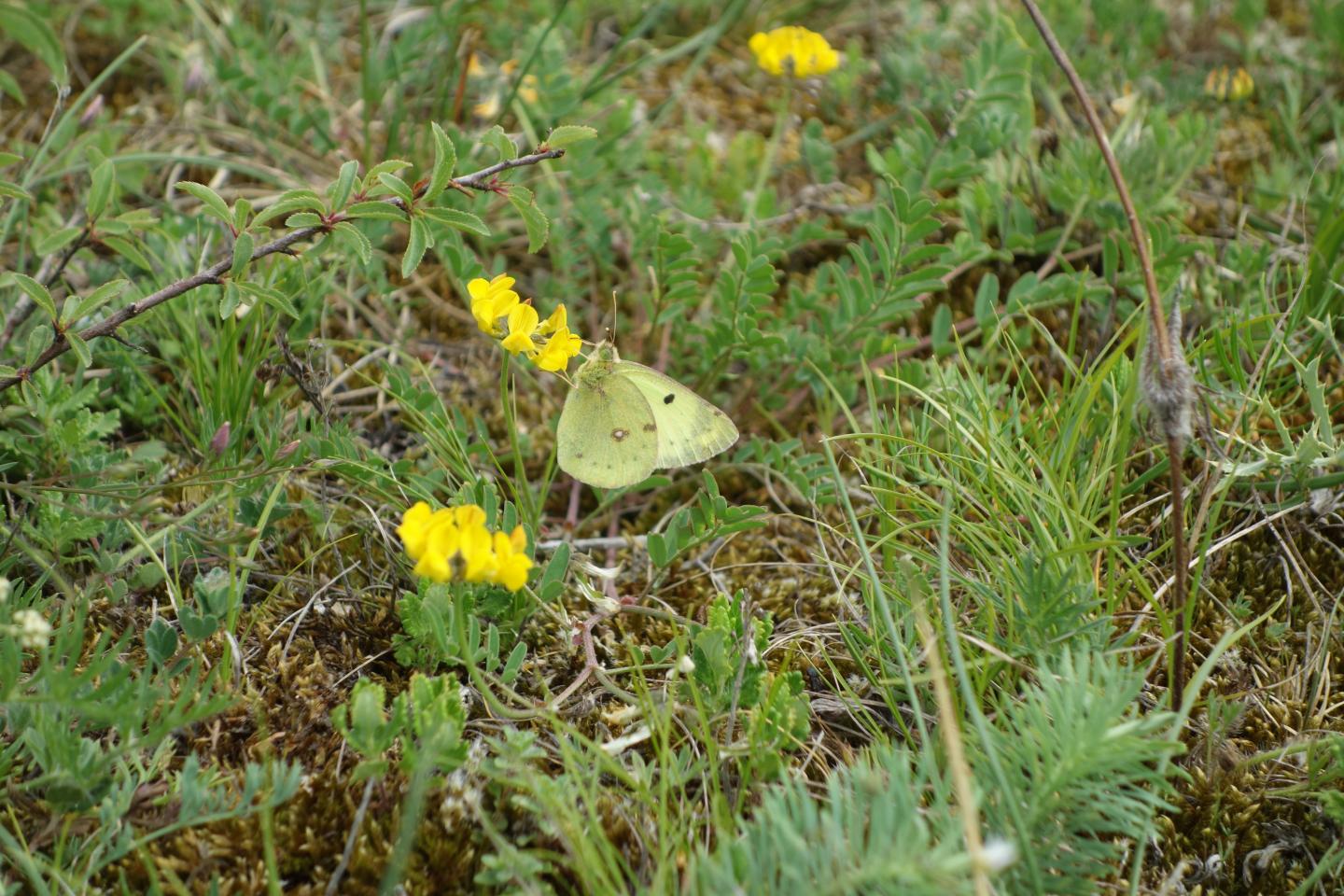
Biodiversity is dwindling, especially that of insects whose number and diversity have decreased. This will have serious implications since the yield and quality of many food crops depend on pollinating insects. Moreover, insects play a vital role in natural pest control. Their decline impairs the services which humans gain from ecosystems.
A scientific challenge
"All these changes present a major challenge for scientists," says Professor Ingolf Steffan-Dewenter, Head of the Chair of Animal Ecology and Tropical Biology at Julius-Maximilians-Universität Würzburg (JMU) in Bavaria, Germany. An interdisciplinary collaborative approach is needed to address the many open questions.
How do climatic differences and the structure of a landscape influence biodiversity and ecosystem performance? How do climatic conditions and land use interact? Does biodiversity at the level of populations, communities and landscapes mitigate the consequences of climate change and extreme weather events?
LandKlif: Four of ten subprojects at JMU
The new Bavarian research alliance "LandKlif" will investigate these issues with activities in 20 natural, agricultural and urban landscapes in five climate zones in Bavaria: from the dry and warm regions in Lower Franconia to the high altitudes of the Bavarian Forest National Park and Berchtesgaden. The goal is to identify options to mitigate the effects of climate change and adapt to changed climatic conditions.
Professor Steffan-Dewenter coordinates the alliance which comprises four research groups from the University of Würzburg, two from the Weihenstephan-Triesdorf University, two from the Technical University of Munich and one from the universities of Augsburg and Bayreuth, respectively. The Free State of Bavaria funds the alliance with a total of EUR 2.6 million of which EUR 1.4 million are allocated to JMU.
Measuring biodiversity and ecosystem performance
Subproject 1, headed by Professor Ingolf Steffan-Dewenter, measures the biodiversity of bees, wasps, hoverflies, beetles and butterflies as well as ecosystem performance in the area of pollination and biological best control. The researchers will perform relocation experiments and simulate extreme weather events to better understand the adaptation ability and resilience of major insect groups. The results could later be used to develop more sustainable management practices for the Bavarian ecosystems.
Simulating climate scenarios and drought stress
Subproject 2 is led by Professor Jörg Müller from the JMU Chair of Animal Ecology and Tropical Biology. Its mission is to determine the quantity and diversity of arthropod communities – arthropods are a large group of animals that include insects – at 240 sites throughout Bavaria in habitats with different microclimates. The collected data will be used to model predictions for various climate scenarios. Moreover, the scientists will simulate drought stress on some areas and perform experiments in environmental chambers.
Landscape types and adaptability
PD Dr. Thomas Hovestadt, Chair of Animal Ecology and Tropical Biology, is in charge of subproject 6. His team will study the tolerance and adaptability of biological communities in the face of climate change. By running computer simulations, the research group wants to understand the role landscape plays in the adaptation of populations and biological communities and which landscape elements are particularly important in this context. Ultimately, their work could help identify strategies and management practices to mitigate the negative impacts of climate change on ecosystem performance.
Investigating vegetation with satellite data
PD Dr. Christopher Conrad from the Chair of Remote Sensing leads subproject 7. This project is about measuring the development of the vegetation in natural, agricultural and urban landscapes in Bavaria over the past 20 years based on satellite data. The goal is to determine which landscape parts are more vulnerable or resilient to climate changes. They also analyse yields, cultivation patterns and diversity in the agricultural landscapes. The project's aim is to recognize detrimental impacts on ecosystem performance at any early stage and support counter-measures.
Bavarian network for climate research
The LandKlif research alliance is part of the Bavarian network for climate research (bayklif) launched officially by Minister of Science, Marion Kiechle, in early May 2018. The network is set to produce more insights into the social and ecological consequences of climate change. Building on this knowledge, models will have to be developed to help mitigate these consequences. Moreover, bayklif aims to develop regional and supraregional strategies for climate protection and adapting to climate change.
###
Media Contact
Dr. Ingolf Steffan-Dewenter
[email protected]
49-931-318-6947
@Uni_WUE
https://www.uni-wuerzburg.de/
Original Source
https://www.uni-wuerzburg.de/en/sonstiges/news/detail/news/landklif-changing-ecosystems/