Credit: Matt Zeher
Opportunities for people to interact with nature have declined over the past century, as most people now live in urban areas and spend much of their time indoors. And while adults are not only experiencing nature less, they are also less likely to take their children outdoors and shape their attitudes toward nature, creating a negative cycle. In 1978, ecologist Robert Pyle coined the phrase "extinction of experience" (EOE) to describe this alienation from nature, and argued that this process is one of the greatest causes of the biodiversity crisis. Four decades later, the question arises: How can we break the cycle and begin to reverse EOE?
In citizen science programs, people participate in real research, helping scientists conduct studies on local, regional and even global scales. In a study released today, researchers from the North Carolina Museum of Natural Sciences, North Carolina State University, Rutgers University, and the Technion-Israel Institute of Technology propose nature-based citizen science as a means to reconnect people to nature. For people to take the next step and develop a desire to preserve nature, they need to not only go outdoors or learn about nature, but to develop emotional connections to and empathy for nature. Because citizen science programs usually involve data collection, they encourage participants to search for, observe and investigate natural elements around them. According to co-author Caren Cooper, assistant head of the Biodiversity Lab at the N.C. Museum of Natural Sciences, "Nature-based citizen science provides a structure and purpose that might help people notice nature around them and appreciate it in their daily lives."
To search for evidence of these patterns across programs and the ability of citizen science to reach non-scientific audiences, the researchers studied the participants of citizen science programs. They reviewed 975 papers, analyzed results from studies that included participants' motivations and/or outcomes in nature-oriented programs, and found that nature-based citizen science fosters cognitive and emotional aspects of experiences in nature, giving it the potential to reverse EOE.
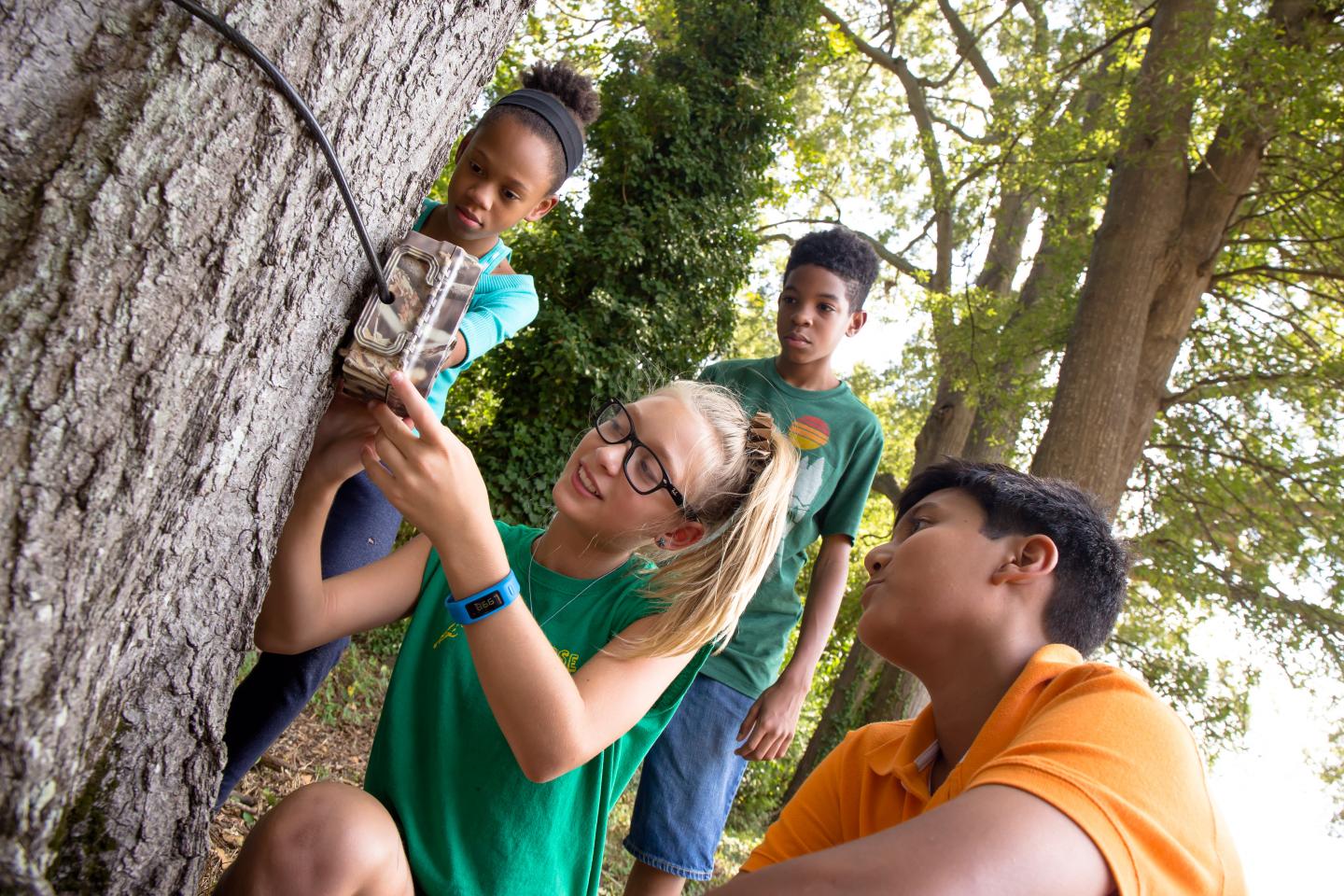
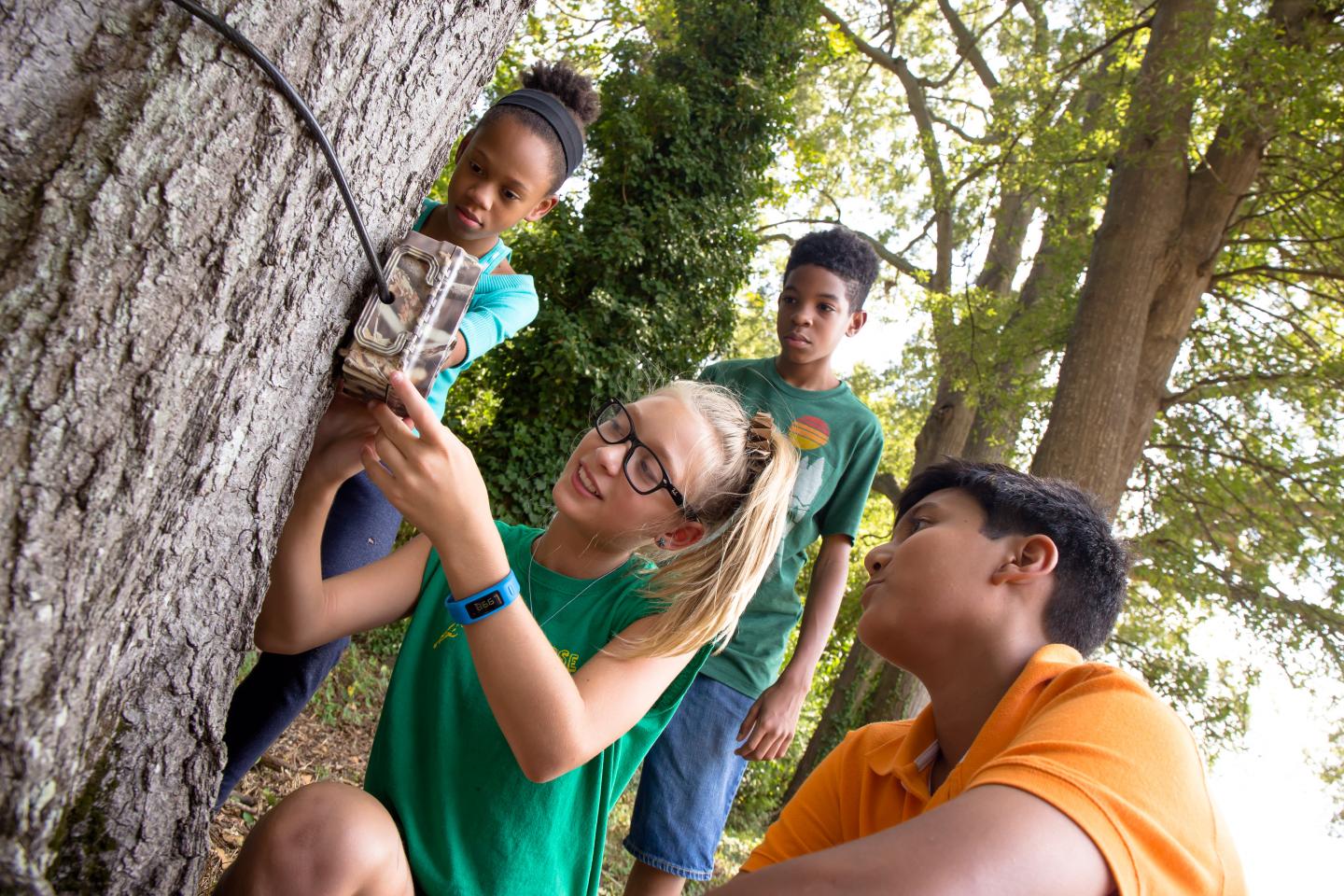
The N.C. Museum of Natural Sciences' Stephanie Schuttler, lead author on the study and scientist on the eMammal citizen science camera trapping program, saw anecdotal evidence of this reversal through her work incorporating camera trap research into K-12 classrooms. "Teachers would tell me how excited and surprised students were about the wildlife in their school yards," Schuttler says. "They had no idea their campus flourished with coyotes, foxes and deer." The study Schuttler headed shows citizen science increased participants' knowledge, skills, interest in and curiosity about nature, and even produced positive behavioral changes. For example, one study revealed that participants in the Garden Butterfly Watch program changed gardening practices to make their yards more hospitable to wildlife. Another study found that participants in the Coastal Observation and Seabird Survey Team program started cleaning up beaches during surveys, even though this was never suggested by the facilitators.
While these results are promising, the EOE study also revealed that this work has only just begun and that most programs do not reach audiences who are not already engaged in science or nature. Only 26 of the 975 papers evaluated participants' motivations and/or outcomes, and only one of these papers studied children, the most important demographic in reversing EOE. "Many studies were full of amazing stories on how citizen science awakened participants to the nature around them, however, most did not study outcomes," Schuttler notes. "To fully evaluate the ability for nature-based citizen science to affect people, we encourage citizen science programs to formally study their participants and not just study the system in question."
Additionally, most citizen science programs attracted or even recruited environmentally mindful participants who likely already spend more time outside than the average person. "If we really want to reconnect people to nature, we need to preach beyond the choir, and attract people who are not already interested in science and/or nature," Schuttler adds. And as co-author Assaf Shwartz of Technion-Israel Institute of Technology asserts, "The best way to avert the extinction of experience is to create meaningful experiences of nature in the places where we all live and work – cities. Participating in citizen science is an excellent way to achieve this goal, as participation can enhance the sense of commitment people have to protect nature."
Luckily, some other factors appear to influence participants' involvement in citizen science. Desire for wellbeing, stewardship and community may provide a gateway for people to participate, an important first step in connecting people to nature. Though nature-based citizen science programs provide opportunities for people to interact with nature, further research on the mechanisms that drive this relationship is needed to strengthen our understanding of various outcomes of citizen science.
###
Note to Editors: The study abstract follows.
"Bridging the nature gap: Can citizen science reverse the extinction of experience?"
Authors: Stephanie G. Schuttler, North Carolina Museum of Natural Sciences; Amanda E. Sorensen, Rutgers University; Rebecca C. Jordan, Rutgers University; Caren Cooper, North Carolina Museum of Natural Sciences and North Carolina State University; and Assaf Shwartz, Technion-Israel Institute of Technology.
The study was supported by National Science Foundation grant #1319293.
Published: July 3, 2018, Frontiers in Ecology and the Environment
DOI: 10.1002/fee.1826
Abstract: Opportunities for people to interact with nature have declined over the past century, as many now live in urban areas and spend much of their time indoors. Conservation attitudes and behaviors largely depend on experiences with nature, and this "extinction of experience" (EOE) is a threat to biodiversity conservation. In this paper, we propose that citizen science, an increasingly popular way to integrate public outreach with data collection, can potentially mitigate EOE. Our review of the literature on volunteers' motivations and/or outcomes indicates that nature-based citizen science (NBCS) fosters cognitive and emotional aspects of experiences in nature. Although these experiences can change participants' behaviors and attitudes toward the natural world, this field remains largely unstudied. As such, even though NBCS can complement efforts to increase opportunities for people to interact with nature, further research on the mechanisms that drive this relationship is needed to strengthen our understanding of various outcomes of citizen science.
Media Contact
Stephanie Schuttler
[email protected]
716-515-8732
http://naturalsciences.org/
Related Journal Article
http://dx.doi.org/10.1002/fee.1826