Credit: University of Otago
University of Otago researchers have discovered a novel property of a new anti-tuberculosis drug which may help develop more drugs to treat the top infectious disease killer in the world.
Globally, there are about 1.7 million deaths annually that are attributed to tuberculosis (TB) with rising incidents of drug-resistant TB.
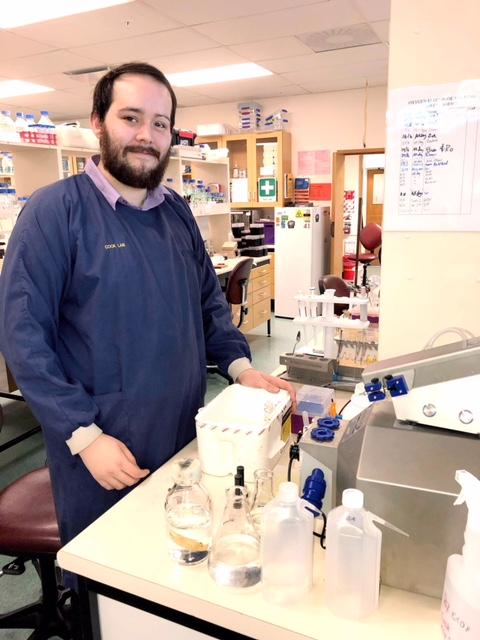
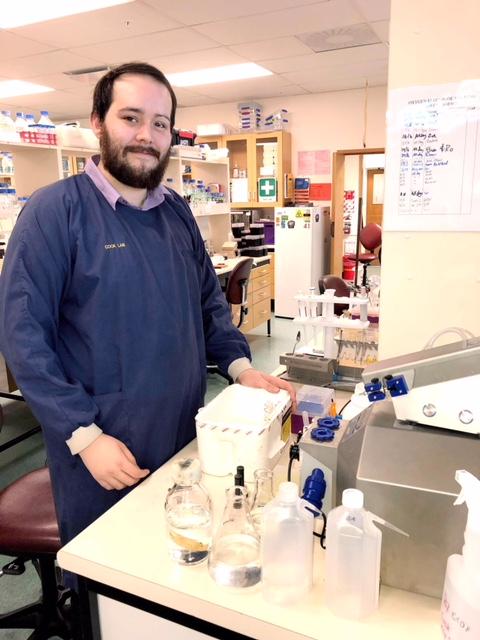
Professor Greg Cook from the University of Otago's Department of Microbiology and Immunology, together with Postdoctoral fellow Dr Kiel Hards, have been investigating one of the first new TB drugs approved in more than 40 years, Bedaquiline – which is sold under the brand name Sirturo.
"Bedaquiline is the first new drug to be developed after 40 years of searching for more effective drugs that combat TB and was only FDA (US Food and Drug Administration) approved in 2012," Professor Cook explains.
"But one drug won't be enough to reverse a 40-year lull in drug-development, so our lab is actively searching for new TB drugs to complement Bedaquiline and expand the treatment options available to clinicians world-wide."
In order to develop even better drugs to combat TB, Dr Hards says it is important to understand why Bedaquiline is so good in the first place.
"The most promising aspects of the drug are its ability to shorten treatment timeframe to eight weeks and that its target is unconventional for an antimicrobial. Bedaquiline disrupts the ability of M. tuberculosis to generate energy," Dr Hards explains.
"What we discovered is that the drug has a second activity or property that may explain how it is able to kill non-replicating cells. This second activity (termed ionophoric) involves the movement or shutting of ions across the mycobacterial membrane resulting in the dissipating of critical ion gradients needed for growth and survival."
Potentially, their finding which was recently published in the international journal Proceedings of the National Academy of Sciences of the United States of America could have ramifications for other antibiotics, as it be could be the case that many other antibiotics work by this mechanism, Professor Cook says.
"We believe that we can design more effective TB drugs if we include ionophore-like properties in a similar way to Bedaquiline," he says.
"The 'biological electricity' that these ions normally create is key to energy generation and a whole series of other incredibly important cellular processes. It was already known that disrupting these ion gradients is lethal to M. tuberculosis but before Bedaquiline there were no drugs that could do this and be safe in humans."
Professor Cook says it is very rare to discover new properties about drugs as researchers frequently focus on the primary target of a drug and often the off target or secondary effects of drugs are ignored.
"Subsequent discoveries are usually serendipitous, but in the case of Bedaquiline we realised the previous data didn't explain how it could kill non-replicating cells and so we kept pushing to find the answer," he explains.
"Many researchers are now turning their attention back to focusing on how antimicrobials actually kill bacteria to uncover new pathways of cell death. These offer tremendous potential to develop new antimicrobials."
The Otago researchers were the lead researchers in the investigation, but worked in collaboration with colleagues from The University of Technology in the Netherlands, the University of Illinois in the United States and Vrije University in Amsterdam.
###
The work received funding support from the Marsden Fund, Royal Society and the Maurice Wilkins Centre for Molecular Biodiscovery.
For further information, contact
Professor Gregory M Cook
Department of Microbiology and Immunology
Tel 03 479 7722
Mob 021 244 7257
Email [email protected]
Dr Kiel Hards
Department of Microbiology and Immunology
Mob 022 013 3139
Email [email protected]
Liane Topham-Kindley
Senior Communications Adviser
Tel 03 479 9065
Mob 021 279 9065
Email [email protected]
Media Contact
Liane Topham-Kindley
[email protected]
64-212-799-065
@otago
http://www.otago.ac.nz