Credit: Alessandra Magistrato
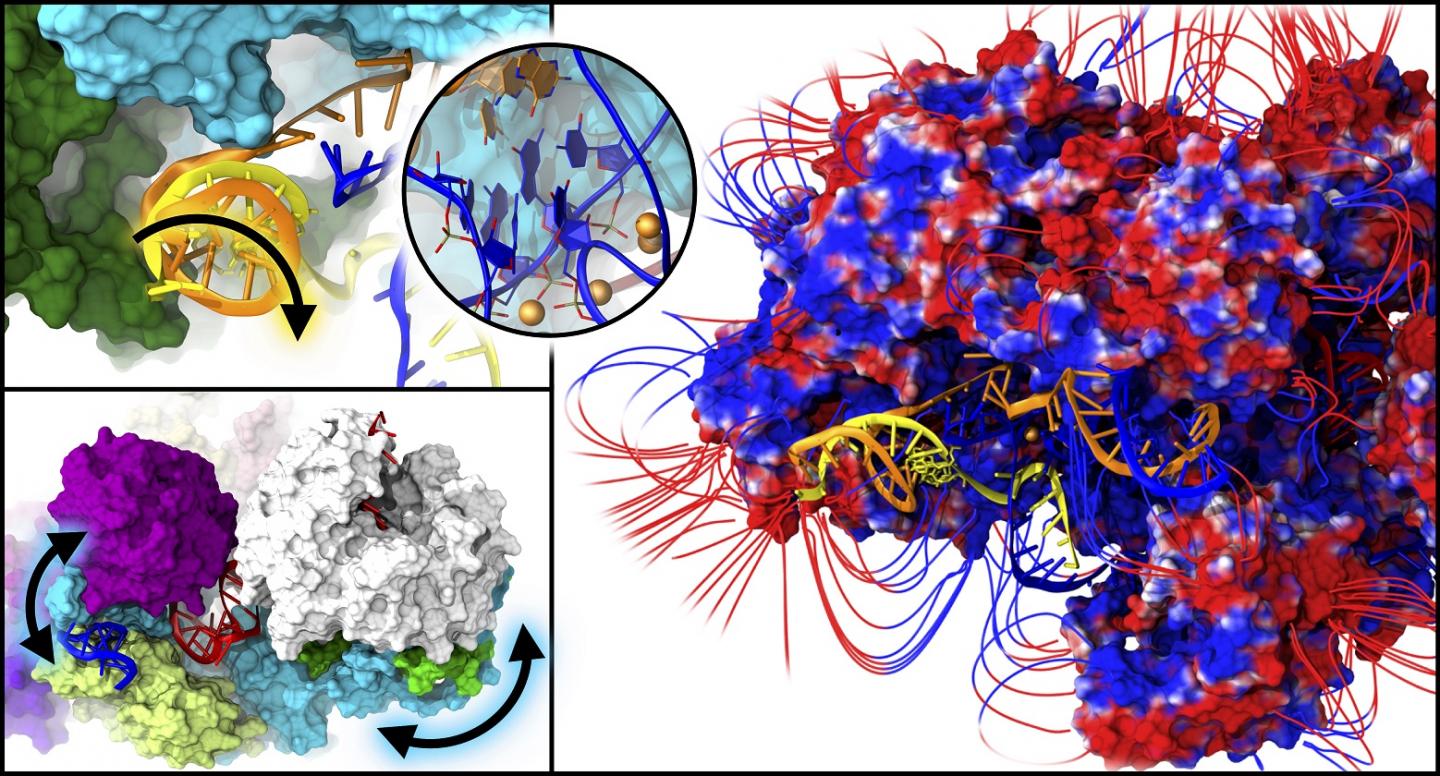
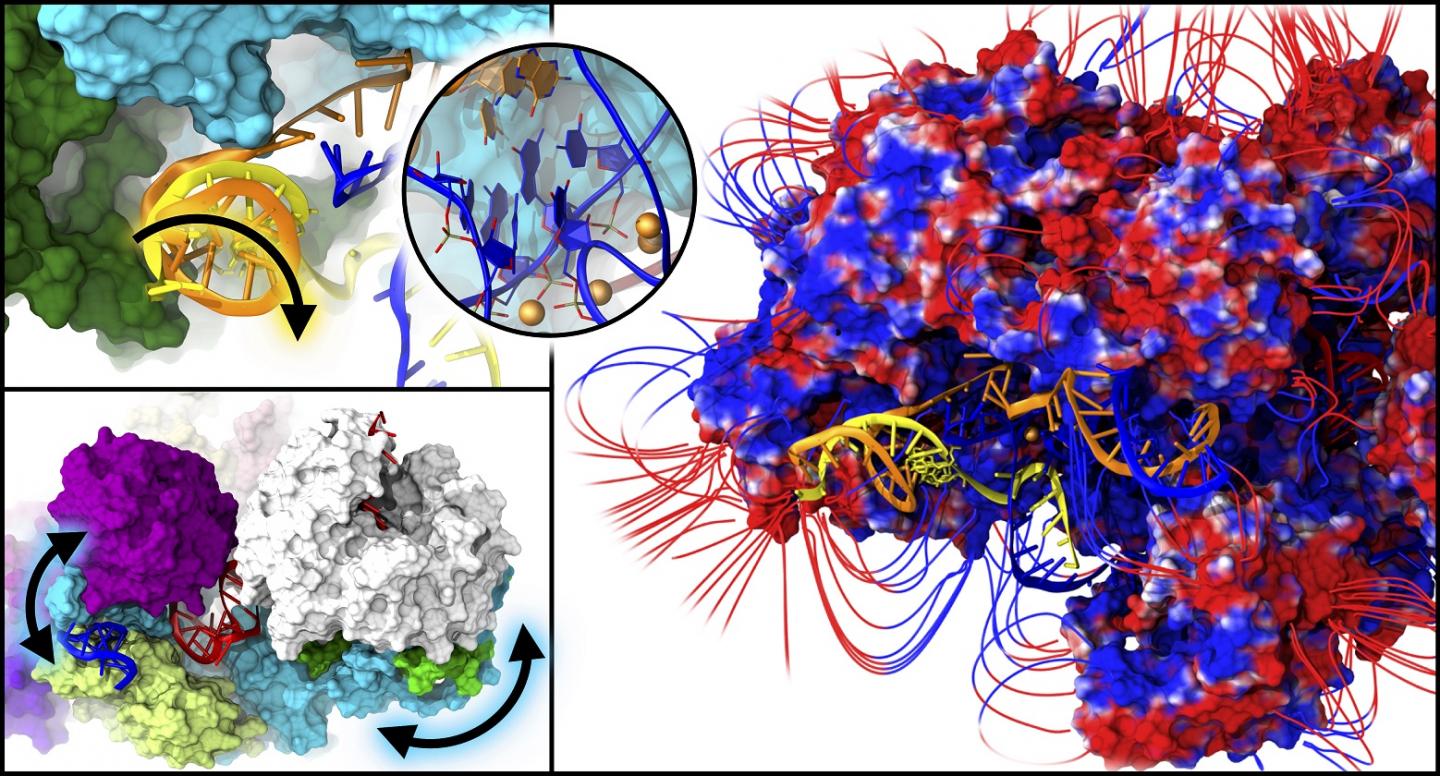
A sophisticated atomic-level computer simulation has allowed researchers of SISSA and the National Research centre (CNR-IOM – Institute for Materials Manufacturing) to shed light, for the first time, on the function of an important biological system called spliceosome, which works as a highly skilled tailor. The spliceosome is composed of 5 filaments of RNA and hundreds of proteins. Among these elements, the researchers have discovered that, in yeast, the Spp42 protein (corresponding to the human Prp8) coordinates the motion of different components which all together handle their tailoring tools to complete a minute cutting and sewing process. Thanks to this activity, the genetic information can be correctly transformed into a product of perfect manufacture and function, like proteins. This is a very delicate cellular process, whose defect is the underlying cause of more than 200 human diseases, including several types of cancer. Understanding the functioning of the spliceosome components may be of fundamental importance for treating several human diseases, for example for the development of new drugs able to regulate and modulate the activity of these "molecular tailors". The research has just been published in PNAS journal.
The "snip and stitch" of genetic information
To give life to its end product, a gene must first be copied by a specific apparatus. The copy, called messenger RNA or mRNA, is responsible for carrying the information contained in the DNA to the other cellular apparati, where it is transformed into proteins. «The messenger RNA, created as a copy of a gene, is in a premature form and must however undergo heavy restructuring» explains Lorenzo Casalino of SISSA and first author of this research. «In this premature form there are protein-coding regions (exons) and other non-coding regions (introns). To have a molecule able to transport information usefully, precisely and effectively, the latter must be eliminated by the spliceosome to transform it into mature mRNA». It is an extremely precise snip and stitch process, explains the researcher, because the minimum error can alter the information, with serious effects on cell activity and on the health of the entire organism. Proof of this is that a defect in the splicing, this is the name of this process, is connected, as we said earlier, to numerous diseases, including several types of leukaemia.
The spliceosome in the spotlight
«With a very long and truly complex computer simulation, working on a model originating from yeast, we have been able to shed light on the core of the spliceosome. We have simulated and analysed the movements of a specific and crucial set of protein/RNA complexes, understanding its role and establishing in particular that a protein called Spp42 (Prp8 in human) carries out a crucial role. Its action essentially induces the movement and hence regulate the function of all the other spliceosome components, namely an enormous machinery composed of more than 100 proteins and 5 filaments of RNA», clarifies Alessandra Magistrato of the Cnr-Iom (National Research Council-Institute of Material Manufacturing), head of the research. «It is the first time in the world that atomic-scale simulations are performed on this system, providing important information that contributes to filling the gaps of modern structural investigation techniques such as, in this case, cryo-electron microscopy».
Towards drug design
«Considering the crucial role played by this system, and its involvement in different diseases, there is strong interest in understanding its structure and action», explain Casalino and Magistrato. «We have studied this complex in yeast, for which we had the initial structural information. Ours is a first step, which has required years of work to understand the basic elements, which can be useful to rationalize also the function of the human spliceosome». A deep comprehension of the defective parts of the mechanism in case of disease may allow researchers to develop drugs that can regulate the spliceosome function as effective therapies. The researchers conclude «We are heading in that direction. Much remains to be done, but the road is fascinating and promising».
###
Media Contact
Donato Ramani
[email protected]
39-040-378-7513
http://www.sissa.it
Related Journal Article
http://dx.doi.org/10.1073/pnas.1802963115