

• HOME
  • NEWS
  • EXPLORE
    • CAREER
      • Companies
      • Jobs
    • EVENTS
    • iGEM
      • News
      • Team
    • PHOTOS
    • VIDEO
    • WIKI
  • BLOG
  • COMMUNITY
    • FACEBOOK
    • INSTAGRAM
    • TWITTER
Monday, October 5, 2026
BIOENGINEER.ORG
No Result
View All Result
  • Login
  • HOME
  • NEWS
  • EXPLORE
    • CAREER
      • Companies
      • Jobs
        • Lecturer
        • PhD Studentship
        • Postdoc
        • Research Assistant
    • EVENTS
    • iGEM
      • News
      • Team
    • PHOTOS
    • VIDEO
    • WIKI
  • BLOG
  • COMMUNITY
    • FACEBOOK
    • INSTAGRAM
    • TWITTER
  • HOME
  • NEWS
  • EXPLORE
    • CAREER
      • Companies
      • Jobs
        • Lecturer
        • PhD Studentship
        • Postdoc
        • Research Assistant
    • EVENTS
    • iGEM
      • News
      • Team
    • PHOTOS
    • VIDEO
    • WIKI
  • BLOG
  • COMMUNITY
    • FACEBOOK
    • INSTAGRAM
    • TWITTER
No Result
View All Result
Bioengineer.org
No Result
View All Result
Home NEWS Science News Health

Illinois’ crop-counting robot earns top recognition at leading robotics conference

Bioengineer by Bioengineer
July 2, 2018
in Health
Reading Time: 2 mins read
0
Share on FacebookShare on TwitterShare on LinkedinShare on RedditShare on Telegram
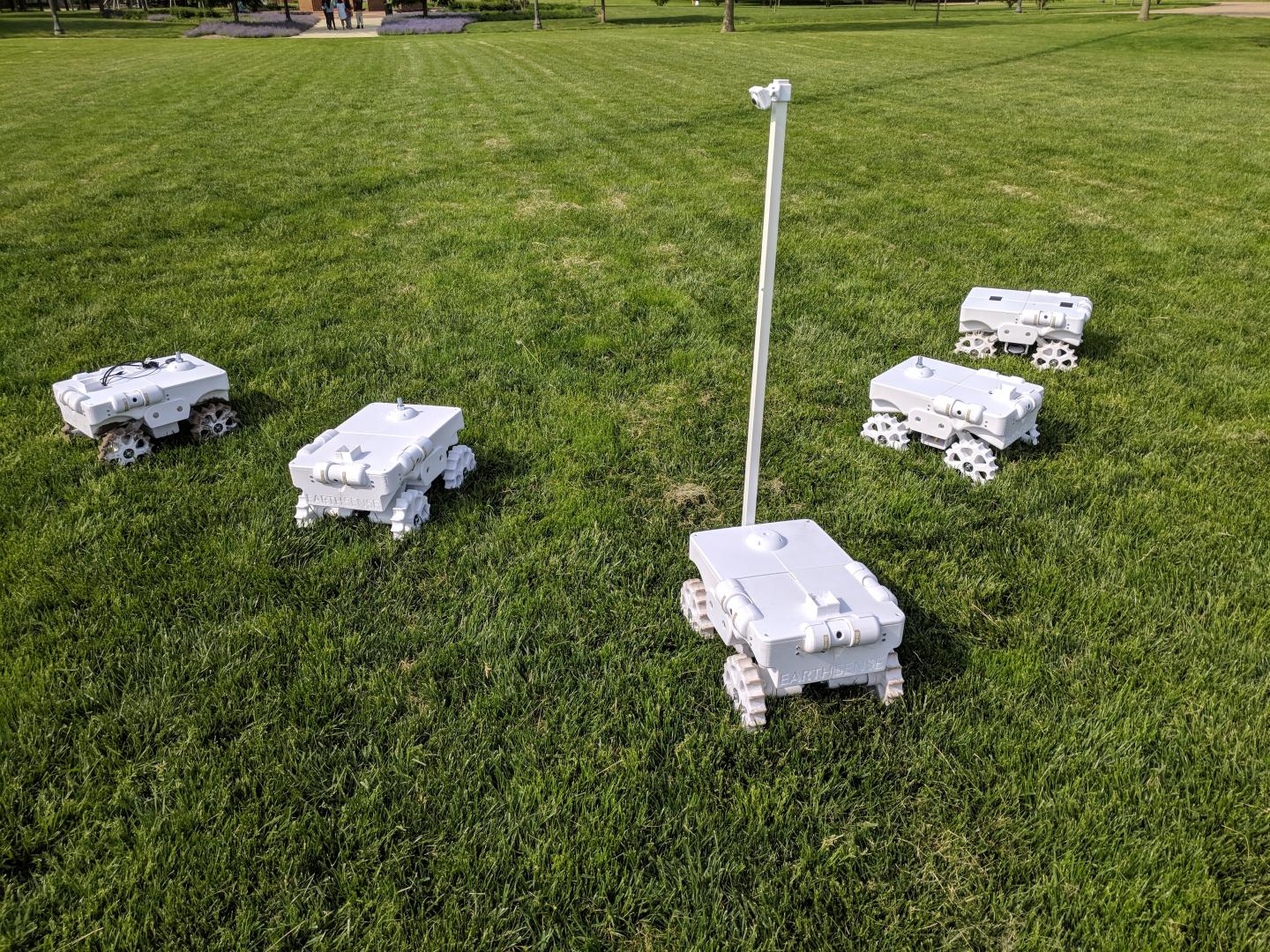
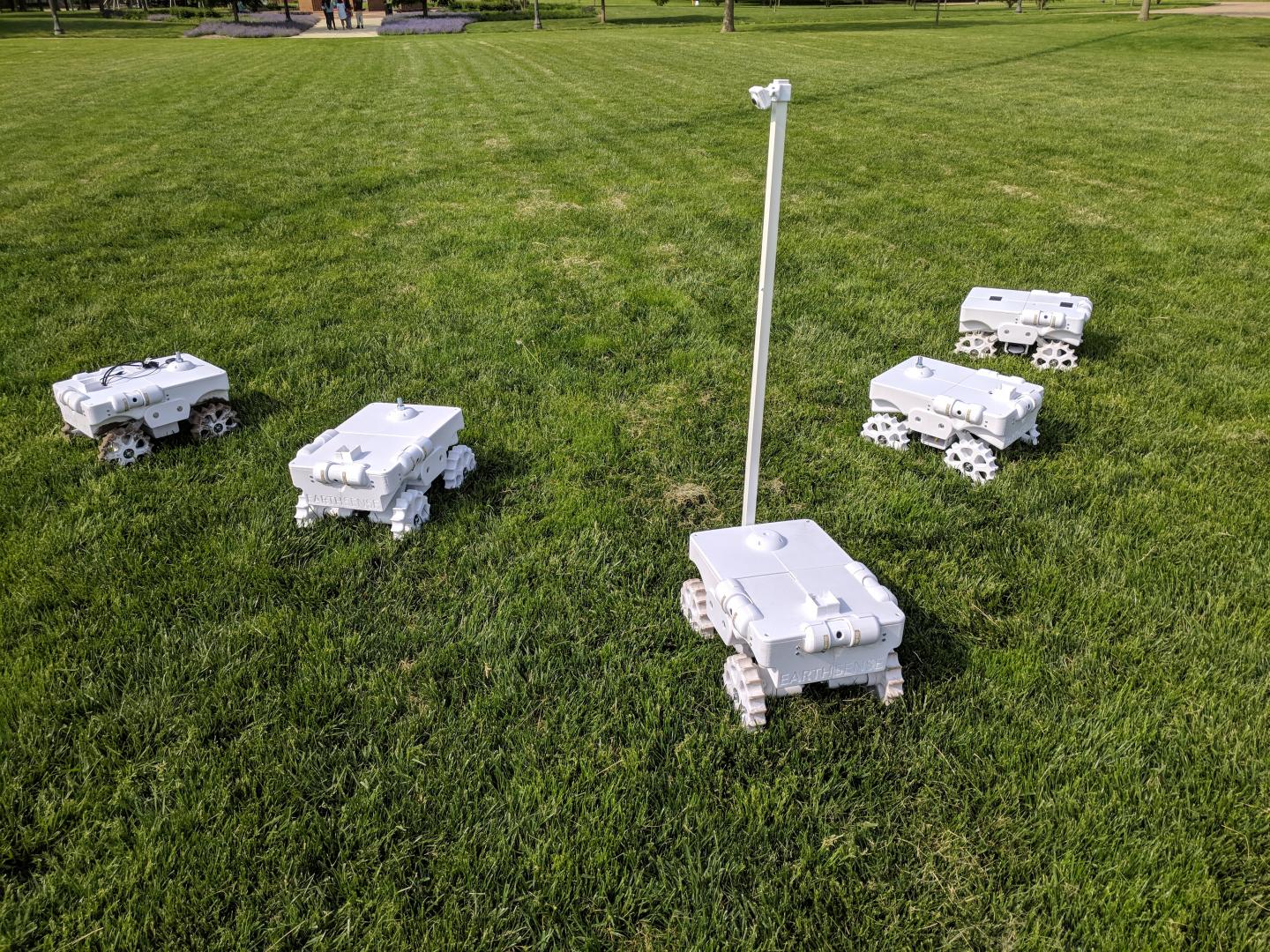
IMAGE

Credit: TERRA-MEPP Project

Today's crop breeders are trying to boost yields while also preparing crops to withstand severe weather and changing climates. To succeed, they must locate genes for high-yielding, hardy traits in crop plants' DNA. A robot developed by the University of Illinois to find these proverbial needles in the haystack was recognized by the best systems paper award at Robotics: Science and Systems, the preeminent robotics conference held last week in Pittsburgh.

"There's a real need to accelerate breeding to meet global food demand," said principal investigator Girish Chowdhary, an assistant professor of field robotics in the Department of Agricultural and Biological Engineering and the Coordinated Science Lab at Illinois. "In Africa, the population will more than double by 2050, but today the yields are only a quarter of their potential."

Crop breeders run massive experiments comparing thousands of different cultivars, or varieties, of crops over hundreds of acres and measure key traits, like plant emergence or height, by hand. The task is expensive, time-consuming, inaccurate, and ultimately inadequate–a team can only manually measure a fraction of plants in a field.

"The lack of automation for measuring plant traits is a bottleneck to progress," said first author Erkan Kayacan, now a postdoctoral researcher at the Massachusetts Institute of Technology. "But it's hard to make robotic systems that can count plants autonomously: the fields are vast, the data can be noisy (unlike benchmark datasets), and the robot has to stay within the tight rows in the challenging under-canopy environment."

Illinois' 13-inch wide, 24-pound TerraSentia robot is transportable, compact and autonomous. It captures each plant from top to bottom using a suite of sensors (cameras), algorithms, and deep learning. Using a transfer learning method, the researchers taught TerraSentia to count corn plants with just 300 images, as reported (DOI: 10.1002/rob.21794) at this conference.

"One challenge is that plants aren't equally spaced, so just assuming that a single plant is in the camera frame is not good enough," said co-author ZhongZhong Zhang, a graduate student in the College of Agricultural Consumer and Environmental Science (ACES). "We developed a method that uses the camera motion to adjust to varying inter-plant spacing, which has led to a fairly robust system for counting plants in different fields, with different and varying spacing, and at different speeds."

###

This work was supported by the Advanced Research Project Agency-Energy (ARPA-E) as part of the TERRA-MEPP project at the Carl R. Woese Institute for Genomic Biology. The robot is now available through the start-up company, EarthSense, Inc. which is equipping the robot with advanced autonomy and plant analytics capabilities.

TERRA-MEPP is a research project that is developing a low-cost phenotyping robot to identify top-performing crops led by the University of Illinois in partnership with Cornell University and Signetron Inc. with support from the Advanced Research Projects Agency-Energy (ARPA-E).

Media Contact

Claire Benjamin
[email protected]
217-244-0941
@IGBIllinois

http://www.igb.uiuc.edu

Original Source

https://terra-mepp.illinois.edu/news/entry/terrasentia-was-recognized-by-the-best-systems-paper-award-at-robotics-scie http://dx.doi.org/10.1002/rob.21794


Share12Tweet8Share2ShareShareShare2

Related Posts

Global Survey Reveals How Plasma Donors Transform Lives of Patients Worldwide

Global Survey Reveals How Plasma Donors Transform Lives of Patients Worldwide

October 5, 2026
Overactive Inflammasome in Artery Muscle Cells Drives Dangerous Vessel Thickening in Mice

Overactive Inflammasome in Artery Muscle Cells Drives Dangerous Vessel Thickening in Mice

October 5, 2026

The Spleen’s Silent Signal: Forensic Scientists Validate a Long-Suspected Sign of Death by Cold

October 5, 2026

CPR Feedback Scores May Reward Compressions That Fall Outside Guidelines

October 5, 2026
Please login to join discussion

POPULAR NEWS

  • Alloys That Shrink Their Own Grains: New PIX Mechanism Refines Metals With Heat Alone

    Alloys That Shrink Their Own Grains: New PIX Mechanism Refines Metals With Heat Alone

    29 shares
    Share 12 Tweet 7
  • Endurance Exercise Reshapes the Liver in Males and Females Through Distinct Molecular Routes

    29 shares
    Share 12 Tweet 7
  • Single Transcription Factor PU.1 Rapidly Converts Fibroblasts into Macrophage-Lineage Cells

    29 shares
    Share 12 Tweet 7
  • New Scale Measures How Ready Nurse Educators Really Are for the AI Era

    29 shares
    Share 12 Tweet 7

About

We bring you the latest biotechnology news from best research centers and universities around the world. Check our website.

Follow us

Recent News

Alloys That Shrink Their Own Grains: New PIX Mechanism Refines Metals With Heat Alone

Endurance Exercise Reshapes the Liver in Males and Females Through Distinct Molecular Routes

Single Transcription Factor PU.1 Rapidly Converts Fibroblasts into Macrophage-Lineage Cells

Subscribe to Blog via Email

Success! An email was just sent to confirm your subscription. Please find the email now and click 'Confirm' to start subscribing.

Join 85 other subscribers
  • Contact Us

Bioengineer.org © Copyright 2023 All Rights Reserved.

Welcome Back!

Login to your account below

Forgotten Password?

Retrieve your password

Please enter your username or email address to reset your password.

Log In
No Result
View All Result
  • Homepages
    • Home Page 1
    • Home Page 2
  • News
  • National
  • Business
  • Health
  • Lifestyle
  • Science

Bioengineer.org © Copyright 2023 All Rights Reserved.
