• HOME
  • NEWS
  • EXPLORE
    • CAREER
      • Companies
      • Jobs
    • EVENTS
    • iGEM
      • News
      • Team
    • PHOTOS
    • VIDEO
    • WIKI
  • BLOG
  • COMMUNITY
    • FACEBOOK
    • INSTAGRAM
    • TWITTER
Saturday, February 7, 2026
BIOENGINEER.ORG
No Result
View All Result
  • Login
  • HOME
  • NEWS
  • EXPLORE
    • CAREER
      • Companies
      • Jobs
        • Lecturer
        • PhD Studentship
        • Postdoc
        • Research Assistant
    • EVENTS
    • iGEM
      • News
      • Team
    • PHOTOS
    • VIDEO
    • WIKI
  • BLOG
  • COMMUNITY
    • FACEBOOK
    • INSTAGRAM
    • TWITTER
  • HOME
  • NEWS
  • EXPLORE
    • CAREER
      • Companies
      • Jobs
        • Lecturer
        • PhD Studentship
        • Postdoc
        • Research Assistant
    • EVENTS
    • iGEM
      • News
      • Team
    • PHOTOS
    • VIDEO
    • WIKI
  • BLOG
  • COMMUNITY
    • FACEBOOK
    • INSTAGRAM
    • TWITTER
No Result
View All Result
Bioengineer.org
No Result
View All Result
Home NEWS Science News Health

Gene discovery unlocks mysteries to our immunity

Bioengineer by Bioengineer
July 1, 2018
in Health
Reading Time: 2 mins read
0
Share on FacebookShare on TwitterShare on LinkedinShare on RedditShare on Telegram
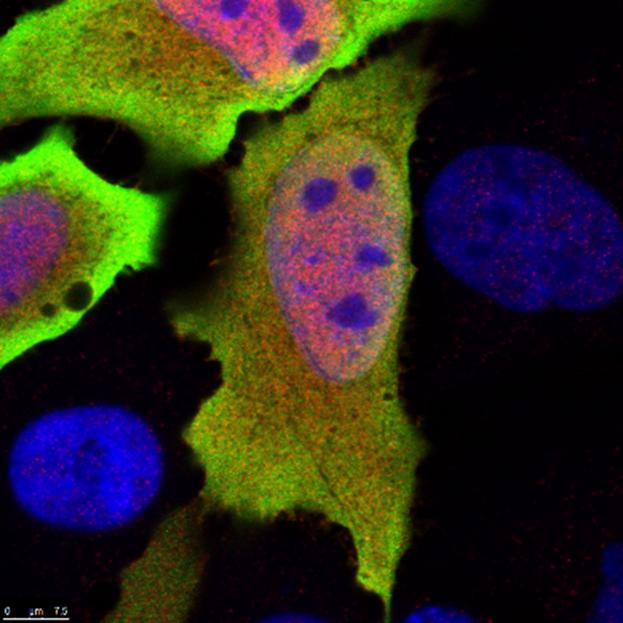
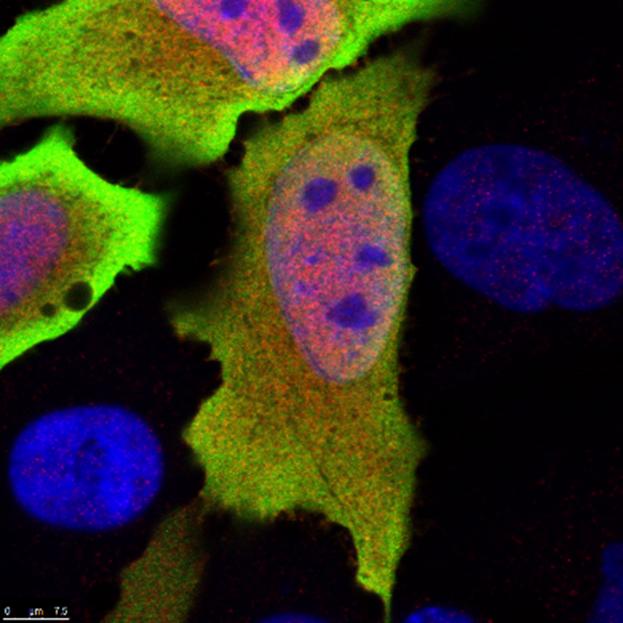
IMAGE

Credit: CSIRO

Australia's national science agency CSIRO has identified a new gene that plays a critical role in regulating the body's immune response to infection and disease.

The discovery could lead to the development of new treatments for influenza, arthritis and even cancer.

The gene, called C6orf106 or "C6", controls the production of proteins involved in infectious diseases, cancer and diabetes. The gene has existed for 500 million years, but its potential is only now understood.

"Our immune system produces proteins called cytokines that help fortify the immune system and work to prevent viruses and other pathogens from replicating and causing disease," CSIRO researcher Dr Cameron Stewart said.

"C6 regulates this process by switching off the production of certain cytokines to stop our immune response from spiralling out of control.

"The cytokines regulated by C6 are implicated in a variety of diseases including cancer, diabetes and inflammatory disorders such as rheumatoid arthritis."

The discovery helps improve our understanding of our immune system, and it is hoped that this understanding will enable scientists to develop new, more targeted therapies.

Dr Rebecca Ambrose was part of the CSIRO team that discovered the gene, and co-authored the recent paper announcing the discovery in the Journal of Biological Chemistry.

"Even though the human genome was first fully sequenced in 2003, there are still thousands of genes that we know very little about," Dr Rebecca Ambrose, a former CSIRO researcher, now based at the Hudson Institute of Medical Research said.

"It's exciting to consider that C6 has existed for more than 500 million years, preserved and passed down from simple organisms all the way to humans. But only now are we gaining insights into its importance."

Having discovered the function of C6, the researchers are awarded the privilege of naming it, and are enlisting the help of the community to do so.

"The current name, C6orf106, reflects the gene's location within the human genome, rather than relating to any particular function," Dr Stewart said.

"We think we can do better than that, and are inviting suggestions from the public."

A shortlist of names will be made available for final approval by a governing third party.

The breakthrough builds on decades of work in infectious diseases, by researchers from CSIRO, Australia's national science agency.

###

Media Contact

Ofa Fitzgibbons
[email protected]
61-424-031-639
@csironews

http://www.csiro.au

Share12Tweet8Share2ShareShareShare2

Related Posts

Evaluating Pediatric Emergency Care Quality in Ethiopia

February 7, 2026

TPMT Expression Predictions Linked to Azathioprine Side Effects

February 7, 2026

Improving Dementia Care with Enhanced Activity Kits

February 7, 2026

Decoding Prostate Cancer Origins via snFLARE-seq, mxFRIZNGRND

February 7, 2026
Please login to join discussion

POPULAR NEWS

  • Robotic Ureteral Reconstruction: A Novel Approach

    Robotic Ureteral Reconstruction: A Novel Approach

    82 shares
    Share 33 Tweet 21
  • Digital Privacy: Health Data Control in Incarceration

    63 shares
    Share 25 Tweet 16
  • Study Reveals Lipid Accumulation in ME/CFS Cells

    57 shares
    Share 23 Tweet 14
  • Breakthrough in RNA Research Accelerates Medical Innovations Timeline

    53 shares
    Share 21 Tweet 13

About

We bring you the latest biotechnology news from best research centers and universities around the world. Check our website.

Follow us

Recent News

Evaluating Pediatric Emergency Care Quality in Ethiopia

TPMT Expression Predictions Linked to Azathioprine Side Effects

Improving Dementia Care with Enhanced Activity Kits

Subscribe to Blog via Email

Success! An email was just sent to confirm your subscription. Please find the email now and click 'Confirm' to start subscribing.

Join 73 other subscribers
  • Contact Us

Bioengineer.org © Copyright 2023 All Rights Reserved.

Welcome Back!

Login to your account below

Forgotten Password?

Retrieve your password

Please enter your username or email address to reset your password.

Log In
No Result
View All Result
  • Homepages
    • Home Page 1
    • Home Page 2
  • News
  • National
  • Business
  • Health
  • Lifestyle
  • Science

Bioengineer.org © Copyright 2023 All Rights Reserved.