• HOME
  • NEWS
  • EXPLORE
    • CAREER
      • Companies
      • Jobs
    • EVENTS
    • iGEM
      • News
      • Team
    • PHOTOS
    • VIDEO
    • WIKI
  • BLOG
  • COMMUNITY
    • FACEBOOK
    • INSTAGRAM
    • TWITTER
Saturday, February 7, 2026
BIOENGINEER.ORG
No Result
View All Result
  • Login
  • HOME
  • NEWS
  • EXPLORE
    • CAREER
      • Companies
      • Jobs
        • Lecturer
        • PhD Studentship
        • Postdoc
        • Research Assistant
    • EVENTS
    • iGEM
      • News
      • Team
    • PHOTOS
    • VIDEO
    • WIKI
  • BLOG
  • COMMUNITY
    • FACEBOOK
    • INSTAGRAM
    • TWITTER
  • HOME
  • NEWS
  • EXPLORE
    • CAREER
      • Companies
      • Jobs
        • Lecturer
        • PhD Studentship
        • Postdoc
        • Research Assistant
    • EVENTS
    • iGEM
      • News
      • Team
    • PHOTOS
    • VIDEO
    • WIKI
  • BLOG
  • COMMUNITY
    • FACEBOOK
    • INSTAGRAM
    • TWITTER
No Result
View All Result
Bioengineer.org
No Result
View All Result
Home NEWS Science News Health

Inflammation discovery opens window to better rehabilitation possibilities

Bioengineer by Bioengineer
June 26, 2018
in Health
Reading Time: 2 mins read
0
Share on FacebookShare on TwitterShare on LinkedinShare on RedditShare on Telegram
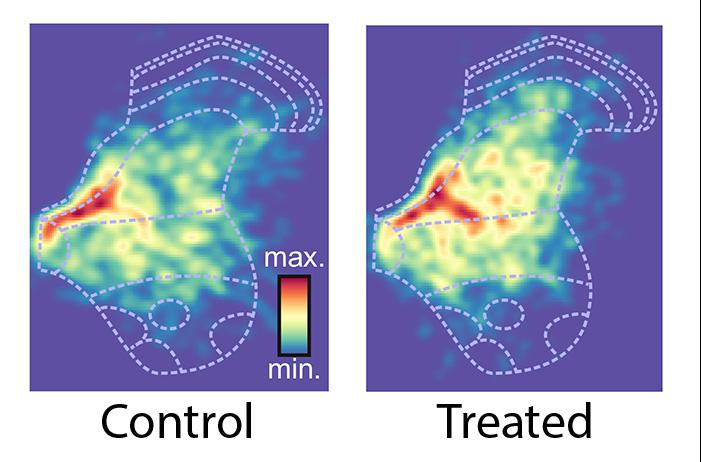
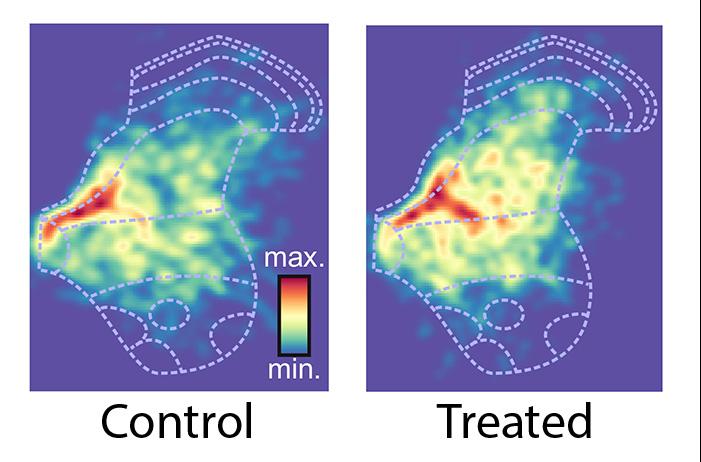
IMAGE

Credit: Brain: A Journal of Neurology (Oxford Academic)

Inflammation plays a key role in improving the ability to relearn motor skills lost as a result of spinal cord injuries, such as grasping objects, new University of Alberta research shows.

U of A spinal cord researchers Karim Fouad, a Canada Research Chair in the Faculty of Rehabilitation Medicine, and Abel Torres EspĂ­n studied inflammation and rehabilitation training in rodents and discovered that creating a mild inflammatory response improved a rat's ability to relearn how to pick up pellets months following a spinal cord injury.

"Time is of the essence," explained Fouad. "It's usually impossible at the early stages to train at a high enough intensity to regain motor functions. If patients can't work on recovering those skills effectively, those skills are lost forever and cannot be regained."

Fouad's findings could have significant impact on how nervous system injuries are treated in the future, to improve patient recovery.

"If we can elicit similar responses in patients, this has huge potential to improve recovery," explained Fouad.

Loss of hand function is a leading cause of adult disability in Canada and can be devastating to patients and their families.

Fouad's team also ran studies to explore training intensity, and found the amount of reaching and the intensity matters to increased recovery. For the rats that were training more frequently, recovery was markedly improved, as mapping of stained nerve cells showed an increase in connectivity.

"After an injury, there are thousands of axons that are all trying to reconnect," said Fouad. "Rebuilding tends to be random, but with training it can be more deliberate and successful."

In order to develop a clinically relevant approach to modulate inflammation, Fouad's group is currently exploring which specific aspect of inflammation is key to nervous system rewiring.

###

Fouad's proof-of-principle, Eliciting Inflammation Enables Successful Rehabilitative Training in Chronic Spinal Cord Injury, was published in the July issue of Brain, the international journal of neurology.

The study was supported by Wings for Life (Austria) and the Canadian Institutes of Health Research.

Media Contact

Bev Betkowski
[email protected]
780-492-3808
@ualberta

http://www.ualberta.ca

Related Journal Article

http://dx.doi.org/10.1093/brain/awy128
Share12Tweet7Share2ShareShareShare1

Related Posts

TPMT Expression Predictions Linked to Azathioprine Side Effects

February 7, 2026

Improving Dementia Care with Enhanced Activity Kits

February 7, 2026

Decoding Prostate Cancer Origins via snFLARE-seq, mxFRIZNGRND

February 7, 2026

Digital Health Perspectives from Baltic Sea Experts

February 7, 2026
Please login to join discussion

POPULAR NEWS

  • Robotic Ureteral Reconstruction: A Novel Approach

    Robotic Ureteral Reconstruction: A Novel Approach

    82 shares
    Share 33 Tweet 21
  • Digital Privacy: Health Data Control in Incarceration

    63 shares
    Share 25 Tweet 16
  • Study Reveals Lipid Accumulation in ME/CFS Cells

    57 shares
    Share 23 Tweet 14
  • Breakthrough in RNA Research Accelerates Medical Innovations Timeline

    53 shares
    Share 21 Tweet 13

About

We bring you the latest biotechnology news from best research centers and universities around the world. Check our website.

Follow us

Recent News

TPMT Expression Predictions Linked to Azathioprine Side Effects

Improving Dementia Care with Enhanced Activity Kits

Decoding Prostate Cancer Origins via snFLARE-seq, mxFRIZNGRND

Subscribe to Blog via Email

Enter your email address to subscribe to this blog and receive notifications of new posts by email.

Join 73 other subscribers
  • Contact Us

Bioengineer.org © Copyright 2023 All Rights Reserved.

Welcome Back!

Login to your account below

Forgotten Password?

Retrieve your password

Please enter your username or email address to reset your password.

Log In
No Result
View All Result
  • Homepages
    • Home Page 1
    • Home Page 2
  • News
  • National
  • Business
  • Health
  • Lifestyle
  • Science

Bioengineer.org © Copyright 2023 All Rights Reserved.