• HOME
  • NEWS
  • EXPLORE
    • CAREER
      • Companies
      • Jobs
    • EVENTS
    • iGEM
      • News
      • Team
    • PHOTOS
    • VIDEO
    • WIKI
  • BLOG
  • COMMUNITY
    • FACEBOOK
    • INSTAGRAM
    • TWITTER
Saturday, February 7, 2026
BIOENGINEER.ORG
No Result
View All Result
  • Login
  • HOME
  • NEWS
  • EXPLORE
    • CAREER
      • Companies
      • Jobs
        • Lecturer
        • PhD Studentship
        • Postdoc
        • Research Assistant
    • EVENTS
    • iGEM
      • News
      • Team
    • PHOTOS
    • VIDEO
    • WIKI
  • BLOG
  • COMMUNITY
    • FACEBOOK
    • INSTAGRAM
    • TWITTER
  • HOME
  • NEWS
  • EXPLORE
    • CAREER
      • Companies
      • Jobs
        • Lecturer
        • PhD Studentship
        • Postdoc
        • Research Assistant
    • EVENTS
    • iGEM
      • News
      • Team
    • PHOTOS
    • VIDEO
    • WIKI
  • BLOG
  • COMMUNITY
    • FACEBOOK
    • INSTAGRAM
    • TWITTER
No Result
View All Result
Bioengineer.org
No Result
View All Result
Home NEWS Science News Biology

The origins of fine-particle pollution in Guangzhou, China

Bioengineer by Bioengineer
June 26, 2018
in Biology
Reading Time: 2 mins read
0
Share on FacebookShare on TwitterShare on LinkedinShare on RedditShare on Telegram
IMAGE

Credit: Nan Wang

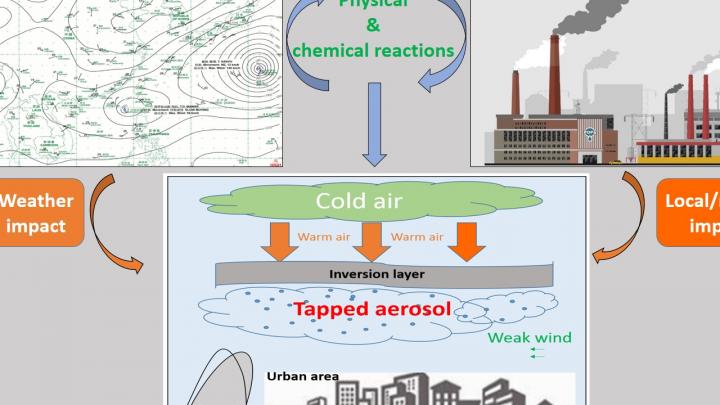
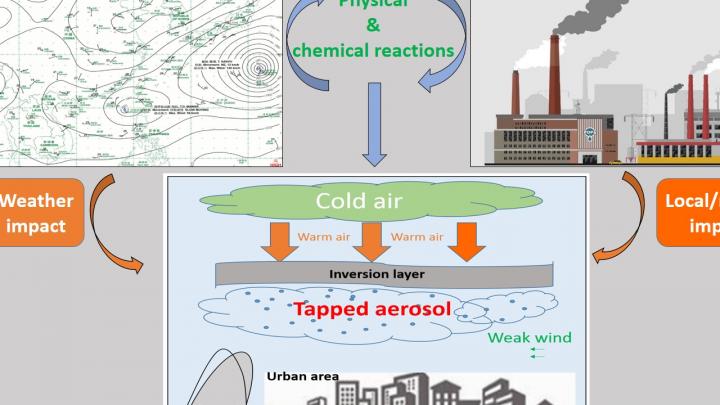
Haze pollution is an integrated result of emissions, chemical reactions and regional transport under unfavorable weather conditions. Numerical simulation has the potential to strengthen our knowledge on the underlying mechanisms of haze formation. As a result, policymakers might benefit and efficient control strategies should emerge.

Dr. Nan WANG, from the Institute of Tropical and Marine Meteorology, China Meteorological Administration, and Dr. Zhenhao LING, from Sun Yat-sen University, collected historical data on haze episodes and classified them according to the associated synoptic weather systems. With the aid of numerical simulation, they summarized the characteristics of source region contributions to fine-particle pollution under the most frequent unfavorable weather systems in Guangzhou–a typical city of China's important Pearl River Delta region. They suggested that source region contributions showed significant differences when controlled by different synoptic systems. Their study is published in Advances in Atmospheric Sciences.

"Our statistical results show that SP ['sea high pressure'] and FC ['foreside of a cold front'] are the most frequent unfavorable weather systems in the PRD [Pearl River Delta region]. Usually, Siberian cold high pressure, the predecessor of SP, moves easterly to the sea, forming a weaker but warmer SP. After that, SP extends to southern China and dominates the PRD. A stationary atmosphere can be found and local emissions are the main cause of haze events. However, an FC-affected event means that the convergence of warm and cold air flow occurring to the northwest of the PRD will result in northerly wind prevailing over the PRD. Pollutants from upwind areas become the main factor. Therefore, policymakers can develop more efficient control plans by incorporating weather system analysis when haze events occur."

Dr. Zhenhao LING further explains that meteorological conditions and emissions are the two main factors causing haze pollution, and that chemical transport models may help us to quantify their relative impacts and thus provide scientific guidance for government decisions around emission control measures.

###

Media Contact

Zheng Lin
[email protected]
86-108-299-5053
@aasjournal

http://english.iap.cas.cn/

Original Source

http://159.226.119.58/aas/EN/news/news154.shtml http://dx.doi.org/10.1007/s00376-018-7212-9

Share12Tweet8Share2ShareShareShare2

Related Posts

Florida Cane Toad: Complex Spread and Selective Evolution

Florida Cane Toad: Complex Spread and Selective Evolution

February 7, 2026
New Study Uncovers Mechanism Behind Burn Pit Particulate Matter–Induced Lung Inflammation

New Study Uncovers Mechanism Behind Burn Pit Particulate Matter–Induced Lung Inflammation

February 6, 2026

DeepBlastoid: Advancing Automated and Efficient Evaluation of Human Blastoids with Deep Learning

February 6, 2026

Navigating the Gut: The Role of Formic Acid in the Microbiome

February 6, 2026
Please login to join discussion

POPULAR NEWS

  • Robotic Ureteral Reconstruction: A Novel Approach

    Robotic Ureteral Reconstruction: A Novel Approach

    82 shares
    Share 33 Tweet 21
  • Digital Privacy: Health Data Control in Incarceration

    63 shares
    Share 25 Tweet 16
  • Study Reveals Lipid Accumulation in ME/CFS Cells

    57 shares
    Share 23 Tweet 14
  • Breakthrough in RNA Research Accelerates Medical Innovations Timeline

    53 shares
    Share 21 Tweet 13

About

We bring you the latest biotechnology news from best research centers and universities around the world. Check our website.

Follow us

Recent News

Decoding Prostate Cancer Origins via snFLARE-seq, mxFRIZNGRND

Digital Health Perspectives from Baltic Sea Experts

Florida Cane Toad: Complex Spread and Selective Evolution

Subscribe to Blog via Email

Enter your email address to subscribe to this blog and receive notifications of new posts by email.

Join 73 other subscribers
  • Contact Us

Bioengineer.org © Copyright 2023 All Rights Reserved.

Welcome Back!

Login to your account below

Forgotten Password?

Retrieve your password

Please enter your username or email address to reset your password.

Log In
No Result
View All Result
  • Homepages
    • Home Page 1
    • Home Page 2
  • News
  • National
  • Business
  • Health
  • Lifestyle
  • Science

Bioengineer.org © Copyright 2023 All Rights Reserved.