



• HOME
  • NEWS
  • EXPLORE
    • CAREER
      • Companies
      • Jobs
    • EVENTS
    • iGEM
      • News
      • Team
    • PHOTOS
    • VIDEO
    • WIKI
  • BLOG
  • COMMUNITY
    • FACEBOOK
    • INSTAGRAM
    • TWITTER
Saturday, February 7, 2026
BIOENGINEER.ORG
No Result
View All Result
  • Login
  • HOME
  • NEWS
  • EXPLORE
    • CAREER
      • Companies
      • Jobs
        • Lecturer
        • PhD Studentship
        • Postdoc
        • Research Assistant
    • EVENTS
    • iGEM
      • News
      • Team
    • PHOTOS
    • VIDEO
    • WIKI
  • BLOG
  • COMMUNITY
    • FACEBOOK
    • INSTAGRAM
    • TWITTER
  • HOME
  • NEWS
  • EXPLORE
    • CAREER
      • Companies
      • Jobs
        • Lecturer
        • PhD Studentship
        • Postdoc
        • Research Assistant
    • EVENTS
    • iGEM
      • News
      • Team
    • PHOTOS
    • VIDEO
    • WIKI
  • BLOG
  • COMMUNITY
    • FACEBOOK
    • INSTAGRAM
    • TWITTER
No Result
View All Result
Bioengineer.org
No Result
View All Result
Home NEWS Science News Biology

In melanoma, radiosurgery may combine well with immunotherapy, especially PD-1 inhibitors

Bioengineer by Bioengineer
June 25, 2018
in Biology
Reading Time: 2 mins read
0
Share on FacebookShare on TwitterShare on LinkedinShare on RedditShare on Telegram
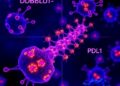
IMAGE

Credit: University of Colorado Cancer Center

Doctors often treat melanoma with drugs that unblind the immune system to cancer. And brain metastases associated with melanoma are often treated with precisely targeted radiation known as radiosurgery. Now a University of Colorado Cancer Center study published in the Journal of Neuro-Oncology shows a potential advantage of combining these two techniques: Of 38 melanoma patients treated with immunotherapy and radiosurgery between 2012 and 2017, median overall survival was not reached, meaning that so many of these patients (who historically have had very poor prognosis) were still alive when data was analyzed that it was impossible to predict how long a patient treated in this way would be expected to live. Importantly, the study also shows a significant difference in cancer control depending on the type of immunotherapy used. In melanoma, brain metastases are a major cause of mortality. Patients treated with anti-CTLA4 immunotherapies saw the development of new brain metastases at median 3.1 months, whereas the median was not reached for patients treated with anti-PD-1 immunotherapies.

"We decided to look at this because it's something we commonly do in the clinic. We use immune checkpoint inhibitors, and at the appearance of brain metastases, we're using radiosurgery. Big studies have shown a dramatic increase in survival for melanoma patients with brain metastases, and our study hints at one possible reason why: There may be an underlying synergy between these therapies," says Tyler Robin, MD, PhD, senior resident in radiation oncology at the CU School of Medicine and the paper's first author.

The exact mechanism of this synergy is still under investigation, but studies have shown that radiation treatments can increase the PD-L1 signal on tumors essentially giving the anti-PD-1 or anti-PD-L1 inhibitors a target to act on.

Of the 38 patients treated in this way, none developed severe side effects, though six patients experienced some adverse reaction. Twenty-five patients received anti-CTLA4 immunotherapy, while 13 received anti-PD-1 immunotherapy, with results for anti-PD-1 therapies being across-the-board more successful (full results here).

"Several years ago, a patient might have expected to live months after that diagnosis, but for many patients this is no longer the case," Robin says. "People are actively investigating the combination of immune checkpoint inhibits and radiation, and our data raise the possibility that PD-1 inhibitors are preferential in this setting. We hope that ongoing and future investigations will shed more light on the potential value of this combination."

###

Media Contact

Garth Sundem
[email protected]
@CUAnschutz

http://www.ucdenver.edu

Original Source

http://www.coloradocancerblogs.org/in-melanoma-radiosurgery-may-work-well-with-immunotherapy-especially-pd-1-inhibitors/ http://dx.doi.org/10.1007/s11060-018-2930-5

Share12Tweet8Share2ShareShareShare2

Related Posts

Florida Cane Toad: Complex Spread and Selective Evolution

Florida Cane Toad: Complex Spread and Selective Evolution

February 7, 2026
New Study Uncovers Mechanism Behind Burn Pit Particulate Matter–Induced Lung Inflammation

New Study Uncovers Mechanism Behind Burn Pit Particulate Matter–Induced Lung Inflammation

February 6, 2026

DeepBlastoid: Advancing Automated and Efficient Evaluation of Human Blastoids with Deep Learning

February 6, 2026

Navigating the Gut: The Role of Formic Acid in the Microbiome

February 6, 2026
Please login to join discussion

POPULAR NEWS

  • Robotic Ureteral Reconstruction: A Novel Approach

    Robotic Ureteral Reconstruction: A Novel Approach

    82 shares
    Share 33 Tweet 21
  • Digital Privacy: Health Data Control in Incarceration

    63 shares
    Share 25 Tweet 16
  • Study Reveals Lipid Accumulation in ME/CFS Cells

    57 shares
    Share 23 Tweet 14
  • Breakthrough in RNA Research Accelerates Medical Innovations Timeline

    53 shares
    Share 21 Tweet 13

About

We bring you the latest biotechnology news from best research centers and universities around the world. Check our website.

Follow us

Recent News

Phage-Antibiotic Combo Beats Resistant Peritoneal Infection

Boosting Remote Healthcare: Stepped-Wedge Trial Insights

Barriers and Boosters of Seniors’ Physical Activity in Karachi

Subscribe to Blog via Email

Enter your email address to subscribe to this blog and receive notifications of new posts by email.

Join 73 other subscribers
  • Contact Us

Bioengineer.org © Copyright 2023 All Rights Reserved.

Welcome Back!

Login to your account below

Forgotten Password?

Retrieve your password

Please enter your username or email address to reset your password.

Log In
No Result
View All Result
  • Homepages
    • Home Page 1
    • Home Page 2
  • News
  • National
  • Business
  • Health
  • Lifestyle
  • Science

Bioengineer.org © Copyright 2023 All Rights Reserved.