• HOME
  • NEWS
  • EXPLORE
    • CAREER
      • Companies
      • Jobs
    • EVENTS
    • iGEM
      • News
      • Team
    • PHOTOS
    • VIDEO
    • WIKI
  • BLOG
  • COMMUNITY
    • FACEBOOK
    • INSTAGRAM
    • TWITTER
Tuesday, April 7, 2026
BIOENGINEER.ORG
No Result
View All Result
  • Login
  • HOME
  • NEWS
  • EXPLORE
    • CAREER
      • Companies
      • Jobs
        • Lecturer
        • PhD Studentship
        • Postdoc
        • Research Assistant
    • EVENTS
    • iGEM
      • News
      • Team
    • PHOTOS
    • VIDEO
    • WIKI
  • BLOG
  • COMMUNITY
    • FACEBOOK
    • INSTAGRAM
    • TWITTER
  • HOME
  • NEWS
  • EXPLORE
    • CAREER
      • Companies
      • Jobs
        • Lecturer
        • PhD Studentship
        • Postdoc
        • Research Assistant
    • EVENTS
    • iGEM
      • News
      • Team
    • PHOTOS
    • VIDEO
    • WIKI
  • BLOG
  • COMMUNITY
    • FACEBOOK
    • INSTAGRAM
    • TWITTER
No Result
View All Result
Bioengineer.org
No Result
View All Result
Home NEWS Science News Health

New target for treating alcoholism

Bioengineer by Bioengineer
June 25, 2018
in Health
Reading Time: 2 mins read
0
Share on FacebookShare on TwitterShare on LinkedinShare on RedditShare on Telegram
IMAGE

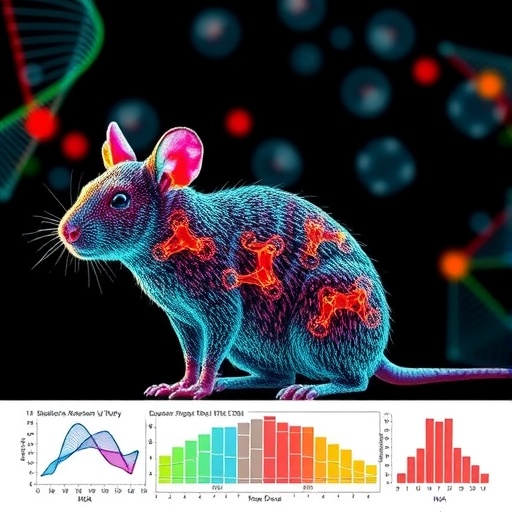
Credit: Kononoff et al., eNeuro (2018)

Activation of a receptor with no known function in the brain reduces excessive alcohol use and the pain of withdrawal, according to preclinical research in male rats. The study, published in eNeuro, suggests a new approach towards the treatment of alcohol use disorder.

More than a third of approved pharmaceutical drugs target G protein-coupled receptors (GPCRs). One receptor belonging to this family, GPR139, is highly expressed in the habenula — a brain region with a critical role in addiction.

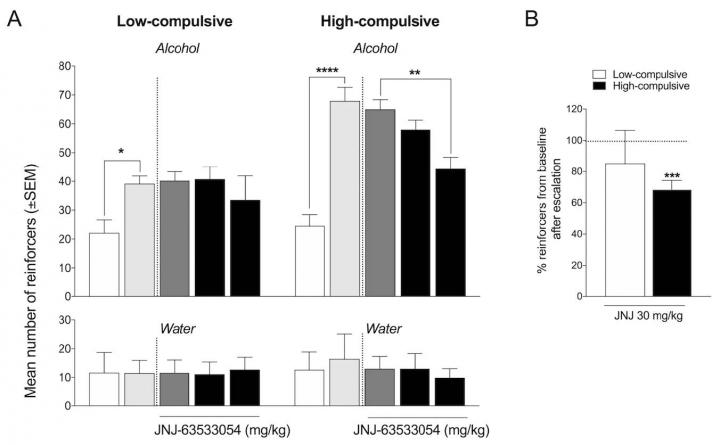
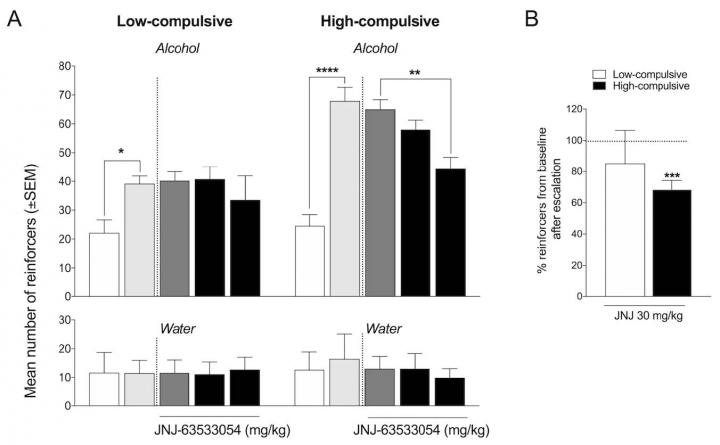
Olivier George and colleagues used a rat model of alcohol dependence and a substance that activates GPR139 to establish a previously unknown role for the receptor in addiction-like behavior. The researchers found that activation of GPR139 reduced alcohol intake and restored pain sensitivity thresholds only in alcohol-dependent mice that showed compulsive-like alcohol consumption akin to problematic drinking in humans. This study is the first to establish an effect of GPR139 manipulation on behavior and encourages investigation of the receptor as a potential drug target in the development of medications for alcohol dependence.

###

Article: Systemic and intra-habenular activation of the orphan G protein-coupled receptor GPR139 decreases compulsive-like alcohol drinking and hyperalgesia in alcohol-dependent rats
DOI: https://doi.org/10.1523/ENEURO.0153-18.2018
Corresponding author: Olivier George (The Scripps Research Institute, La Jolla, CA, USA), [email protected]

About eNeuro

eNeuro, the Society for Neuroscience's open-access journal launched in 2014, publishes rigorous neuroscience research with double-blind peer review that masks the identity of both the authors and reviewers, minimizing the potential for implicit biases. eNeuro is distinguished by a broader scope and balanced perspective achieved by publishing negative results, failure to replicate or replication studies. New research, computational neuroscience, theories and methods are also published.

About The Society for Neuroscience

The Society for Neuroscience is the world's largest organization of scientists and physicians devoted to understanding the brain and nervous system. The nonprofit organization, founded in 1969, now has nearly 37,000 members in more than 90 countries and over 130 chapters worldwide.

Media Contact

David Barnstone
[email protected]
202-962-4000
@SfNJournals

http://www.sfn.org

Related Journal Article

http://dx.doi.org/10.1523/ENEURO.0153-18.2018
Share12Tweet7Share2ShareShareShare1

Related Posts

AlpE Combo: New Tuberculosis Treatment Breakthrough

April 7, 2026

Ochsner Baton Rouge Welcomes New Specialty Physicians and Advanced Practice Providers

April 7, 2026

Reducing NICU Antibiotics by Revisiting Culture Timing

April 7, 2026

Reversing Disc Degeneration via Lactate Metabolism Shift

April 7, 2026
Please login to join discussion

POPULAR NEWS

  • blank

    Revolutionary AI Model Enhances Precision in Detecting Food Contamination

    98 shares
    Share 39 Tweet 25
  • Promising Outcomes from First Clinical Trials of Gene Regulation in Epilepsy

    51 shares
    Share 20 Tweet 13
  • Imagine a Social Media Feed That Challenges Your Views Instead of Reinforcing Them

    1010 shares
    Share 399 Tweet 250
  • Popular Anti-Aging Compound Linked to Damage in Corpus Callosum, Study Finds

    44 shares
    Share 18 Tweet 11

About

BIOENGINEER.ORG

We bring you the latest biotechnology news from best research centers and universities around the world. Check our website.

Follow us

Recent News

Innovative Framework for Tracking Plant Water Use Promises Enhanced Drought Resilience Forecasting

Sustainability of Maize-Soybean Farming Systems Compared

AlpE Combo: New Tuberculosis Treatment Breakthrough

Subscribe to Blog via Email

Enter your email address to subscribe to this blog and receive notifications of new posts by email.

Join 78 other subscribers
  • Contact Us

Bioengineer.org © Copyright 2023 All Rights Reserved.

Welcome Back!

Login to your account below

Forgotten Password?

Retrieve your password

Please enter your username or email address to reset your password.

Log In
No Result
View All Result
  • Homepages
    • Home Page 1
    • Home Page 2
  • News
  • National
  • Business
  • Health
  • Lifestyle
  • Science

Bioengineer.org © Copyright 2023 All Rights Reserved.