Credit: Chris Kassotis, Duke University
DURHAM, N.C. – Exposure to fracking chemicals and wastewater promotes fat cell development, or adipogenesis, in living cells in a laboratory, according to a new Duke University-led study.
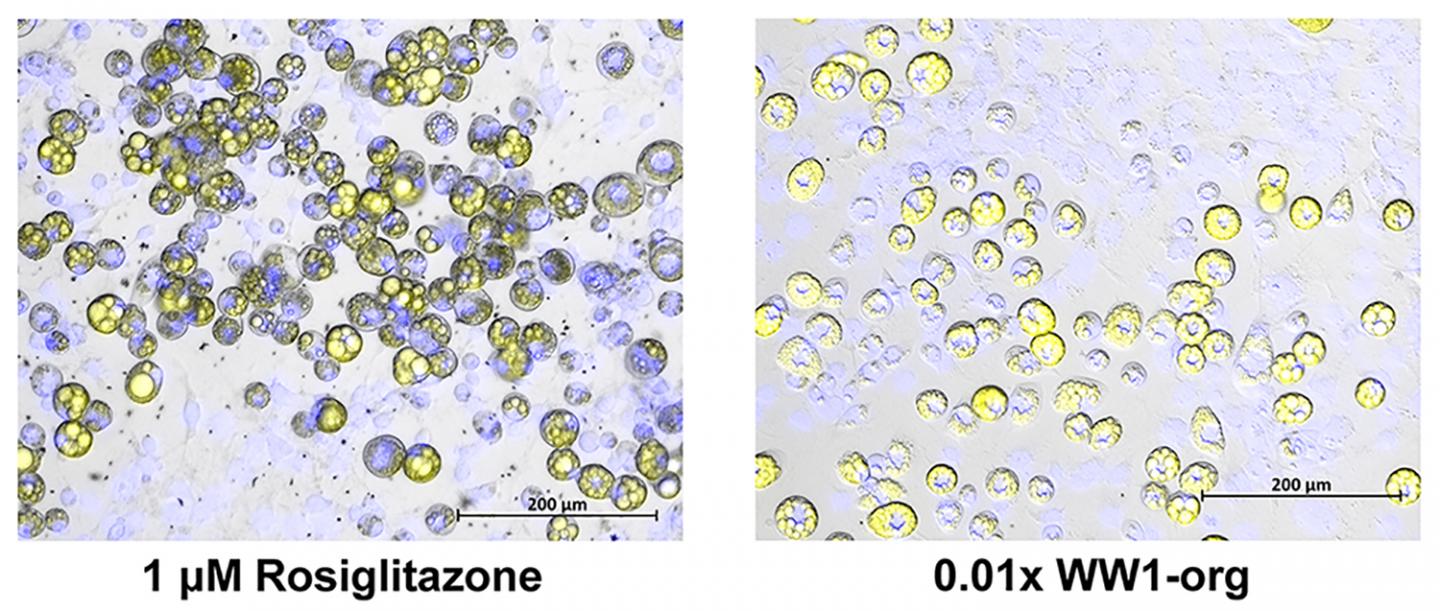
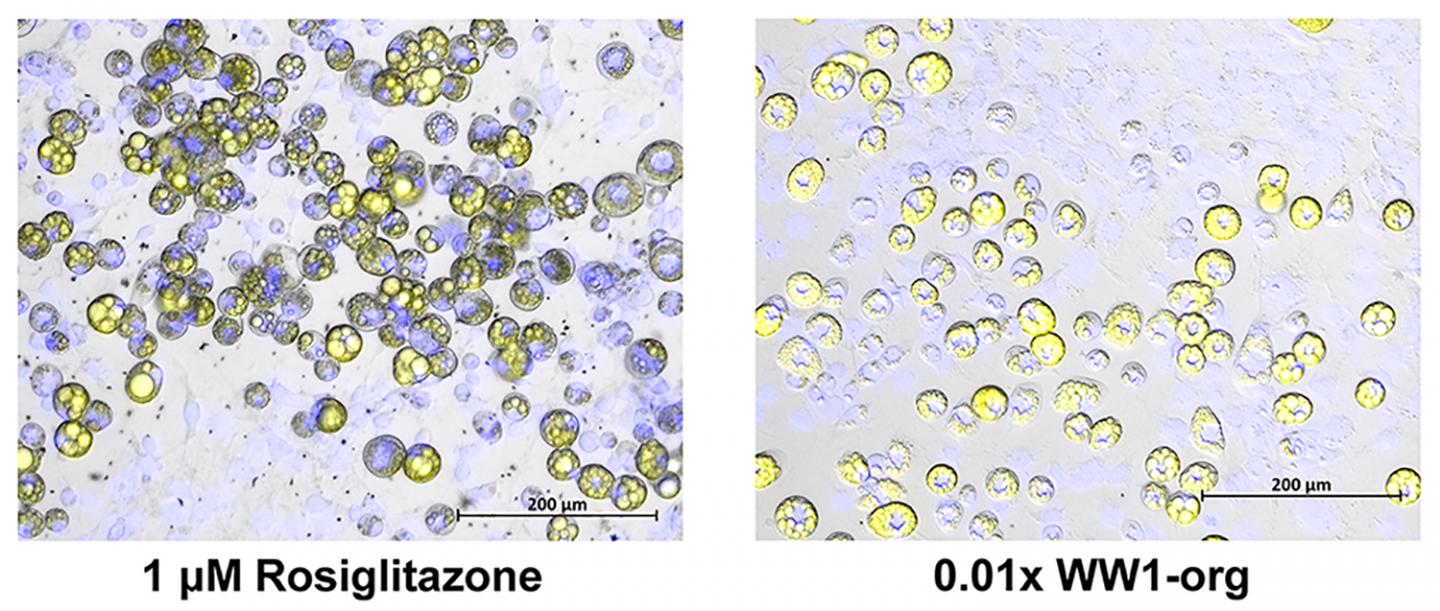
Researchers observed increases in both the size and number of fat cells after exposing living mouse cells in a dish to a mixture of 23 commonly used fracking chemicals. They also observed these effects after exposing the cells to samples of wastewater from fracked oil and gas wells and surface water believed to be contaminated with the wastewater. The findings appear June 21 in Science of the Total Environment.
"We saw significant fat cell proliferation and lipid accumulation, even when wastewater samples were diluted 1,000-fold from their raw state and when wastewater-affected surface water samples were diluted 25-fold," said Chris Kassotis, a postdoctoral research associate at Duke's Nicholas School of the Environment, who led the study.
"Rather than needing to concentrate the samples to detect effects, we diluted them and still detected the effects," he said.
Previous lab studies by Kassotis and his colleagues have shown that rodents exposed during gestation to the mix of 23 fracking chemicals are more likely to experience metabolic, reproductive and developmental health impacts, including increased weight gain.
Kassotis said further research will be needed to assess whether similar effects occur in humans or animals who drink or come into physical contact with affected surface waters outside the laboratory.
More than 1,000 different chemicals are used for hydraulic fracturing across the United States, many of which have been demonstrated through laboratory testing to act as endocrine disrupting chemicals in both cell and animal models.
To conduct this study, Kassotis and colleagues collected samples of fracking wastewater and wastewater-contaminated surface water near unconventional (aka, fracked) oil and gas production sites in Garfield County, Colorado, and Fayette County, West Virginia, in 2014.
Laboratory cultures of mouse cells were then exposed to these waters at varying concentrations or dilutions over a two-week period. The researchers measured how fat cell development in the cultures was affected. They performed similar tests exposing cell models to a mix of 23 fracking chemicals.
Within each experiment, other cells were exposed to rosiglitazone, a pharmaceutical known to be highly effective at activating fat cell differentiation and causing weight gain in humans.
The results showed that the 23-chemical mix induced about 60 percent as much fat accumulation as the potent pharmaceutical; the diluted wastewater samples induced about 80 percent as much; and the diluted surface water samples induced about 40 percent as much.
In all three cases, the number of pre-adipocytes, or precursor fat cells, that developed was much greater in cell models exposed to the chemicals or water samples than in those exposed to the rosiglitazone.
The tests also provided insights into the mechanisms that might be driving these effects.
"Activation of the hormone receptor PPAR-gamma, often called the master regulator of fat cell differentiation, occurred in some samples, while in other samples different mechanisms such as inhibition of the thyroid or androgen receptor, seemed to be in play," Kassotis explained.
###
Susan Nagel of the University of Missouri and Heather Stapleton of Duke's Nicholas School co-authored the new study with Kassotis.
Primary funding came from the National Institute for Environmental Health Sciences. Additional funding came from the University of Missouri, a crowdfunding campaign via Experiment.com, and an EPA 520 STAR Fellowship Assistance Agreement.
CITATION: "Unconventional Oil and Gas Chemicals and Wastewater-Impacted Water Samples Promote Adipogenesis via PPARγ-Dependent and Independent Mechanisms in 3T3-L1 Cells," Christopher D. Kassotis, Susan C. Nagel and Heather M. Stapleton; Science of the Total Environment, June 21, 2018. DOI: 10.1016/j.scitotenv.2018.05.030
Media Contact
Tim Lucas
[email protected]
919-613-8084
@DukeU
http://www.duke.edu
Related Journal Article
http://dx.doi.org/10.1016/j.scitotenv.2018.05.030