• HOME
  • NEWS
  • EXPLORE
    • CAREER
      • Companies
      • Jobs
    • EVENTS
    • iGEM
      • News
      • Team
    • PHOTOS
    • VIDEO
    • WIKI
  • BLOG
  • COMMUNITY
    • FACEBOOK
    • INSTAGRAM
    • TWITTER
Friday, August 21, 2026
BIOENGINEER.ORG
No Result
View All Result
  • Login
  • HOME
  • NEWS
  • EXPLORE
    • CAREER
      • Companies
      • Jobs
        • Lecturer
        • PhD Studentship
        • Postdoc
        • Research Assistant
    • EVENTS
    • iGEM
      • News
      • Team
    • PHOTOS
    • VIDEO
    • WIKI
  • BLOG
  • COMMUNITY
    • FACEBOOK
    • INSTAGRAM
    • TWITTER
  • HOME
  • NEWS
  • EXPLORE
    • CAREER
      • Companies
      • Jobs
        • Lecturer
        • PhD Studentship
        • Postdoc
        • Research Assistant
    • EVENTS
    • iGEM
      • News
      • Team
    • PHOTOS
    • VIDEO
    • WIKI
  • BLOG
  • COMMUNITY
    • FACEBOOK
    • INSTAGRAM
    • TWITTER
No Result
View All Result
Bioengineer.org
No Result
View All Result
Home NEWS Science News Immunology

Researchers solve the structure of the Zika virus helicase

Bioengineer by Bioengineer
May 21, 2016
in Immunology
Reading Time: 1 min read
0
Share on FacebookShare on TwitterShare on LinkedinShare on RedditShare on Telegram
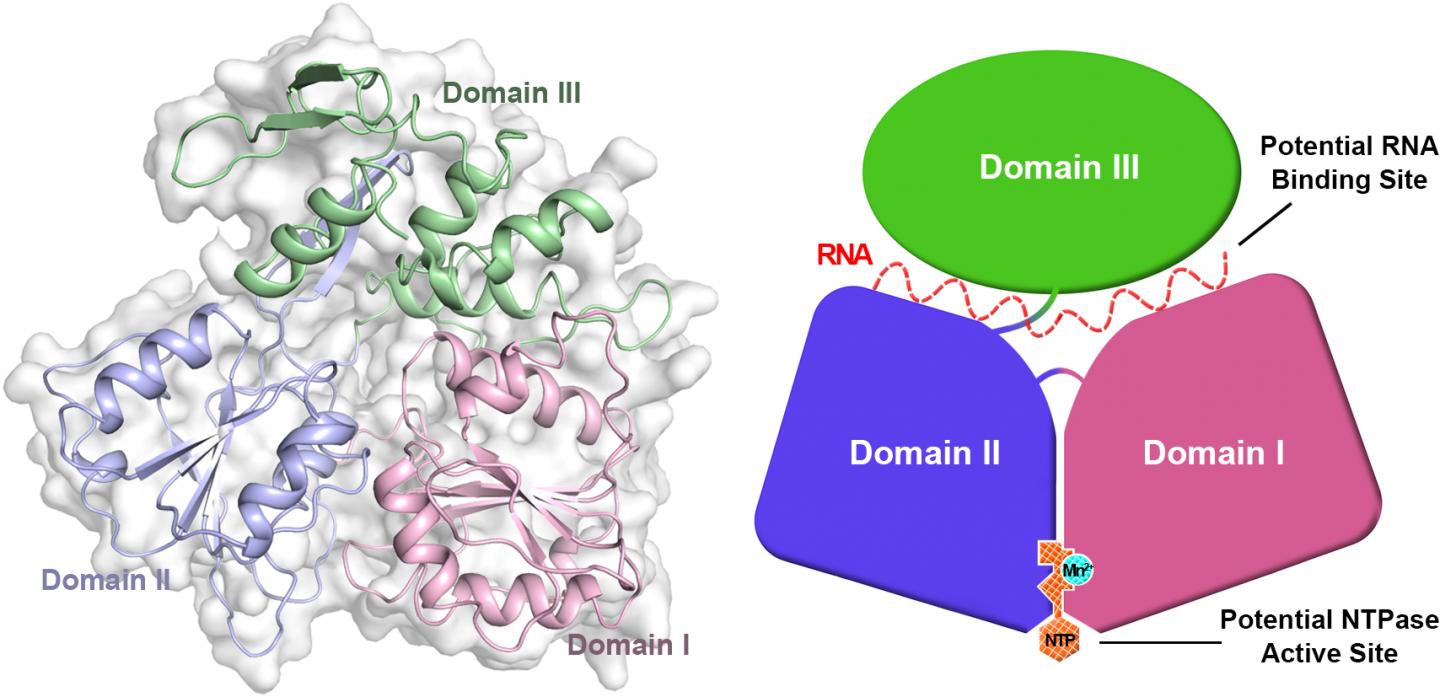
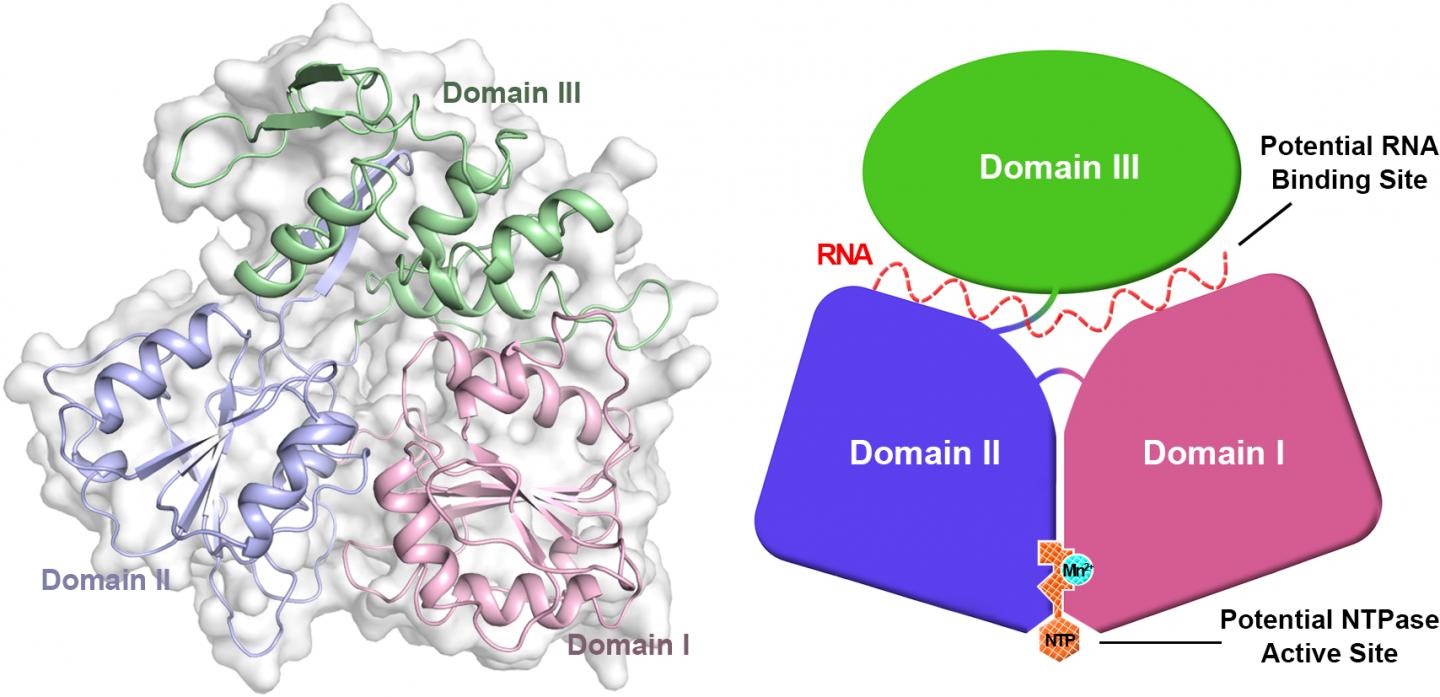
IMAGE
Credit: Protein & Cell

A team led by researchers from Tianjin University (P.R. China) has solved the structure of the Zika virus helicase, which is a key target for antiviral development. The research is published in Springer’s journal Protein & Cell.

The Zika virus can cause microcephaly and other severe birth defects. However, as there are currently no effective vaccines or therapies available to contain ZIKV infection, ZIKV remains a significant challenge to public health.

All viruses seem to need a helicase for replication. The Zika virus helicase is a motor enzyme which can convert energy from nucleoside triphosphate to unwind double stranded nucleic acids. This is an essential step for viral replication. By targeting Zika virus helicase with small-molecule inhibitors, it might be possible to stop viral replication and prevent disease. The scientists have successfully obtained an image at 1.8 angstroms of this viral enzyme. An angstrom is one ten-billionth (10-10) of a meter. This high-resolution image of the Zika virus key enzyme will help scientists develop drugs to treat the Zika virus disease.

###

Reference: Hongliang Tian, et al. (2016). The crystal structure of Zika virus helicase: basis for antiviral drug design. Protein & Cell. http://link.springer.com/article/10.1007/s13238-016-0275-4

Media Contact

Joan Robinson
[email protected]
49-622-148-78130
@SpringerNature

http://www.springer.com

The post Researchers solve the structure of the Zika virus helicase appeared first on Scienmag.

Share12Tweet8Share2ShareShareShare2

Related Posts

IMAGE

UMass Amherst grad student awarded fellowship for food allergy research

July 23, 2021
IMAGE

Less-sensitive COVID-19 tests may still achieve optimal results if enough people tested

July 22, 2021

Public trust in CDC, FDA, and Fauci holds steady, survey shows

July 20, 2021

USC study shows male-female differences in immune cell function

July 19, 2021
Please login to join discussion

POPULAR NEWS

  • Insilico’s Alex Aliper to Attend Two Hong Kong Summits on AI Healthcare

    29 shares
    Share 12 Tweet 7
  • Scientists trace the origins and domestication of modern cultivated chrysanthemums

    29 shares
    Share 12 Tweet 7
  • Nationwide Study Examines Comorbidity Burden Predicting Three-Year Neurodevelopment in Extremely Preterm Infants

    29 shares
    Share 12 Tweet 7
  • Systematic review finds DICER1 mutations in children and adolescents with thyroid cancer

    29 shares
    Share 12 Tweet 7

About

We bring you the latest biotechnology news from best research centers and universities around the world. Check our website.

Follow us

Recent News

Insilico’s Alex Aliper to Attend Two Hong Kong Summits on AI Healthcare

Scientists trace the origins and domestication of modern cultivated chrysanthemums

Nationwide Study Examines Comorbidity Burden Predicting Three-Year Neurodevelopment in Extremely Preterm Infants

Subscribe to Blog via Email

Enter your email address to subscribe to this blog and receive notifications of new posts by email.

Join 85 other subscribers
  • Contact Us

Bioengineer.org © Copyright 2023 All Rights Reserved.

Welcome Back!

Login to your account below

Forgotten Password?

Retrieve your password

Please enter your username or email address to reset your password.

Log In
No Result
View All Result
  • Homepages
    • Home Page 1
    • Home Page 2
  • News
  • National
  • Business
  • Health
  • Lifestyle
  • Science

Bioengineer.org © Copyright 2023 All Rights Reserved.