

• HOME
  • NEWS
  • EXPLORE
    • CAREER
      • Companies
      • Jobs
    • EVENTS
    • iGEM
      • News
      • Team
    • PHOTOS
    • VIDEO
    • WIKI
  • BLOG
  • COMMUNITY
    • FACEBOOK
    • INSTAGRAM
    • TWITTER
Sunday, October 4, 2026
BIOENGINEER.ORG
No Result
View All Result
  • Login
  • HOME
  • NEWS
  • EXPLORE
    • CAREER
      • Companies
      • Jobs
        • Lecturer
        • PhD Studentship
        • Postdoc
        • Research Assistant
    • EVENTS
    • iGEM
      • News
      • Team
    • PHOTOS
    • VIDEO
    • WIKI
  • BLOG
  • COMMUNITY
    • FACEBOOK
    • INSTAGRAM
    • TWITTER
  • HOME
  • NEWS
  • EXPLORE
    • CAREER
      • Companies
      • Jobs
        • Lecturer
        • PhD Studentship
        • Postdoc
        • Research Assistant
    • EVENTS
    • iGEM
      • News
      • Team
    • PHOTOS
    • VIDEO
    • WIKI
  • BLOG
  • COMMUNITY
    • FACEBOOK
    • INSTAGRAM
    • TWITTER
No Result
View All Result
Bioengineer.org
No Result
View All Result
Home NEWS Science News Health

Finnish scientists analyzed the proteome of T helper 17 cells

Bioengineer by Bioengineer
June 20, 2018
in Health
Reading Time: 2 mins read
0
Share on FacebookShare on TwitterShare on LinkedinShare on RedditShare on Telegram
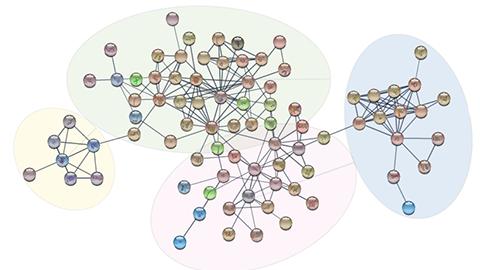
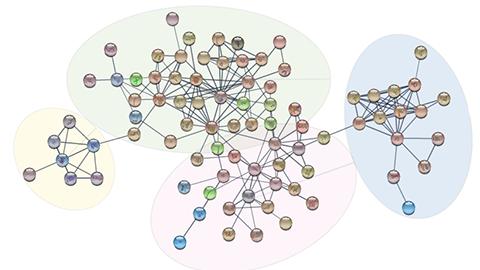
IMAGE

Credit: Turku Centre for Biotechnology

T helper 17 (Th17) cells belong to a group of T cells with essential functions in autoimmune diseases and inflammation. Regulatory T cells (iTregs) are T cells with a suppressive function to maintain self-tolerance and prevent autoimmune responses. Researchers from Turku Centre for Biotechnology and Aalto University together utilised the advanced technology called label-free quantitative proteomics to identify the proteomes of Th17 and iTreg cells.

Proteins are one of the major biomolecules that form the functional and structural entity of a living cell. Mass spectrometry-based quantitative proteomics can be used to determine the set of proteins expressed by a cell, tissue, or organism at a certain time.

The immune system defends the body against harmful pathogens and tumours, and also provides self-tolerance. T helper cells are major components of the adaptive system, and they play critical roles in controlling immune reactions.

During her postdoctoral study at the National Institutes of Health (NIH), USA, Dr. Zhi Chen started working on Th17 cells, a subset of helper T cells with an important role in autoimmune inflammation.

The label-free quantitative proteomics technology has been established at the Turku Centre for Biotechnology. Using this technology, Chen's research team in collaboration with computational scientists from Aalto University and scientists from the University of Turku, Åbo Akademi University and the University of Maryland generated a resource that was used to identify over 4000 proteins expressed in Th17 and iTreg cells.

– We also combined analysis of proteome and gene expression data and discovered protein expression changes that were not associated with changes at the transcriptional level, says Chen.

– These identified proteins can potentially be targeted in immunotherapy, especially in disease conditions like cancer and autoimmunity, believes Chen.

###

The research is funded by grants from Academy of Finland and TEKES.

The study is published in the journal PLoS Biology.

Media Contact

Zhi Chen
[email protected]
358-294-503-775

http://www.utu.fi/en/

Original Source

http://www.utu.fi/en/news/news/Pages/Finnish-Scientists-Analysed-the-Proteome-of-T-Helper-17-Cells.aspx http://dx.doi.org/10.1371/journal.pbio.2004194


Share12Tweet8Share2ShareShareShare2

Related Posts

How Well Do Patients Really Know Their Own Skin Cancer History?

How Well Do Patients Really Know Their Own Skin Cancer History?

October 4, 2026
Smartphone Dependence in the Hospital Ward: Nurses' Nomophobia Tested Against Job Performance

Smartphone Dependence in the Hospital Ward: Nurses’ Nomophobia Tested Against Job Performance

October 4, 2026

Toddler’s Sip of Printer Fluid Reveals Hidden Danger of Hydrocarbon Poisoning

October 4, 2026

Gene Silencing of Complement C3 Shields Nerve-Muscle Junctions in Myasthenia Gravis Rats

October 4, 2026
Please login to join discussion

POPULAR NEWS

  • Alloys That Shrink Their Own Grains: New PIX Mechanism Refines Metals With Heat Alone

    Alloys That Shrink Their Own Grains: New PIX Mechanism Refines Metals With Heat Alone

    29 shares
    Share 12 Tweet 7
  • Endurance Exercise Reshapes the Liver in Males and Females Through Distinct Molecular Routes

    29 shares
    Share 12 Tweet 7
  • Single Transcription Factor PU.1 Rapidly Converts Fibroblasts into Macrophage-Lineage Cells

    29 shares
    Share 12 Tweet 7
  • New Scale Measures How Ready Nurse Educators Really Are for the AI Era

    29 shares
    Share 12 Tweet 7

About

We bring you the latest biotechnology news from best research centers and universities around the world. Check our website.

Follow us

Recent News

Alloys That Shrink Their Own Grains: New PIX Mechanism Refines Metals With Heat Alone

Endurance Exercise Reshapes the Liver in Males and Females Through Distinct Molecular Routes

Single Transcription Factor PU.1 Rapidly Converts Fibroblasts into Macrophage-Lineage Cells

Subscribe to Blog via Email

Enter your email address to subscribe to this blog and receive notifications of new posts by email.

Join 85 other subscribers
  • Contact Us

Bioengineer.org © Copyright 2023 All Rights Reserved.

Welcome Back!

Login to your account below

Forgotten Password?

Retrieve your password

Please enter your username or email address to reset your password.

Log In
No Result
View All Result
  • Homepages
    • Home Page 1
    • Home Page 2
  • News
  • National
  • Business
  • Health
  • Lifestyle
  • Science

Bioengineer.org © Copyright 2023 All Rights Reserved.
