

• HOME
  • NEWS
  • EXPLORE
    • CAREER
      • Companies
      • Jobs
    • EVENTS
    • iGEM
      • News
      • Team
    • PHOTOS
    • VIDEO
    • WIKI
  • BLOG
  • COMMUNITY
    • FACEBOOK
    • INSTAGRAM
    • TWITTER
Saturday, February 7, 2026
BIOENGINEER.ORG
No Result
View All Result
  • Login
  • HOME
  • NEWS
  • EXPLORE
    • CAREER
      • Companies
      • Jobs
        • Lecturer
        • PhD Studentship
        • Postdoc
        • Research Assistant
    • EVENTS
    • iGEM
      • News
      • Team
    • PHOTOS
    • VIDEO
    • WIKI
  • BLOG
  • COMMUNITY
    • FACEBOOK
    • INSTAGRAM
    • TWITTER
  • HOME
  • NEWS
  • EXPLORE
    • CAREER
      • Companies
      • Jobs
        • Lecturer
        • PhD Studentship
        • Postdoc
        • Research Assistant
    • EVENTS
    • iGEM
      • News
      • Team
    • PHOTOS
    • VIDEO
    • WIKI
  • BLOG
  • COMMUNITY
    • FACEBOOK
    • INSTAGRAM
    • TWITTER
No Result
View All Result
Bioengineer.org
No Result
View All Result
Home NEWS Science News Health

Diagnostics of genetic cardiac diseases using stem cell-derived cardiomyocytes

Bioengineer by Bioengineer
June 19, 2018
in Health
Reading Time: 2 mins read
0
Share on FacebookShare on TwitterShare on LinkedinShare on RedditShare on Telegram
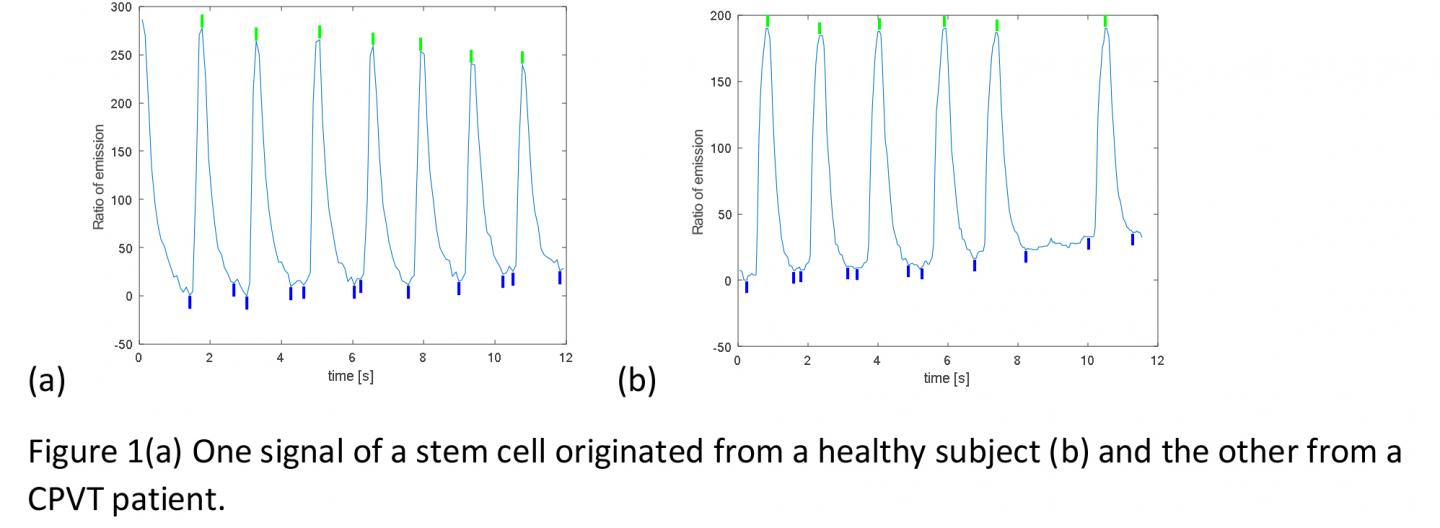
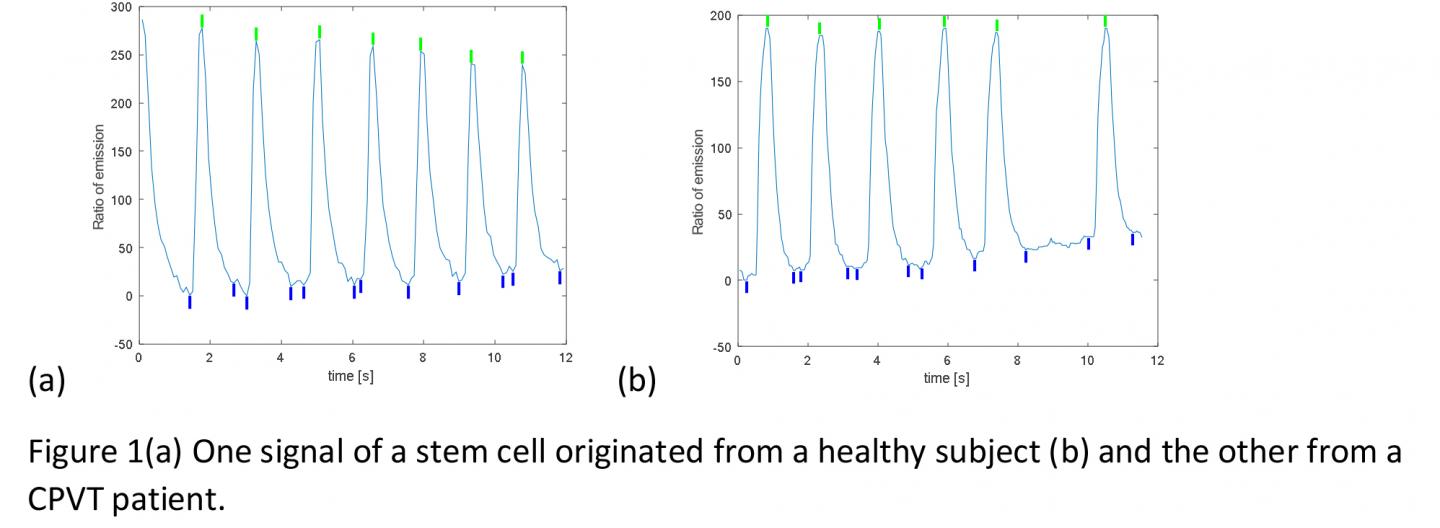
IMAGE

Credit: Authors

A new study by Professors Martti Juhola and Katriina Aalto-Setälä of the University of Tampere in Finland demonstrates that with the use of artificial intelligence and machine learning, it is possible not only to accurately sort sick cardiac cell cultures from healthy ones, but also to differentiate between genetic cardiac diseases.

iPSC-derived cardiomyocytes can be derived from a blood sample or a skin biopsy. These cells are currently used to understand the pathophysiology of different diseases and to identify new potential drugs for various diseases.

Machine learning and artificial intelligence have greatly improved in recent years. Scientists at the University of Tampere have now combined stem cell technology and artificial intelligence to study beating cardiomyocytes in cell cultures. The beating behavior of the cells was analyzed using calcium signals. Calcium is essential for cardiomyocytes to beat, and the beating can be monitored by using fluorescent labels.

In the study, the cardiomyocytes were derived either from patients with a genetic arrhythmia (CPVT), long QT syndrome (LQTS), or hypertrophic cardiomyopathy (HCM), or from healthy individuals. The beatings of single cardiomyocytes were recorded and the analysis software was taught what diseases they represented. The program then learned to separate the different groups and to identify specific features in the beating behavior of each cell.

The software is now capable of identifying whether signals are from cells derived from an individual carrying a disease-causing mutation or from a healthy individual. This is very impressive, but the biggest surprise was that the program could also tell the difference between the diseases.

This important observation reveals that iPSC-derived cells and artificial intelligence have the potential to be used in diagnostics. Currently, genetic diseases are mainly diagnosed by DNA analysis, but in many cases the results do not reveal whether the DNA alteration is the true cause of the disease or whether it is just an innocent variation. This new finding demonstrates that uniting artificial intelligence and machine learning can help in such situations. The combination of technologies could also be used in cases of unspecific but severe cardiac findings to identify the specific disease causing the symptoms.

###

See the article in Scientific Reports: http://www.nature.com/articles/s41598-018-27695-5

Media Contact

Professor of computer science Martti Juhola
[email protected]
358-401-901-716
@UniTampere

http://www.uta.fi/

Original Source

http://www.uta.fi/en/news/story/diagnostics-genetic-cardiac-diseases-using-stem-cell-derived-cardiomyocytes

Share12Tweet8Share2ShareShareShare2

Related Posts

Digital Health Perspectives from Baltic Sea Experts

February 7, 2026

Exploring Decision-Making in Dementia Caregivers’ Mobility

February 7, 2026

Succinate Receptor 1 Limits Blood Cell Formation, Leukemia

February 7, 2026

Palmitoylation of Tfr1 Drives Platelet Ferroptosis and Exacerbates Liver Damage in Heat Stroke

February 7, 2026
Please login to join discussion

POPULAR NEWS

  • Robotic Ureteral Reconstruction: A Novel Approach

    Robotic Ureteral Reconstruction: A Novel Approach

    82 shares
    Share 33 Tweet 21
  • Digital Privacy: Health Data Control in Incarceration

    63 shares
    Share 25 Tweet 16
  • Study Reveals Lipid Accumulation in ME/CFS Cells

    57 shares
    Share 23 Tweet 14
  • Breakthrough in RNA Research Accelerates Medical Innovations Timeline

    53 shares
    Share 21 Tweet 13

About

We bring you the latest biotechnology news from best research centers and universities around the world. Check our website.

Follow us

Recent News

Digital Health Perspectives from Baltic Sea Experts

Florida Cane Toad: Complex Spread and Selective Evolution

Exploring Decision-Making in Dementia Caregivers’ Mobility

Subscribe to Blog via Email

Enter your email address to subscribe to this blog and receive notifications of new posts by email.

Join 73 other subscribers
  • Contact Us

Bioengineer.org © Copyright 2023 All Rights Reserved.

Welcome Back!

Login to your account below

Forgotten Password?

Retrieve your password

Please enter your username or email address to reset your password.

Log In
No Result
View All Result
  • Homepages
    • Home Page 1
    • Home Page 2
  • News
  • National
  • Business
  • Health
  • Lifestyle
  • Science

Bioengineer.org © Copyright 2023 All Rights Reserved.