• HOME
  • NEWS
  • EXPLORE
    • CAREER
      • Companies
      • Jobs
    • EVENTS
    • iGEM
      • News
      • Team
    • PHOTOS
    • VIDEO
    • WIKI
  • BLOG
  • COMMUNITY
    • FACEBOOK
    • INSTAGRAM
    • TWITTER
Saturday, February 7, 2026
BIOENGINEER.ORG
No Result
View All Result
  • Login
  • HOME
  • NEWS
  • EXPLORE
    • CAREER
      • Companies
      • Jobs
        • Lecturer
        • PhD Studentship
        • Postdoc
        • Research Assistant
    • EVENTS
    • iGEM
      • News
      • Team
    • PHOTOS
    • VIDEO
    • WIKI
  • BLOG
  • COMMUNITY
    • FACEBOOK
    • INSTAGRAM
    • TWITTER
  • HOME
  • NEWS
  • EXPLORE
    • CAREER
      • Companies
      • Jobs
        • Lecturer
        • PhD Studentship
        • Postdoc
        • Research Assistant
    • EVENTS
    • iGEM
      • News
      • Team
    • PHOTOS
    • VIDEO
    • WIKI
  • BLOG
  • COMMUNITY
    • FACEBOOK
    • INSTAGRAM
    • TWITTER
No Result
View All Result
Bioengineer.org
No Result
View All Result
Home NEWS Science News Health

OU team develops new antibiotic to fight MRSA

Bioengineer by Bioengineer
May 18, 2016
in Health
Reading Time: 2 mins read
0
Share on FacebookShare on TwitterShare on LinkedinShare on RedditShare on Telegram
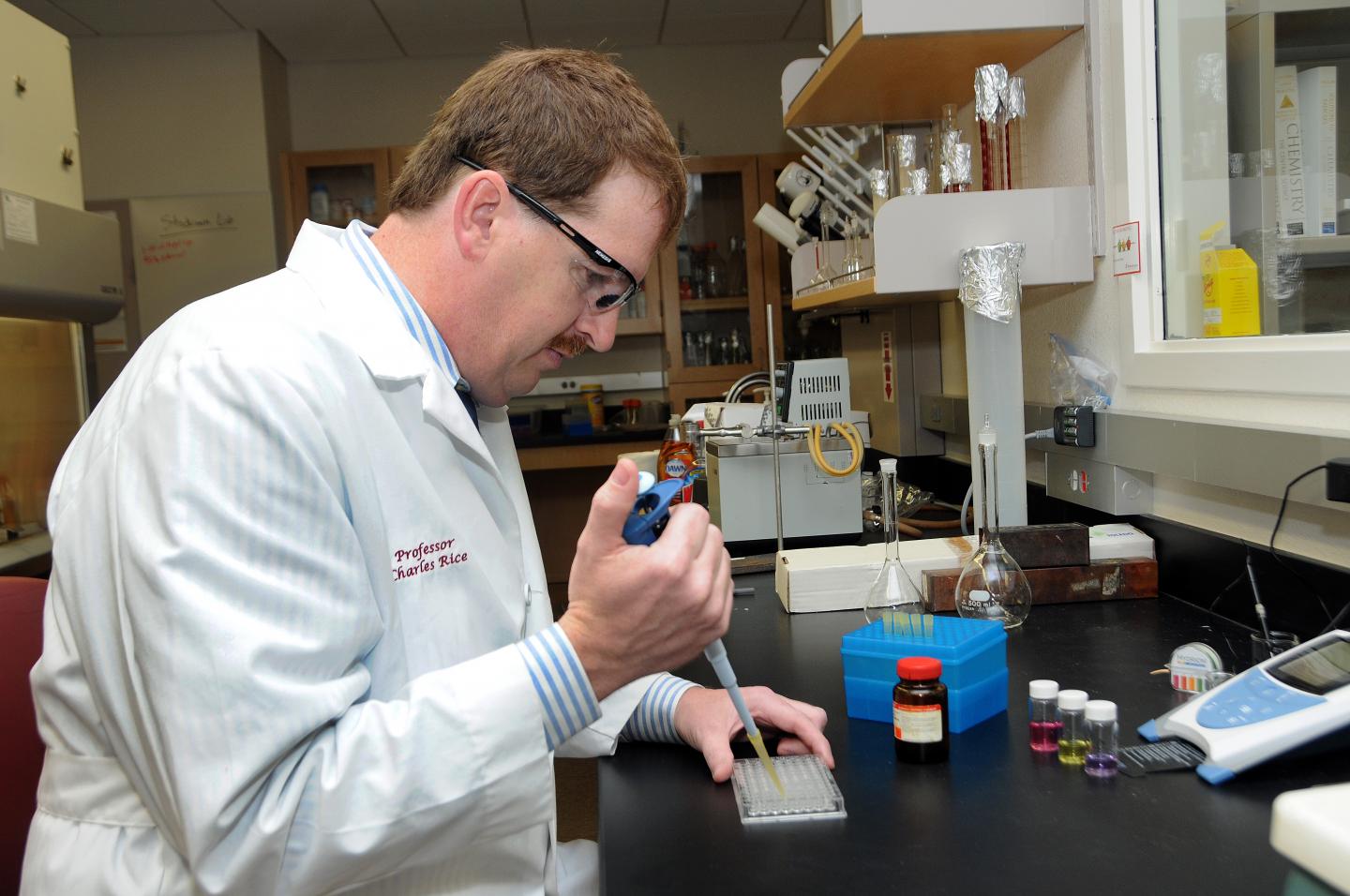
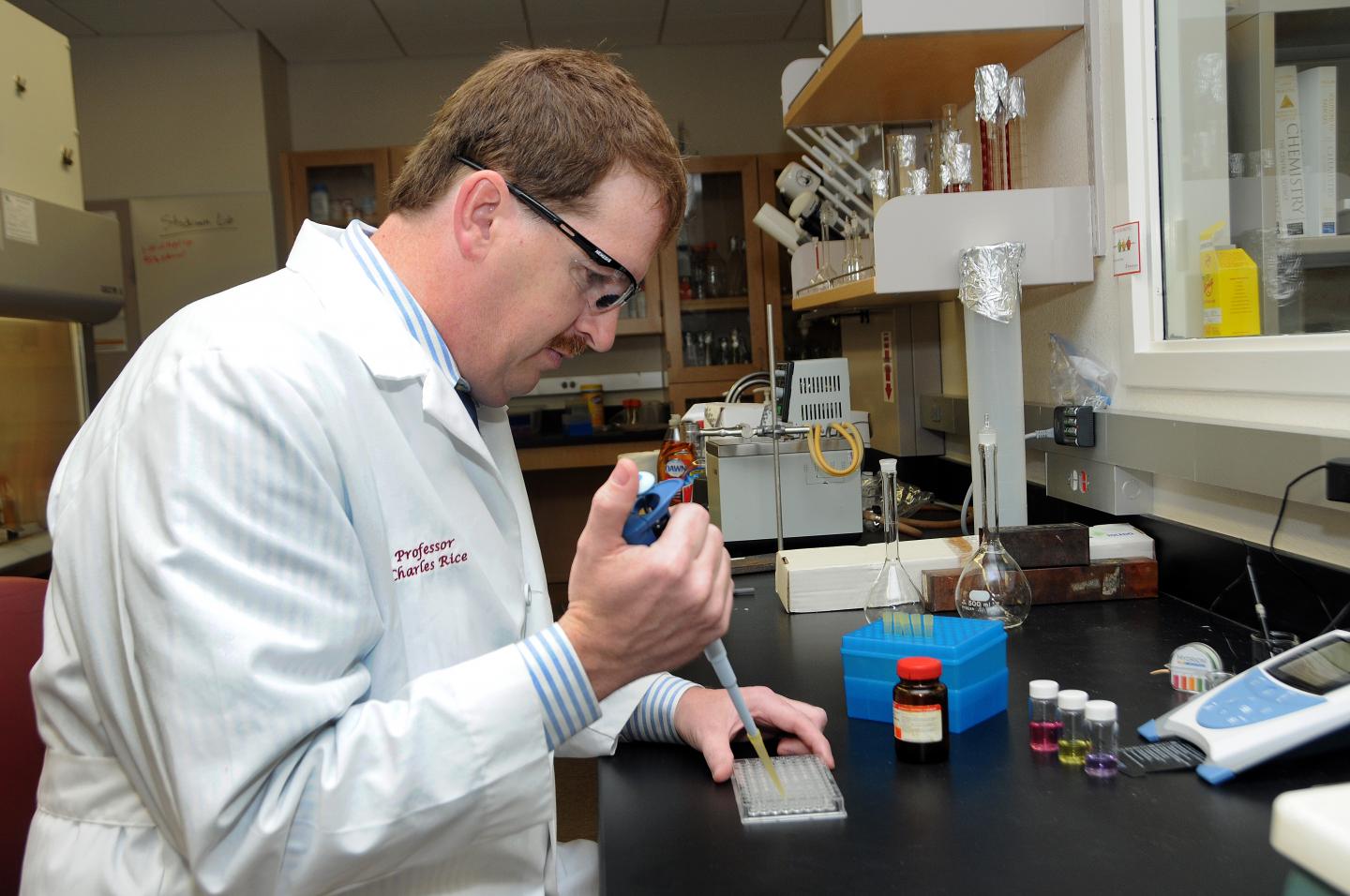
IMAGE
Credit: University of Oklahoma

A University of Oklahoma team of chemists has developed a new antibiotic formulation to fight the sometimes deadly staph infection caused by methicillin-resistant S. aureus or MRSA and other antibiotic-resistant infectious bacteria. The new drug to treat MRSA combines traditional Food and Drug Administration-approved antibiotics, such as methicillin, with the polymer BPEI.

Charles Rice, principal investigator and professor in the Department of Chemistry and Biochemistry, OU College of Arts and Sciences, with team members Robert Cichewicz and Daniel Glatzhofer, both OU chemistry professors, has been able to invigorate older drugs from the penicillin family by combining them with BPEI. While this new formulation requires FDA approval, the approach restores efficacy to obsolete antibiotics.

“The use of first-line antibiotics to kill MRSA or other infectious bacteria will improve patient outcomes and lower the economic burden,” Rice said. “The discovery in our laboratory has made it possible to create an effective antibiotic that can reduce expensive hospitalization costs.”

Leading up to the discovery, Rice was working in his laboratory when he discovered a way to neutralize the MRSA bacteria so that it is no longer resistant to methicillin. This method can be used to neutralize other infectious bacteria. The takeaway from these experiments is that any number of penicillin-type drugs combined with BPEI or related polymers could create a new first-line drug for treating infectious diseases and change how MRSA and other infectious bacteria are treated.

The Centers for Disease Control considers MRSA a serious threat to human health. MRSA infected 80,500 people in 2011 and nearly one in seven cases resulted in death. When MRSA colonies invade host tissue, they release toxins that cause tissue injury leading to patient morbidity. Until now, more costly and highly toxic antibiotics of last resort were used to treat MRSA. The new first-line combo drug developed at OU by Rice and his team has the potential to change how patients with MRSA are treated.

Funding for this research was provided by the National Institutes of Health and the University of Oklahoma. The Journal of Antibiotics has published a paper on the OU-developed first-line combo drug to treat deadly infectious bacteria, such as MRSA. For more information about the development of this new combo drug, please contact Rice at [email protected]. The Rice laboratory is located in the Stephenson Life Sciences Research Center on the OU Research Campus in Norman, Oklahoma.

###

Media Contact

Jana Smith
[email protected]
405-325-1322
@ouresearch

http://www.ou.edu

The post OU team develops new antibiotic to fight MRSA appeared first on Scienmag.

Share12Tweet8Share2ShareShareShare2

Related Posts

Succinate Receptor 1 Limits Blood Cell Formation, Leukemia

February 7, 2026

Palmitoylation of Tfr1 Drives Platelet Ferroptosis and Exacerbates Liver Damage in Heat Stroke

February 7, 2026

Oxygen-Enhanced Dual-Section Microneedle Patch Improves Drug Delivery and Boosts Photodynamic and Anti-Inflammatory Treatment for Psoriasis

February 7, 2026

Scientists Identify SARS-CoV-2 PLpro and RIPK1 Inhibitors Showing Potent Synergistic Antiviral Effects in Mouse COVID-19 Model

February 7, 2026
Please login to join discussion

POPULAR NEWS

  • Robotic Ureteral Reconstruction: A Novel Approach

    Robotic Ureteral Reconstruction: A Novel Approach

    82 shares
    Share 33 Tweet 21
  • Digital Privacy: Health Data Control in Incarceration

    63 shares
    Share 25 Tweet 16
  • Study Reveals Lipid Accumulation in ME/CFS Cells

    57 shares
    Share 23 Tweet 14
  • Breakthrough in RNA Research Accelerates Medical Innovations Timeline

    53 shares
    Share 21 Tweet 13

About

We bring you the latest biotechnology news from best research centers and universities around the world. Check our website.

Follow us

Recent News

Succinate Receptor 1 Limits Blood Cell Formation, Leukemia

Palmitoylation of Tfr1 Drives Platelet Ferroptosis and Exacerbates Liver Damage in Heat Stroke

Oxygen-Enhanced Dual-Section Microneedle Patch Improves Drug Delivery and Boosts Photodynamic and Anti-Inflammatory Treatment for Psoriasis

Subscribe to Blog via Email

Enter your email address to subscribe to this blog and receive notifications of new posts by email.

Join 73 other subscribers
  • Contact Us

Bioengineer.org © Copyright 2023 All Rights Reserved.

Welcome Back!

Login to your account below

Forgotten Password?

Retrieve your password

Please enter your username or email address to reset your password.

Log In
No Result
View All Result
  • Homepages
    • Home Page 1
    • Home Page 2
  • News
  • National
  • Business
  • Health
  • Lifestyle
  • Science

Bioengineer.org © Copyright 2023 All Rights Reserved.