• HOME
  • NEWS
  • EXPLORE
    • CAREER
      • Companies
      • Jobs
    • EVENTS
    • iGEM
      • News
      • Team
    • PHOTOS
    • VIDEO
    • WIKI
  • BLOG
  • COMMUNITY
    • FACEBOOK
    • INSTAGRAM
    • TWITTER
Friday, May 22, 2026
BIOENGINEER.ORG
No Result
View All Result
  • Login
  • HOME
  • NEWS
  • EXPLORE
    • CAREER
      • Companies
      • Jobs
        • Lecturer
        • PhD Studentship
        • Postdoc
        • Research Assistant
    • EVENTS
    • iGEM
      • News
      • Team
    • PHOTOS
    • VIDEO
    • WIKI
  • BLOG
  • COMMUNITY
    • FACEBOOK
    • INSTAGRAM
    • TWITTER
  • HOME
  • NEWS
  • EXPLORE
    • CAREER
      • Companies
      • Jobs
        • Lecturer
        • PhD Studentship
        • Postdoc
        • Research Assistant
    • EVENTS
    • iGEM
      • News
      • Team
    • PHOTOS
    • VIDEO
    • WIKI
  • BLOG
  • COMMUNITY
    • FACEBOOK
    • INSTAGRAM
    • TWITTER
No Result
View All Result
Bioengineer.org
No Result
View All Result
Home NEWS Science News Biology

Alzheimer’s disease: How amyloid aggregates alter neuronal function

Bioengineer by Bioengineer
June 12, 2018
in Biology
Reading Time: 2 mins read
0
Share on FacebookShare on TwitterShare on LinkedinShare on RedditShare on Telegram
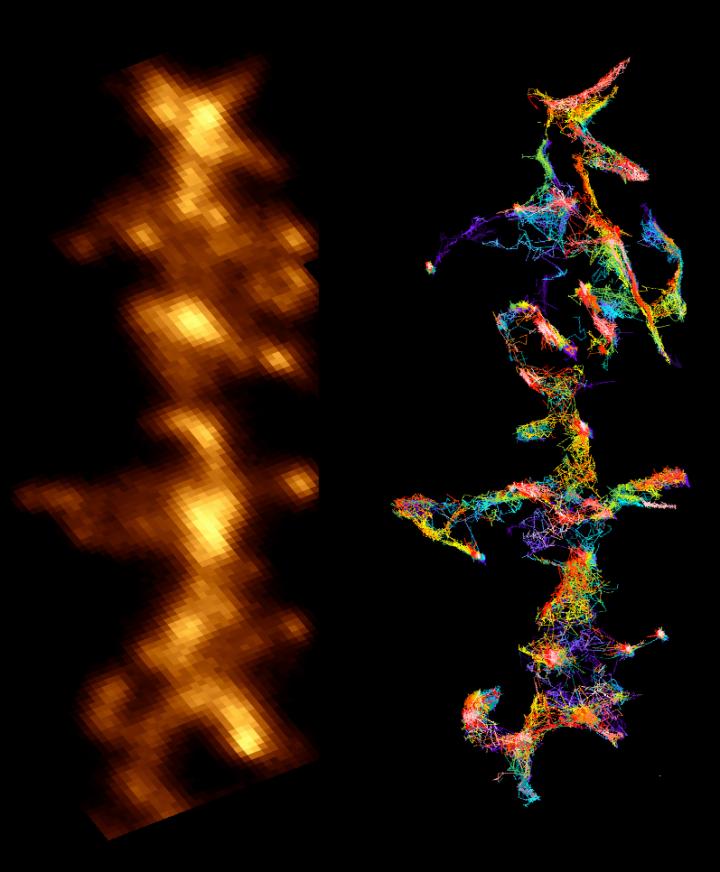
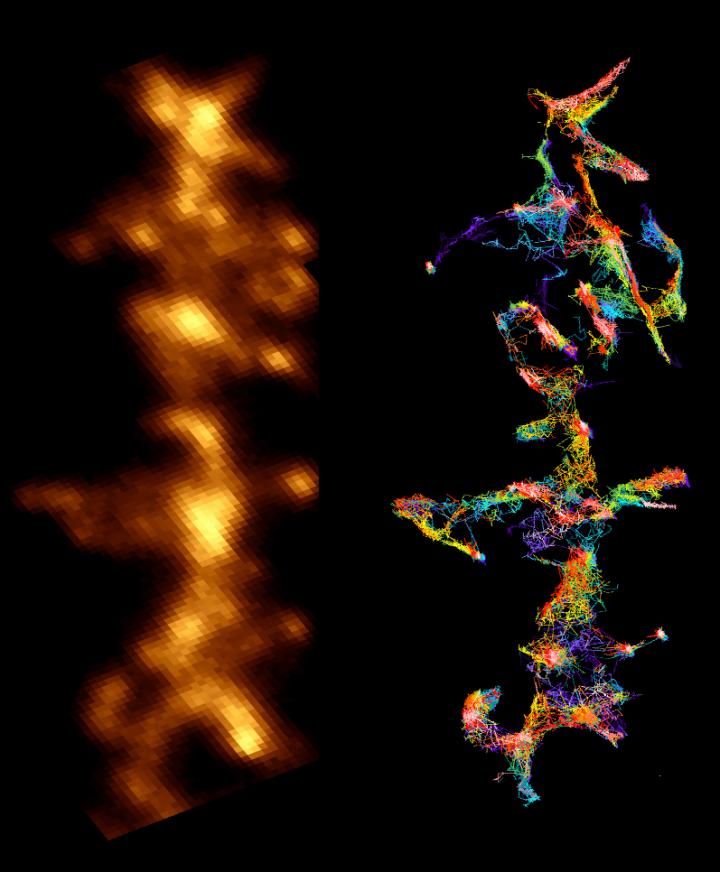
IMAGE

Credit: Patricio Opazo/Daniel Choquet/IINS

Alzheimer's disease, which affects nearly a million French people, is characterized by a premature alteration of the patient's cognitive faculties, followed by neuronal degeneration in late stages. Three types of brain lesions are characteristic of the illness: neuronal loss, fibrillar degeneration, and the accumulation of amyloid peptides that form on amyloid plaques. The respective involvement of these different elements in developing the symptoms of the illness is still poorly understood.

Researchers knew, for instance, that amyloid peptides disrupt synapses-the area of contact and chemical communication between neurons-but did not understand how they did so until the research conducted by teams from l'Institut interdisciplinaire de neurosciences (CNRS/universite de Bordeaux). Their findings have revealed the molecular mechanism that links amyloid aggregates and deficient synaptic function observed in animal models of Alzheimer's disease: peptide oligomers interact with a key enzyme in synaptic balance, thereby preventing its normal mobilization.

The molecule, called CamKII, usually orchestrates synaptic plasticity, an aspect of neuronal adaptability that enables neurons to reinforce their responses to the signals they exchange. Groups of neurons that code for an information to be memorized are connected by synapses, which are themselves under the control of mechanisms of synaptic plasticity. When the connection between two neurons must be reinforced in order to memorize information, for instance during intense stimulation, CamKII is activated and leads to a chain of reactions that strengthen the capacity to transmit messages between these neurons. Synaptic plasticity is central to memory and learning. Amyloid peptides prevent CamKII from participating to this process of synaptic plasticity, and this blockage eventually leads to the disappearance of the synapse. This discovery could find an application in early phases of Alzheimer's disease when initial cognitive deficiencies are observed, which could be linked to this synaptic malfunction.

The goal for researchers now is to continue studying amyloid aggregates, especially by trying to prevent their interaction with CamKII and the loss of synapses observed during the disease.

###

Media Contact

Francois Maginiot
[email protected]
33-144-964-309

http://www.cnrs.fr

Share13Tweet8Share2ShareShareShare2

Related Posts

How the Gut Reprograms the Brain to Crave Essential Nutrients — Biology

How the Gut Reprograms the Brain to Crave Essential Nutrients

May 22, 2026
Decoding the Mechanisms Behind Collective Cell Movement — Biology

Decoding the Mechanisms Behind Collective Cell Movement

May 22, 2026

Harvard Scientists Develop Innovative Methods to Detect the Body’s “Orphan” Signaling Receptors

May 22, 2026

Seasonal Lake Denitrification Shifts Amid Climate Warming

May 22, 2026
Please login to join discussion

POPULAR NEWS

  • blank

    New Study Reveals Plants Can Detect the Sound of Rain

    734 shares
    Share 293 Tweet 183
  • ESMO 2025: mRNA COVID Vaccines Enhance Efficacy of Cancer Immunotherapy

    309 shares
    Share 124 Tweet 77
  • Research Indicates Potential Connection Between Prenatal Medication Exposure and Elevated Autism Risk

    847 shares
    Share 339 Tweet 212
  • Breastmilk Balances E. coli and Beneficial Bacteria in Infant Gut Microbiomes

    58 shares
    Share 23 Tweet 15

About

We bring you the latest biotechnology news from best research centers and universities around the world. Check our website.

Follow us

Recent News

Breakthrough in Augmented Reality: Active Retinal Projection Display Achieves Pixel-to-Pixel Collimation

Scientists Discover Novel Biomarker Predicting Therapy Response in Pediatric Cancers

Innovative Microneedle Patch Speeds Up Oral Ulcer Healing Through Immune Modulation

Subscribe to Blog via Email

Enter your email address to subscribe to this blog and receive notifications of new posts by email.

Join 82 other subscribers
  • Contact Us

Bioengineer.org © Copyright 2023 All Rights Reserved.

Welcome Back!

Login to your account below

Forgotten Password?

Retrieve your password

Please enter your username or email address to reset your password.

Log In
No Result
View All Result
  • Homepages
    • Home Page 1
    • Home Page 2
  • News
  • National
  • Business
  • Health
  • Lifestyle
  • Science

Bioengineer.org © Copyright 2023 All Rights Reserved.