• HOME
  • NEWS
  • EXPLORE
    • CAREER
      • Companies
      • Jobs
    • EVENTS
    • iGEM
      • News
      • Team
    • PHOTOS
    • VIDEO
    • WIKI
  • BLOG
  • COMMUNITY
    • FACEBOOK
    • INSTAGRAM
    • TWITTER
Sunday, October 4, 2026
BIOENGINEER.ORG
No Result
View All Result
  • Login
  • HOME
  • NEWS
  • EXPLORE
    • CAREER
      • Companies
      • Jobs
        • Lecturer
        • PhD Studentship
        • Postdoc
        • Research Assistant
    • EVENTS
    • iGEM
      • News
      • Team
    • PHOTOS
    • VIDEO
    • WIKI
  • BLOG
  • COMMUNITY
    • FACEBOOK
    • INSTAGRAM
    • TWITTER
  • HOME
  • NEWS
  • EXPLORE
    • CAREER
      • Companies
      • Jobs
        • Lecturer
        • PhD Studentship
        • Postdoc
        • Research Assistant
    • EVENTS
    • iGEM
      • News
      • Team
    • PHOTOS
    • VIDEO
    • WIKI
  • BLOG
  • COMMUNITY
    • FACEBOOK
    • INSTAGRAM
    • TWITTER
No Result
View All Result
Bioengineer.org
No Result
View All Result
Home NEWS Science News Health

A laser that smells like a hound

Bioengineer by Bioengineer
June 7, 2018
in Health
Reading Time: 2 mins read
0
Share on FacebookShare on TwitterShare on LinkedinShare on RedditShare on Telegram
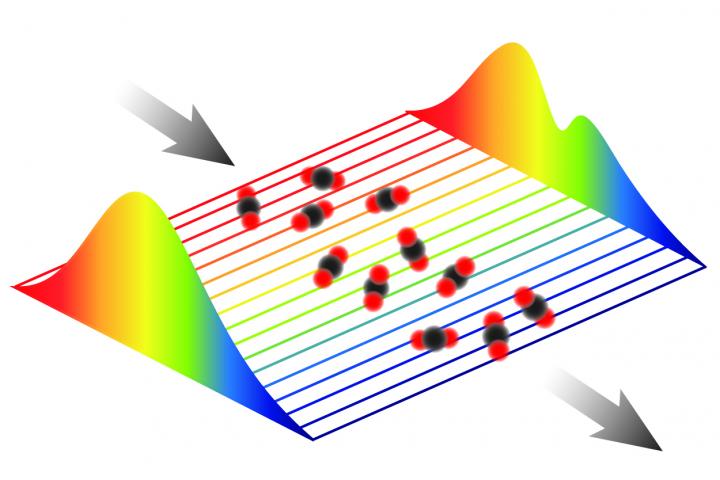
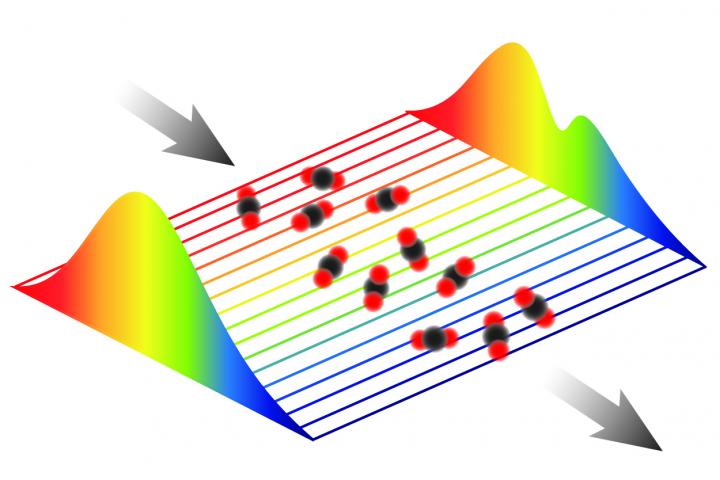
IMAGE

Credit: Credit: Sarah Scholten

University of Adelaide researchers have created a laser that can "smell" different gases within a sample.

Applications for the new device lie not just in environmental monitoring and detecting industrial contamination, but may eventually be used to diagnose disease by "smelling" the breath.

The researchers liken the ability of the laser to differentiate between different gas compounds in a sample to the sensitive nose of a bloodhound. But rather than smell, the device uses patterns of light absorption to measure the composition of the sample.

From the University's Institute for Photonics and Advanced Sensing (IPAS), the researchers report in the journal Physical Review Applied that the laser can measure the amount of carbon dioxide in a gas sample in under one second, with high accuracy and precision.

"The ability to rapidly measure gas composition to such high accuracy is cutting edge," says lead author Sarah Scholten, PhD candidate in the University's School of Physical Sciences. "With further development, it opens the way for real-time and inexpensive monitoring and analysis that can be carried out in the field, or in the doctor's surgery, by non-specialist operators."

The device exploits a Nobel-prize winning technology, developed by US and German scientists, called an 'optical frequency comb'. This 'laser comb' generates millions of different light frequencies or colours at once.

The researchers pass this special light through a sample of gas where each gas molecule absorbs a distinctive set of colours. The pattern of light absorption is a unique fingerprint of the gas composition of the sample.

"This first work aims at atmospheric monitoring, however, the technique is broadly applicable and offers an avenue for near-universal concentration measurements," says Dr Chris Perrella, Postdoctoral Fellow.

The group now aims to use the laser comb to unravel the chemical composition of the exhaled breath – in this much more complex situation they hope to find tell-tale chemical signs that point to underlying disease. The ultimate goal is to use the laser as a screening tool – to discover a serious illness even before the patient is aware of the condition.

###

The research was led by IPAS Director Professor Andre Luiten and was funded by the Australian Research Council, Medical and Scientific Services Pty Ltd, the South Australian Premier's Research and Industry Fund and a South Australian Government Catalyst Research Grant.

Media Contact:

Sarah Scholten, PhD candidate, School of Physical Sciences, The University of Adelaide. Mobile: +61 (0)401 857 960, [email protected]

Professor Andre Luiten, IPAS Director, The University of Adelaide, Phone: +61 (0)8 8313 2359, Mobile: +61(0) 404 817 168, [email protected]

Dr Chris Perrella, Postdoctoral Fellow, Institute for Photonics and Advanced Sensing, The University of Adelaide. Phone: +61 ())8 8313 2323, Mobile: +61 (0)424 544 035, [email protected]

Robyn Mills, Media Officer, University of Adelaide. Phone: +61 (0)8 8313 6341, Mobile: +61 (0)410 689 084, [email protected]

Media Contact

Sarah Scholten
[email protected]
61-040-185-7960
@UniofAdelaide

http://www.adelaide.edu.au

Related Journal Article

http://dx.doi.org/10.1103/PhysRevApplied.9.054043

Share12Tweet8Share2ShareShareShare2

Related Posts

Escape Room Learning Helps Nursing Students With ADHD but Hurts Those With Language Difficulties

Escape Room Learning Helps Nursing Students With ADHD but Hurts Those With Language Difficulties

October 4, 2026
One Health modelling in agri-food systems: a scoping review reveals narrow institutional scope

One Health modelling in agri-food systems: a scoping review reveals narrow institutional scope

October 4, 2026

Narcolepsy Mortality Debate: Researchers Defend Big-Data Findings on Non-Type 1 Risk

October 4, 2026

MRI Scans Reveal Hidden Cell Neighborhoods That May Signal Breast Cancer Spread

October 4, 2026
Please login to join discussion

POPULAR NEWS

  • Alloys That Shrink Their Own Grains: New PIX Mechanism Refines Metals With Heat Alone

    Alloys That Shrink Their Own Grains: New PIX Mechanism Refines Metals With Heat Alone

    29 shares
    Share 12 Tweet 7
  • Endurance Exercise Reshapes the Liver in Males and Females Through Distinct Molecular Routes

    29 shares
    Share 12 Tweet 7
  • Single Transcription Factor PU.1 Rapidly Converts Fibroblasts into Macrophage-Lineage Cells

    29 shares
    Share 12 Tweet 7
  • New Scale Measures How Ready Nurse Educators Really Are for the AI Era

    29 shares
    Share 12 Tweet 7

About

We bring you the latest biotechnology news from best research centers and universities around the world. Check our website.

Follow us

Recent News

Alloys That Shrink Their Own Grains: New PIX Mechanism Refines Metals With Heat Alone

Endurance Exercise Reshapes the Liver in Males and Females Through Distinct Molecular Routes

Single Transcription Factor PU.1 Rapidly Converts Fibroblasts into Macrophage-Lineage Cells

Subscribe to Blog via Email

Enter your email address to subscribe to this blog and receive notifications of new posts by email.

Join 85 other subscribers
  • Contact Us

Bioengineer.org © Copyright 2023 All Rights Reserved.

Welcome Back!

Login to your account below

Forgotten Password?

Retrieve your password

Please enter your username or email address to reset your password.

Log In
No Result
View All Result
  • Homepages
    • Home Page 1
    • Home Page 2
  • News
  • National
  • Business
  • Health
  • Lifestyle
  • Science

Bioengineer.org © Copyright 2023 All Rights Reserved.