

• HOME
  • NEWS
  • EXPLORE
    • CAREER
      • Companies
      • Jobs
    • EVENTS
    • iGEM
      • News
      • Team
    • PHOTOS
    • VIDEO
    • WIKI
  • BLOG
  • COMMUNITY
    • FACEBOOK
    • INSTAGRAM
    • TWITTER
Saturday, February 7, 2026
BIOENGINEER.ORG
No Result
View All Result
  • Login
  • HOME
  • NEWS
  • EXPLORE
    • CAREER
      • Companies
      • Jobs
        • Lecturer
        • PhD Studentship
        • Postdoc
        • Research Assistant
    • EVENTS
    • iGEM
      • News
      • Team
    • PHOTOS
    • VIDEO
    • WIKI
  • BLOG
  • COMMUNITY
    • FACEBOOK
    • INSTAGRAM
    • TWITTER
  • HOME
  • NEWS
  • EXPLORE
    • CAREER
      • Companies
      • Jobs
        • Lecturer
        • PhD Studentship
        • Postdoc
        • Research Assistant
    • EVENTS
    • iGEM
      • News
      • Team
    • PHOTOS
    • VIDEO
    • WIKI
  • BLOG
  • COMMUNITY
    • FACEBOOK
    • INSTAGRAM
    • TWITTER
No Result
View All Result
Bioengineer.org
No Result
View All Result
Home NEWS Science News Health

Computer simulations identify chemical key to diabetes drug alternatives

Bioengineer by Bioengineer
June 5, 2018
in Health
Reading Time: 2 mins read
0
Share on FacebookShare on TwitterShare on LinkedinShare on RedditShare on Telegram
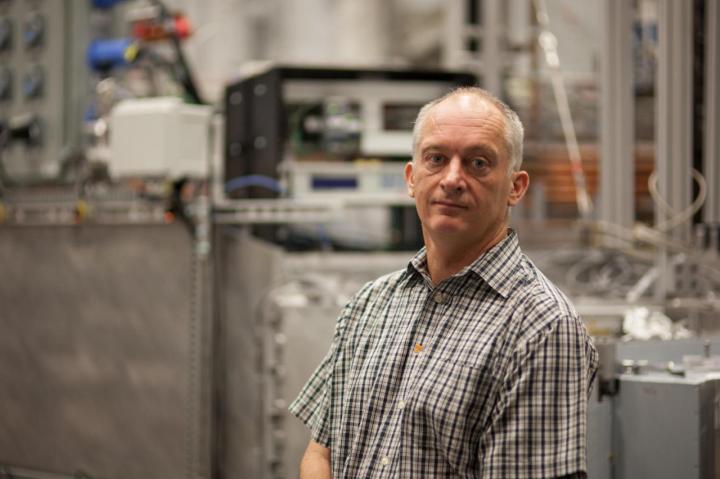
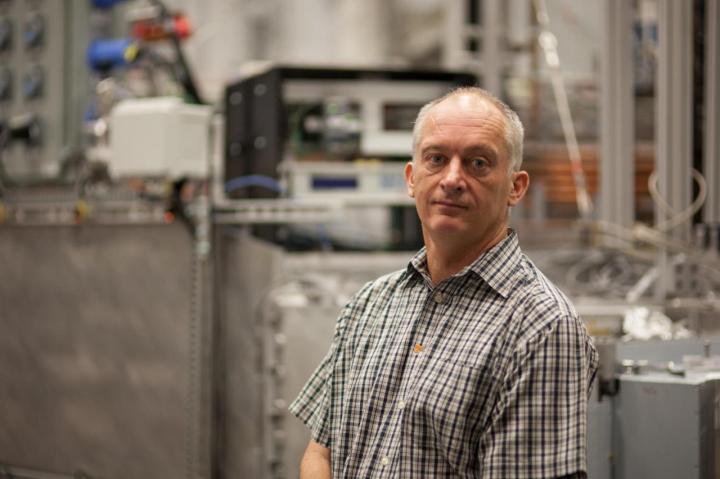
IMAGE

Credit: University of Tennessee, Knoxville

Jeremy Smith, Governor's Chair for Molecular Biophysics at the University of Tennessee, Knoxville, and director of the Center for Molecular Biophysics at Oak Ridge National Laboratory, has worked with a research team from the UT Health Science Center to discover a chemical compound that could lower sugar levels as effectively as the diabetes drug metformin but with a lower dose.

Smith, together with Jerome Baudry, of the University of Alabama at Huntsville, and graduate student Karan Kapoor, of the University of Illinois at Urbana-Champaign, used high-performance computing to create sophisticated simulations to suggest chemicals that could activate GPRC6A, a protein that regulates sugar levels by simultaneously correcting abnormalities in pancreatic insulin secretion, glucose uptake into skeletal muscle, and liver regulation of glucose and fat metabolism. The UTHSC team verified its potency and used this starting point to design an even more effective chemical.

"This chemical compound lowers sugar levels in mice as effectively as metformin, but with a 30-times lower dose," Smith said. "It therefore is a good starting point for the development of a new and effective drug to fight diabetes."

This new approach to diabetes drug discovery has been published in PLOS One, a peer-reviewed open access scientific journal.

Leading the UTHSC research team is Darryl Quarles, UT Medical Group Endowed Professor of Nephrology, director of the Division of Nephrology, and associate dean for Research in the College of Medicine at UTHSC.

With more than 400 million people suffering from Type 2 diabetes worldwide, the global cost of medicine and prevention is close to a trillion dollars annually. Metformin, a drug that lowers the liver's production of sugar and decreases risk of mortality, is currently recommended as a first-line treatment. However, there is a need for alternative treatment options when patients are not responsive to metformin.

Smith's computations found several chemicals that might activate the protein, and the Quarles laboratory at UTHSC tested each. A team of UTHSC medicinal chemists then used the results to synthesize related molecules for pre-clinical testing, and a chemical called DJ-V-159 was found to be highly potent in stimulating insulin secretion and lowering sugar levels in mice.

###

CONTACT:

Karen Dunlap, UT Knoxville (865-974-8674, [email protected])

Connor Bran, UT Health Science Center (901-448-2517, [email protected])

Media Contact

Karen Dunlap
[email protected]
865-974-8674
@UTKnoxville

UT System

Original Source

https://news.utk.edu/2018/06/04/computer-simulations-identify-chemical-key-to-diabetes-drug-alternatives/


Share12Tweet8Share2ShareShareShare2

Related Posts

Inflammasome Protein ASC Drives Pancreatic Cancer Metabolism

February 7, 2026

Phage-Antibiotic Combo Beats Resistant Peritoneal Infection

February 7, 2026

Boosting Remote Healthcare: Stepped-Wedge Trial Insights

February 7, 2026

Barriers and Boosters of Seniors’ Physical Activity in Karachi

February 7, 2026
Please login to join discussion

POPULAR NEWS

  • Robotic Ureteral Reconstruction: A Novel Approach

    Robotic Ureteral Reconstruction: A Novel Approach

    82 shares
    Share 33 Tweet 21
  • Digital Privacy: Health Data Control in Incarceration

    63 shares
    Share 25 Tweet 16
  • Study Reveals Lipid Accumulation in ME/CFS Cells

    57 shares
    Share 23 Tweet 14
  • Breakthrough in RNA Research Accelerates Medical Innovations Timeline

    53 shares
    Share 21 Tweet 13

About

We bring you the latest biotechnology news from best research centers and universities around the world. Check our website.

Follow us

Recent News

Inflammasome Protein ASC Drives Pancreatic Cancer Metabolism

Phage-Antibiotic Combo Beats Resistant Peritoneal Infection

Boosting Remote Healthcare: Stepped-Wedge Trial Insights

Subscribe to Blog via Email

Enter your email address to subscribe to this blog and receive notifications of new posts by email.

Join 73 other subscribers
  • Contact Us

Bioengineer.org © Copyright 2023 All Rights Reserved.

Welcome Back!

Login to your account below

Forgotten Password?

Retrieve your password

Please enter your username or email address to reset your password.

Log In
No Result
View All Result
  • Homepages
    • Home Page 1
    • Home Page 2
  • News
  • National
  • Business
  • Health
  • Lifestyle
  • Science

Bioengineer.org © Copyright 2023 All Rights Reserved.
