• HOME
  • NEWS
  • EXPLORE
    • CAREER
      • Companies
      • Jobs
    • EVENTS
    • iGEM
      • News
      • Team
    • PHOTOS
    • VIDEO
    • WIKI
  • BLOG
  • COMMUNITY
    • FACEBOOK
    • INSTAGRAM
    • TWITTER
Saturday, February 7, 2026
BIOENGINEER.ORG
No Result
View All Result
  • Login
  • HOME
  • NEWS
  • EXPLORE
    • CAREER
      • Companies
      • Jobs
        • Lecturer
        • PhD Studentship
        • Postdoc
        • Research Assistant
    • EVENTS
    • iGEM
      • News
      • Team
    • PHOTOS
    • VIDEO
    • WIKI
  • BLOG
  • COMMUNITY
    • FACEBOOK
    • INSTAGRAM
    • TWITTER
  • HOME
  • NEWS
  • EXPLORE
    • CAREER
      • Companies
      • Jobs
        • Lecturer
        • PhD Studentship
        • Postdoc
        • Research Assistant
    • EVENTS
    • iGEM
      • News
      • Team
    • PHOTOS
    • VIDEO
    • WIKI
  • BLOG
  • COMMUNITY
    • FACEBOOK
    • INSTAGRAM
    • TWITTER
No Result
View All Result
Bioengineer.org
No Result
View All Result
Home NEWS Science News Health

It’s all in your head: Brain protein targeted for alcoholism cure

Bioengineer by Bioengineer
June 5, 2018
in Health
Reading Time: 2 mins read
0
Share on FacebookShare on TwitterShare on LinkedinShare on RedditShare on Telegram
IMAGE

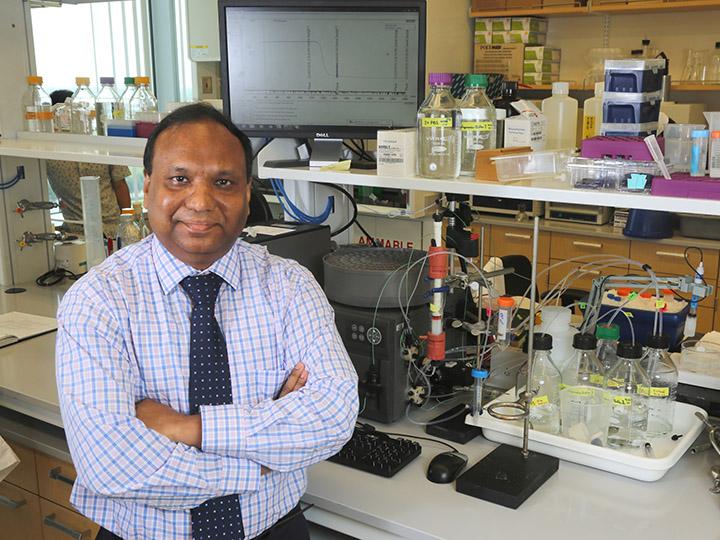
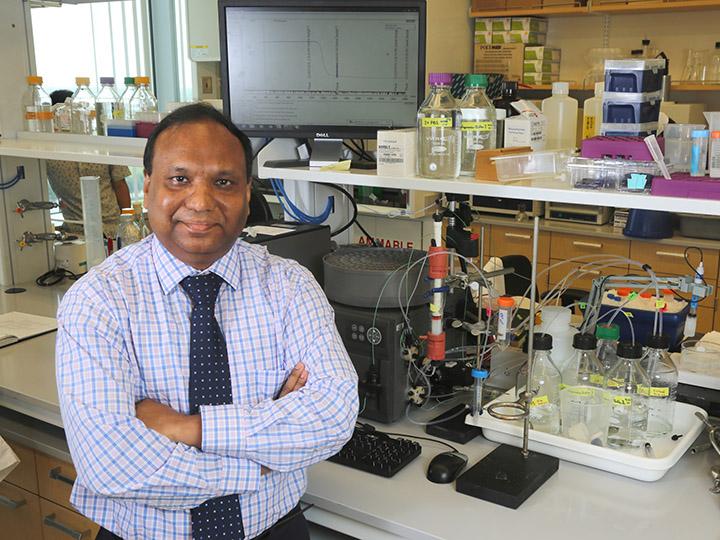
Credit: University of Houston

A protein in the brain that binds to alcohol could be the key to curing alcoholism, reports UH College of Pharmacy medicinal chemist Joydip Das in eNeuro, a journal of the Society for Neuroscience. The protein, called MUNC 13-1, plays a pivotal role in the development of tolerance to alcoholism according to Das.

"Addiction to alcohol remains one of the most significant mental health problems throughout the world. A major challenge is to understand how ethanol, or alcohol, changes behavior and the brain during the descent into addiction," Das reported. Developing tolerance is a critical step in that descent.

"If a person becomes tolerant of one drink, he will have another and maybe another. If we could stop alcohol from binding into MUNC 13-1 it will help problem drinkers in reducing tolerance. If we can reduce tolerance we can reduce addiction," said Das whose study focuses on binge alcohol exposure.

The process of MUNC 13-1 binding to alcohol takes place in a brain synapse, where one nerve cell, or neuron, passes a signal to another. Specifically, the binding takes place in the presynaptic space, a much understudied portion of the synapse mechanism.

During binge alcohol exposure, alcohol creates widespread and long-lasting changes in neural activity, altering both presynaptic and postsynaptic activity.

Thus far the work has been done using the Drosophila genetic model system, which offers a simple model, but various similarities. Their activating protein is called Dunc13, the equivalent to MUNC 13-1.

"Reduction in Dunc13 produces a behavioral and physiological resistance to sedative effects of ethanol," said Das. That makes MUNC 13-1 an important target for developing drugs. "We need to develop a pill that would inhibit alcohol binding to MUNC 13 and reduce its activity. Based on our results so far, this would likely reduce the formation of tolerance, making it harder to become addicted to alcohol," said Das.

###

Das is joined in his work by biologist Gregg Roman of the University of Mississippi and University of Houston psychologist J. Leigh Leasure.

Media Contact

Laurie Fickman
[email protected]
713-743-8454
@UH_News

http://www.uh.edu/news-events

Original Source

http://www.uh.edu/news-events/stories/2018/june2018/06051018-joydip-das-alcohol.php

Share17Tweet8Share2ShareShareShare2

Related Posts

Evaluating Pediatric Emergency Care Quality in Ethiopia

February 7, 2026

TPMT Expression Predictions Linked to Azathioprine Side Effects

February 7, 2026

Improving Dementia Care with Enhanced Activity Kits

February 7, 2026

Decoding Prostate Cancer Origins via snFLARE-seq, mxFRIZNGRND

February 7, 2026
Please login to join discussion

POPULAR NEWS

  • Robotic Ureteral Reconstruction: A Novel Approach

    Robotic Ureteral Reconstruction: A Novel Approach

    82 shares
    Share 33 Tweet 21
  • Digital Privacy: Health Data Control in Incarceration

    63 shares
    Share 25 Tweet 16
  • Study Reveals Lipid Accumulation in ME/CFS Cells

    57 shares
    Share 23 Tweet 14
  • Breakthrough in RNA Research Accelerates Medical Innovations Timeline

    53 shares
    Share 21 Tweet 13

About

We bring you the latest biotechnology news from best research centers and universities around the world. Check our website.

Follow us

Recent News

Evaluating Pediatric Emergency Care Quality in Ethiopia

TPMT Expression Predictions Linked to Azathioprine Side Effects

Improving Dementia Care with Enhanced Activity Kits

Subscribe to Blog via Email

Success! An email was just sent to confirm your subscription. Please find the email now and click 'Confirm' to start subscribing.

Join 73 other subscribers
  • Contact Us

Bioengineer.org © Copyright 2023 All Rights Reserved.

Welcome Back!

Login to your account below

Forgotten Password?

Retrieve your password

Please enter your username or email address to reset your password.

Log In
No Result
View All Result
  • Homepages
    • Home Page 1
    • Home Page 2
  • News
  • National
  • Business
  • Health
  • Lifestyle
  • Science

Bioengineer.org © Copyright 2023 All Rights Reserved.