• HOME
  • NEWS
  • EXPLORE
    • CAREER
      • Companies
      • Jobs
    • EVENTS
    • iGEM
      • News
      • Team
    • PHOTOS
    • VIDEO
    • WIKI
  • BLOG
  • COMMUNITY
    • FACEBOOK
    • INSTAGRAM
    • TWITTER
Saturday, February 7, 2026
BIOENGINEER.ORG
No Result
View All Result
  • Login
  • HOME
  • NEWS
  • EXPLORE
    • CAREER
      • Companies
      • Jobs
        • Lecturer
        • PhD Studentship
        • Postdoc
        • Research Assistant
    • EVENTS
    • iGEM
      • News
      • Team
    • PHOTOS
    • VIDEO
    • WIKI
  • BLOG
  • COMMUNITY
    • FACEBOOK
    • INSTAGRAM
    • TWITTER
  • HOME
  • NEWS
  • EXPLORE
    • CAREER
      • Companies
      • Jobs
        • Lecturer
        • PhD Studentship
        • Postdoc
        • Research Assistant
    • EVENTS
    • iGEM
      • News
      • Team
    • PHOTOS
    • VIDEO
    • WIKI
  • BLOG
  • COMMUNITY
    • FACEBOOK
    • INSTAGRAM
    • TWITTER
No Result
View All Result
Bioengineer.org
No Result
View All Result
Home NEWS Science News Health

SensTek licenses pH sensor developed by UTA faculty member

Bioengineer by Bioengineer
June 4, 2018
in Health
Reading Time: 2 mins read
0
Share on FacebookShare on TwitterShare on LinkedinShare on RedditShare on Telegram
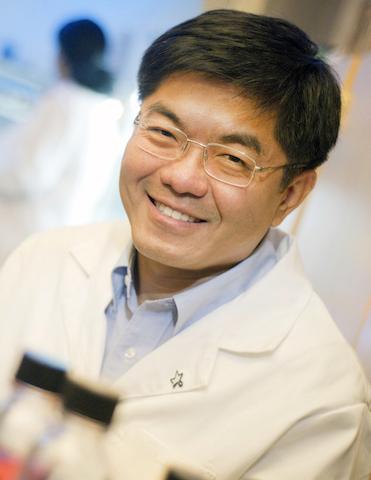
IMAGE

Credit: UTA

California startup SensTek has licensed pH sensor technology linked to two issued patents developed by University of Texas at Arlington electrical engineering professor J.C. Chiao.

"Our pH sensor is a very simple, biocompatible, flexible, inexpensively and easily mass-produced, and has a broad application across many sectors, including agriculture, cosmetics, medical devices and shipping logistics," Chiao said.

"SensTek is now raising capital to demonstrate the viability of the prototypes and the manufacturing process for potential customers."

Existing solutions in the pH market are usually bulky, expensive, high-power and complicated to use, often involving calibration and cleaning. The SensTek pH sensor is small, low-power and cost-effective for mobile applications, including wearables for biomedical applications or even custom cosmetics.

In the cosmetics sectors, applications are seen to test for changes of skin pH with aging and during adolescence, including potential personalized skincare. Biomedical applications include using flexible sensors on the skin for smart bandages that detect acid or bacteria or to measures stress and sweat on athletes. The logistical sector is interested in sensors to provide information on the freshness of agricultural produce such as fish and fruits during transport and the agricultural sector to test soil acidity and wine quality.

"UTA received equity in the company in partial exchange for the license grant and I received founder's equity for my role in the company," Chiao said. "Collaboration with our alumna UTA Gloria Maceiko in Silicon Valley as well as our Office of Technology Management at UTA, brought together the ingredients for this success."

The pH sensor uses a very simple fabrication process and common nonhazardous materials, both of which are keys for mass production.

"This process is low-cost and the end-product is biocompatible, which opens many doors, as it could potentially be implanted in the stomach or the brain, or onto any organ," Chiao said. "Using printing we could potentially manufacture tens of thousands a day."

Teri Schultz, director of UTA's Office of Technology Management, emphasized that the business side of the startup is moving rapidly.

"SensTek is moving quickly to connect all the dots and move the product towards the market as soon as possible," Schultz said.

"This is a great example of how a patented invention by a faculty member can be licensed and moved towards prototyping fast enough to meet rising demand," she added.

The pH sensor market is projecting high compounded growth rates of more than four percent annually up to 2023, reaching a $1.8 billion market globally, according to Market Research Future.

###

Media Contact

Louisa Kellie
[email protected]
817-524-8926
@utarlington

http://www.uta.edu

Original Source

https://www.uta.edu/news/releases/2018/06/SensTek%20JC%20Chiao.php

Share12Tweet8Share2ShareShareShare2

Related Posts

Phage-Antibiotic Combo Beats Resistant Peritoneal Infection

February 7, 2026

Boosting Remote Healthcare: Stepped-Wedge Trial Insights

February 7, 2026

Barriers and Boosters of Seniors’ Physical Activity in Karachi

February 7, 2026

Evaluating Pediatric Emergency Care Quality in Ethiopia

February 7, 2026
Please login to join discussion

POPULAR NEWS

  • Robotic Ureteral Reconstruction: A Novel Approach

    Robotic Ureteral Reconstruction: A Novel Approach

    82 shares
    Share 33 Tweet 21
  • Digital Privacy: Health Data Control in Incarceration

    63 shares
    Share 25 Tweet 16
  • Study Reveals Lipid Accumulation in ME/CFS Cells

    57 shares
    Share 23 Tweet 14
  • Breakthrough in RNA Research Accelerates Medical Innovations Timeline

    53 shares
    Share 21 Tweet 13

About

We bring you the latest biotechnology news from best research centers and universities around the world. Check our website.

Follow us

Recent News

Phage-Antibiotic Combo Beats Resistant Peritoneal Infection

Boosting Remote Healthcare: Stepped-Wedge Trial Insights

Barriers and Boosters of Seniors’ Physical Activity in Karachi

Subscribe to Blog via Email

Enter your email address to subscribe to this blog and receive notifications of new posts by email.

Join 73 other subscribers
  • Contact Us

Bioengineer.org © Copyright 2023 All Rights Reserved.

Welcome Back!

Login to your account below

Forgotten Password?

Retrieve your password

Please enter your username or email address to reset your password.

Log In
No Result
View All Result
  • Homepages
    • Home Page 1
    • Home Page 2
  • News
  • National
  • Business
  • Health
  • Lifestyle
  • Science

Bioengineer.org © Copyright 2023 All Rights Reserved.