• HOME
  • NEWS
  • EXPLORE
    • CAREER
      • Companies
      • Jobs
    • EVENTS
    • iGEM
      • News
      • Team
    • PHOTOS
    • VIDEO
    • WIKI
  • BLOG
  • COMMUNITY
    • FACEBOOK
    • INSTAGRAM
    • TWITTER
Saturday, February 7, 2026
BIOENGINEER.ORG
No Result
View All Result
  • Login
  • HOME
  • NEWS
  • EXPLORE
    • CAREER
      • Companies
      • Jobs
        • Lecturer
        • PhD Studentship
        • Postdoc
        • Research Assistant
    • EVENTS
    • iGEM
      • News
      • Team
    • PHOTOS
    • VIDEO
    • WIKI
  • BLOG
  • COMMUNITY
    • FACEBOOK
    • INSTAGRAM
    • TWITTER
  • HOME
  • NEWS
  • EXPLORE
    • CAREER
      • Companies
      • Jobs
        • Lecturer
        • PhD Studentship
        • Postdoc
        • Research Assistant
    • EVENTS
    • iGEM
      • News
      • Team
    • PHOTOS
    • VIDEO
    • WIKI
  • BLOG
  • COMMUNITY
    • FACEBOOK
    • INSTAGRAM
    • TWITTER
No Result
View All Result
Bioengineer.org
No Result
View All Result
Home NEWS Science News Biology

New study finds parasites affect flight ability of wild seabirds

Bioengineer by Bioengineer
May 30, 2018
in Biology
Reading Time: 2 mins read
0
Share on FacebookShare on TwitterShare on LinkedinShare on RedditShare on Telegram
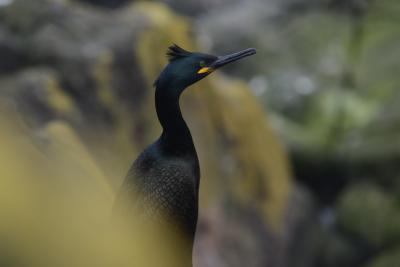
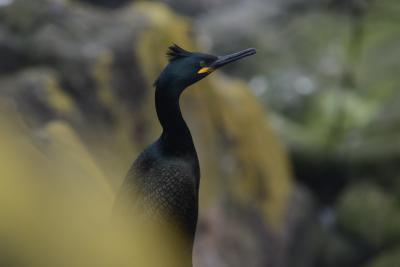
IMAGE

Credit: Joe Turner

A study led by the University of Liverpool and the Centre for Ecology & Hydrology (CEH) has found that parasites affect flight ability of wild seabirds, which may make it harder for them to raise chicks.

The researchers studied a population of European shags on the Isle of May National Nature Reserve, Scotland and measured how parasites affect energy levels and behaviour of individual birds, something which hasn't been done before in a wild population.

They used an endoscope to count individual worms in the birds' stomachs and miniaturised electronic tags recorded the movement and energy of the birds.

They then calculated the total energy used on each day, and the energy used for flying, diving and resting.

Researchers found that the total energy used per day did not depend on the amount of parasites, but females with higher levels of parasites had more costly flight and spent less time flying each day, presumably to avoid using too much energy.

Olivia Hicks, lead author of the study and a PhD candidate with the University's School of Environmental Sciences, said: "This is the first study to measure the impact of parasites on individual birds in this way

"We found that the more parasites a female bird had, the more this affected their ability to fly when feeding."

"This is important as seabirds catch fish at sea in order to feed themselves and their chicks. These trips are costly but essential to raise young. If the costs and duration of the flight while feeding are affected, this may reduce their ability to raise young which could have implications for the population."

CEH population ecologist Sarah Burthe, who was involved in the study and is co-author of the paper, said: "It is extremely unusual and challenging to be able to measure both parasites and energetic expenditure in wild animals, so this is a very exciting development.

"We already know from previous work that parasites can negatively affect the ability of parents to successfully raise chicks.

"The really interesting thing about this current work is that it shows the mechanism by which parasites affect the host."

The study was carried out over four years, from 2014-2017, on the Isle of May in Scotland as part of a long-term study conducted by CEH.

###

The paper `The energetic cost of parasitism in a wild population' is published in the journal Proceedings of the Royal Society B.

The research also involved Biomathematics and Statistics Scotland and Tokyo University.

Media Contact

Sarah Stamper
[email protected]
01-517-943-044
@livuninews

http://www.liv.ac.uk

Share12Tweet8Share2ShareShareShare2

Related Posts

Florida Cane Toad: Complex Spread and Selective Evolution

Florida Cane Toad: Complex Spread and Selective Evolution

February 7, 2026
New Study Uncovers Mechanism Behind Burn Pit Particulate Matter–Induced Lung Inflammation

New Study Uncovers Mechanism Behind Burn Pit Particulate Matter–Induced Lung Inflammation

February 6, 2026

DeepBlastoid: Advancing Automated and Efficient Evaluation of Human Blastoids with Deep Learning

February 6, 2026

Navigating the Gut: The Role of Formic Acid in the Microbiome

February 6, 2026
Please login to join discussion

POPULAR NEWS

  • Robotic Ureteral Reconstruction: A Novel Approach

    Robotic Ureteral Reconstruction: A Novel Approach

    82 shares
    Share 33 Tweet 21
  • Digital Privacy: Health Data Control in Incarceration

    63 shares
    Share 25 Tweet 16
  • Study Reveals Lipid Accumulation in ME/CFS Cells

    57 shares
    Share 23 Tweet 14
  • Breakthrough in RNA Research Accelerates Medical Innovations Timeline

    53 shares
    Share 21 Tweet 13

About

We bring you the latest biotechnology news from best research centers and universities around the world. Check our website.

Follow us

Recent News

Inflammasome Protein ASC Drives Pancreatic Cancer Metabolism

Phage-Antibiotic Combo Beats Resistant Peritoneal Infection

Boosting Remote Healthcare: Stepped-Wedge Trial Insights

Subscribe to Blog via Email

Enter your email address to subscribe to this blog and receive notifications of new posts by email.

Join 73 other subscribers
  • Contact Us

Bioengineer.org © Copyright 2023 All Rights Reserved.

Welcome Back!

Login to your account below

Forgotten Password?

Retrieve your password

Please enter your username or email address to reset your password.

Log In
No Result
View All Result
  • Homepages
    • Home Page 1
    • Home Page 2
  • News
  • National
  • Business
  • Health
  • Lifestyle
  • Science

Bioengineer.org © Copyright 2023 All Rights Reserved.