• HOME
  • NEWS
  • EXPLORE
    • CAREER
      • Companies
      • Jobs
    • EVENTS
    • iGEM
      • News
      • Team
    • PHOTOS
    • VIDEO
    • WIKI
  • BLOG
  • COMMUNITY
    • FACEBOOK
    • INSTAGRAM
    • TWITTER
Saturday, February 7, 2026
BIOENGINEER.ORG
No Result
View All Result
  • Login
  • HOME
  • NEWS
  • EXPLORE
    • CAREER
      • Companies
      • Jobs
        • Lecturer
        • PhD Studentship
        • Postdoc
        • Research Assistant
    • EVENTS
    • iGEM
      • News
      • Team
    • PHOTOS
    • VIDEO
    • WIKI
  • BLOG
  • COMMUNITY
    • FACEBOOK
    • INSTAGRAM
    • TWITTER
  • HOME
  • NEWS
  • EXPLORE
    • CAREER
      • Companies
      • Jobs
        • Lecturer
        • PhD Studentship
        • Postdoc
        • Research Assistant
    • EVENTS
    • iGEM
      • News
      • Team
    • PHOTOS
    • VIDEO
    • WIKI
  • BLOG
  • COMMUNITY
    • FACEBOOK
    • INSTAGRAM
    • TWITTER
No Result
View All Result
Bioengineer.org
No Result
View All Result
Home NEWS Science News Biology

New research could improve wireless sensing and communication

Bioengineer by Bioengineer
May 29, 2018
in Biology
Reading Time: 2 mins read
0
Share on FacebookShare on TwitterShare on LinkedinShare on RedditShare on Telegram
IMAGE

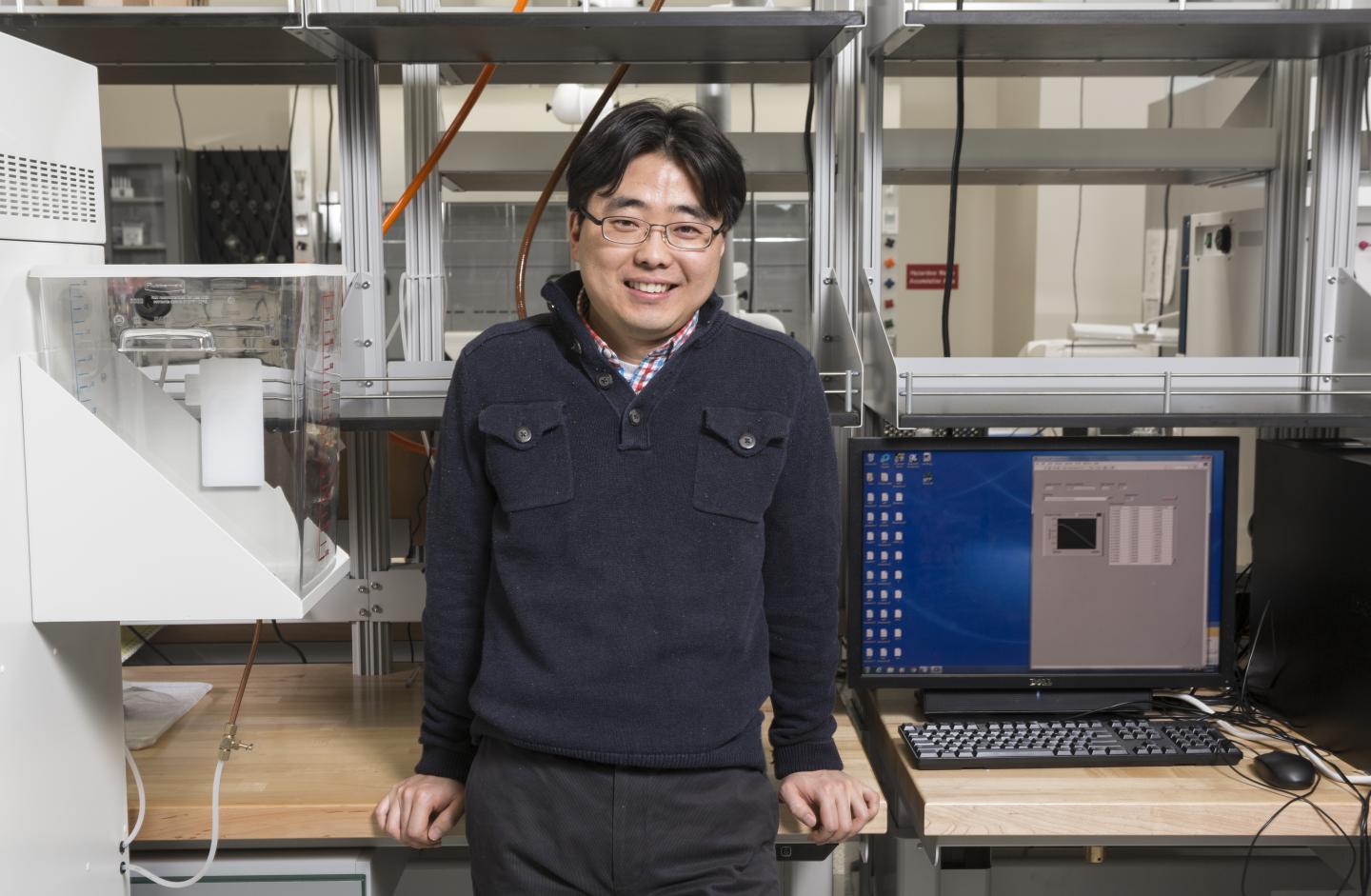
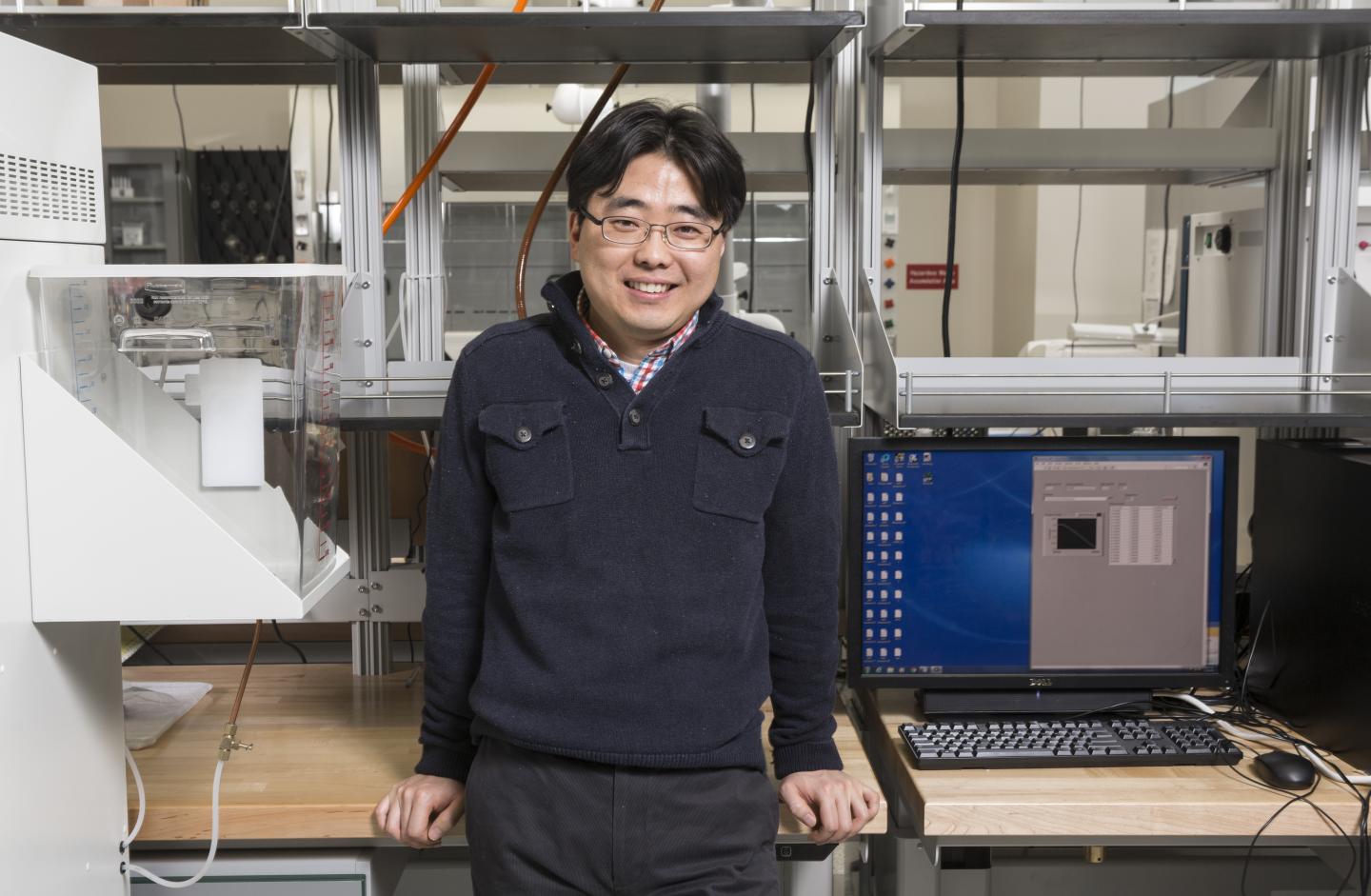
Credit: Binghamton University, State University at New York

BINGHAMTON, N.Y. – A research team led by faculty at Binghamton University, State University at New York plans to improve wireless sensor networks with a relatively new type of technology that harnesses energy from the biological photosynthetic process.

Binghamton University Associate Professor of Electrical and Computer Engineering Seokheun "Sean" Choi was recently awarded a $510k grant from the Office of Naval Research for his project titled "Supercapacitive micro-bio-photovoltaics for sustainable wireless sensor networks." The project will attempt to create a micro-device that uses what is called bio-photovoltaic (BPV) technology to act as a supercapacitator capable of improving wireless sensing and communication.

Bio-photovoltaic technology stems from the idea that instead of using something like solar panels, scientists could use a cyanobacterial photosynthesis process to harness the sun's energy and convert that into usable electricity.

This novel idea could be the future of sustainable technology, and Choi's proposed plan will add to the fundamental understanding of how to harness this energy.

Once energy is harnessed via the micro-device, Choi plans to use the device as a supercapacitor this will make wireless sensor networks (WSNs) sustainable.

WSNs, also known as dust networks, consist of wireless sensors that monitor environmental conditions and base stations that collect and relay that information as needed. These networks can monitor everything from the temperature to the noise levels outside. Currently, WSNs are used to monitor temperatures in the Arctic, track vehicles, observe livestock and more.

"I hope this project will give us WSNs that are self-sustaining and serve as a way to improve the efficiency and performance levels of these networks," said Choi. "I'm also excited for what this study could mean for BPV technology in the future."

The project will provide a way to understand more about what is involved in the design of a micro-BPV device. This could lead to more researchers being able to apply BPV technology to create sustainable, innovative solutions to our energy needs.

###

Media Contact

Seokheun "Sean" Choi
[email protected]
607-777-5913
@binghamtonu

http://www.binghamton.edu

Share13Tweet8Share2ShareShareShare2

Related Posts

Florida Cane Toad: Complex Spread and Selective Evolution

Florida Cane Toad: Complex Spread and Selective Evolution

February 7, 2026
New Study Uncovers Mechanism Behind Burn Pit Particulate Matter–Induced Lung Inflammation

New Study Uncovers Mechanism Behind Burn Pit Particulate Matter–Induced Lung Inflammation

February 6, 2026

DeepBlastoid: Advancing Automated and Efficient Evaluation of Human Blastoids with Deep Learning

February 6, 2026

Navigating the Gut: The Role of Formic Acid in the Microbiome

February 6, 2026
Please login to join discussion

POPULAR NEWS

  • Robotic Ureteral Reconstruction: A Novel Approach

    Robotic Ureteral Reconstruction: A Novel Approach

    82 shares
    Share 33 Tweet 21
  • Digital Privacy: Health Data Control in Incarceration

    63 shares
    Share 25 Tweet 16
  • Study Reveals Lipid Accumulation in ME/CFS Cells

    57 shares
    Share 23 Tweet 14
  • Breakthrough in RNA Research Accelerates Medical Innovations Timeline

    53 shares
    Share 21 Tweet 13

About

We bring you the latest biotechnology news from best research centers and universities around the world. Check our website.

Follow us

Recent News

Evaluating Pediatric Emergency Care Quality in Ethiopia

TPMT Expression Predictions Linked to Azathioprine Side Effects

Improving Dementia Care with Enhanced Activity Kits

Subscribe to Blog via Email

Success! An email was just sent to confirm your subscription. Please find the email now and click 'Confirm' to start subscribing.

Join 73 other subscribers
  • Contact Us

Bioengineer.org © Copyright 2023 All Rights Reserved.

Welcome Back!

Login to your account below

Forgotten Password?

Retrieve your password

Please enter your username or email address to reset your password.

Log In
No Result
View All Result
  • Homepages
    • Home Page 1
    • Home Page 2
  • News
  • National
  • Business
  • Health
  • Lifestyle
  • Science

Bioengineer.org © Copyright 2023 All Rights Reserved.