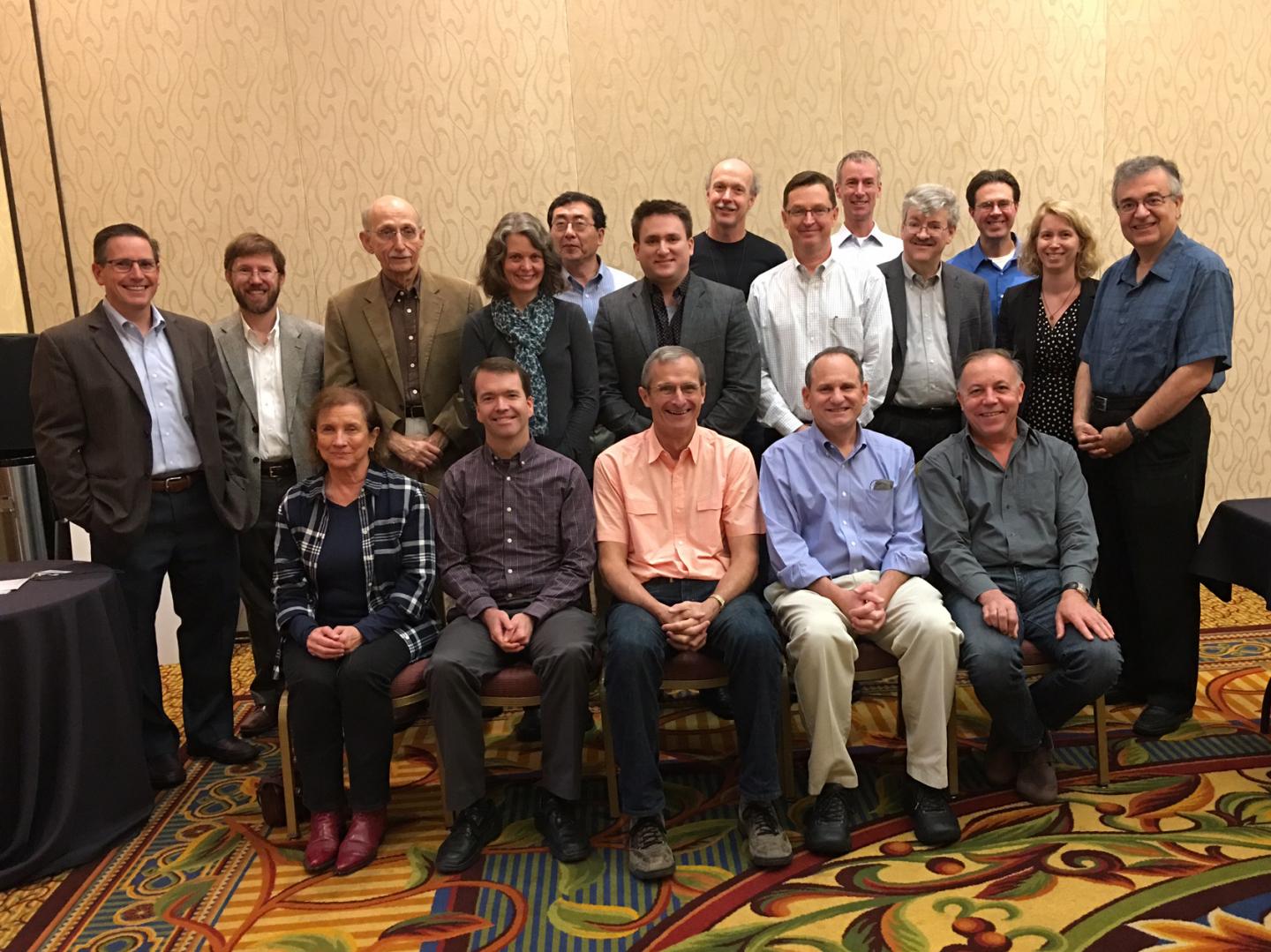
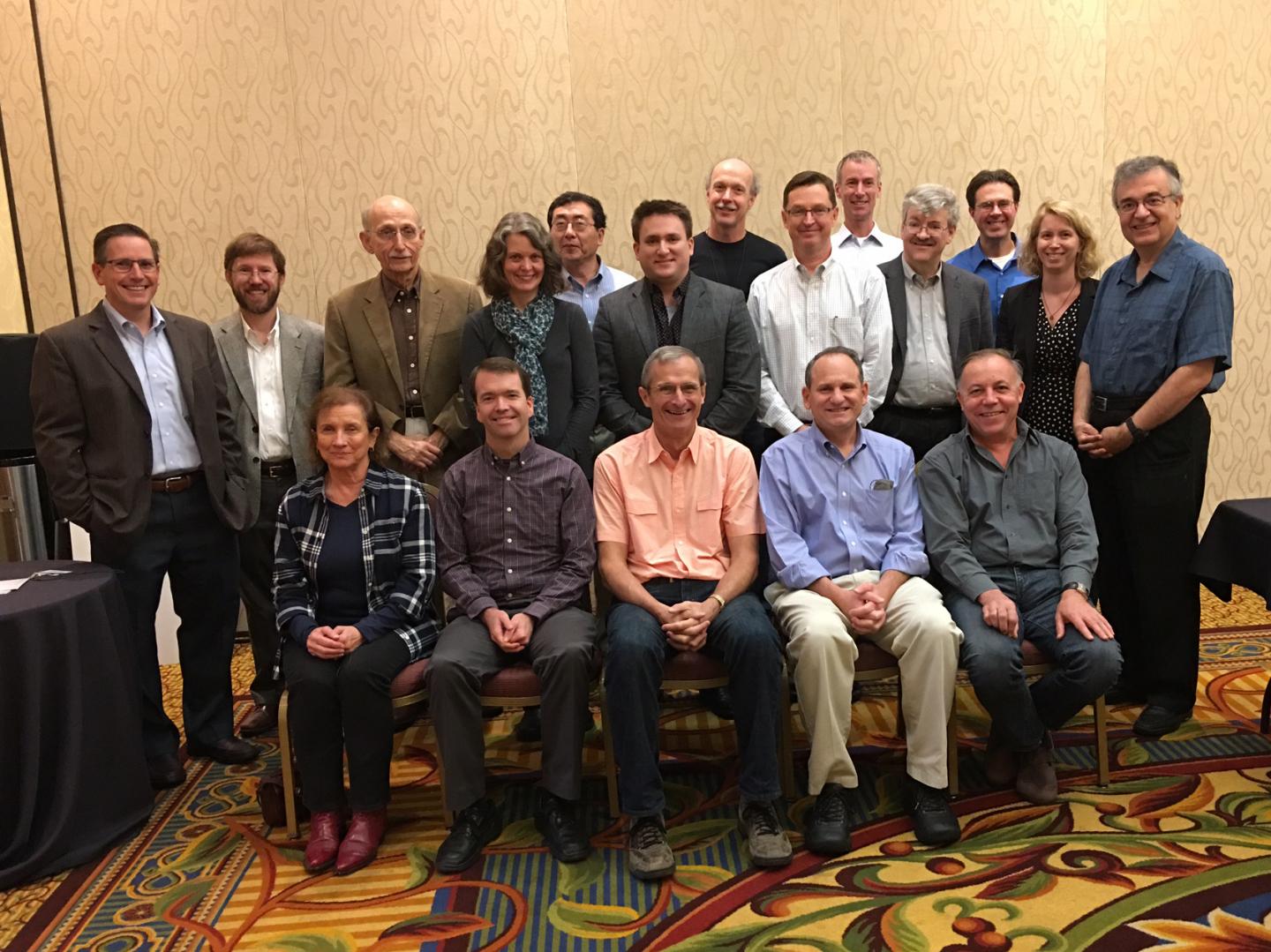
Credit: US Department of Energy
LOGAN, UTAH, USA — Freeways choked with traffic, supermarkets laden with fertilizer-grown stock from distance fields and virtually everything we touch derived from petroleum-based plastics. It's hard to imagine life beyond our fossil-fueled world. Black gold has brought us unprecedented prosperity, but it's also polluted our environment, perhaps irreparably, and it's in finite supply. Now what?
The answer, my friend, is blowin' in the wind. But not in the plaintive, unattainable way Bob Dylan expressed in his famous lyrics. Life-giving nitrogen flows all around us and, according to Utah State University biochemist Lance Seefeldt and other top scientists, it holds the key to sustainability beyond nonrenewable energy.
The U.S. Department of Energy Office of Basic Energy Sciences gathered Seefeldt and 16 other experts in nitrogen research in Washington, D.C. for an October 2016 summit to discuss the current field of nitrogen activation chemistry and its future directions. The team reports their conclusions in a review article in the May 25, 2018, issue of the journal Science.
"This gathering was a 'Who's Who' of nitrogen research," says Seefeldt, professor in USU's Department of Chemistry and Biochemistry, an American Academy for the Advancement of Science Fellow and a co-chair of the gathering. "Our group included Nobel Laureate Robert Schrock and the culmination of our efforts is truly a tour de force. No one of us, individually, could have written this report."
All life on earth requires nitrogen and a whopping 80 percent of the planet's atmosphere, in the form of dinitrogen, is comprised of the life-sustaining gas. Yet, neither animals nor plants can access nitrogen directly.
"It's an incredible irony," Seefeldt says. "We need nitrogen to survive and we're swimming in a sea of it, but we can't get to it. Humans and animals get nitrogen from protein in our food. Plants get nitrogen from the soil."
Which is where fossil fuels entered the picture about a century ago. German scientists Franz Haber and Carl Bösch pioneered a revolutionary process to break nitrogen's ultra-strong bonds and enable commercial-scale production of fertilizer, which spurred unprecedented growth of the global food supply and, subsequently, the world's population.
"It was one of history's technological marvels, but it currently consumes about two percent of the world's fossil fuel supply and thus, it's come with a very heavy carbon footprint," Seefeldt says.
What did he and his fellow scientists conclude from their summit? It's time to embark on a new revolution.
"Opportunities exist to achieve radically improved, new and different pathways (to achieve nitrogen transformations)," the scientists write. "But progress in this regard will require a molecular-level understanding of nitrogen transformation reactions, as well as … discovery of new catalytic systems and alternative means of delivering the energy needed to drive those reactions."
Seefeldt and his USU team, whose research is supported by the DOE, have already pioneered efforts toward a clean and renewable light-driven process for converting nitrogen to ammonia, a primary component of fertilizer.
"Our research on this process, which uses nanomaterials to capture light energy, demonstrates how sunlight or artificial light can power nitrogen fixation," Seefeldt says. "It a potential game-changer."
###
Authors of the Science paper, in addition to Seefeldt, are Schrock of MIT; lead author Jingguang Chen, Columbia University; Richard Crooks, the University of Texas at Austin; Kara Bren, University of Rochester; Morris Bullock, Pacific Northwest National Laboratory; Marcetta Darensbourg, Texas A&M University; Patrick Holland, Yale University; Brian Hoffman and Mercouri Kanatzides, Northwestern University; Michael Janik, Pennsylvania State University; Anne Jones, Arizona State University; Paul King, National Renewable Energy Laboratory; Kyle Lancaster, Cornell University; Sergei Lymar, Brookhaven National Laboratory, Peter Pfromm, Washington State University and William Schneider, University of Notre Dame.
Media Contact
Lance Seefeldt
[email protected]
435-797-3964
http://www.usu.edu
Related Journal Article
http://dx.doi.org/10.1126/science.aar6611