• HOME
  • NEWS
  • EXPLORE
    • CAREER
      • Companies
      • Jobs
    • EVENTS
    • iGEM
      • News
      • Team
    • PHOTOS
    • VIDEO
    • WIKI
  • BLOG
  • COMMUNITY
    • FACEBOOK
    • INSTAGRAM
    • TWITTER
Saturday, February 7, 2026
BIOENGINEER.ORG
No Result
View All Result
  • Login
  • HOME
  • NEWS
  • EXPLORE
    • CAREER
      • Companies
      • Jobs
        • Lecturer
        • PhD Studentship
        • Postdoc
        • Research Assistant
    • EVENTS
    • iGEM
      • News
      • Team
    • PHOTOS
    • VIDEO
    • WIKI
  • BLOG
  • COMMUNITY
    • FACEBOOK
    • INSTAGRAM
    • TWITTER
  • HOME
  • NEWS
  • EXPLORE
    • CAREER
      • Companies
      • Jobs
        • Lecturer
        • PhD Studentship
        • Postdoc
        • Research Assistant
    • EVENTS
    • iGEM
      • News
      • Team
    • PHOTOS
    • VIDEO
    • WIKI
  • BLOG
  • COMMUNITY
    • FACEBOOK
    • INSTAGRAM
    • TWITTER
No Result
View All Result
Bioengineer.org
No Result
View All Result
Home NEWS Science News Biology

Programming synthetic molecular codes to turn genes ‘on’

Bioengineer by Bioengineer
May 24, 2018
in Biology
Reading Time: 2 mins read
0
Share on FacebookShare on TwitterShare on LinkedinShare on RedditShare on Telegram
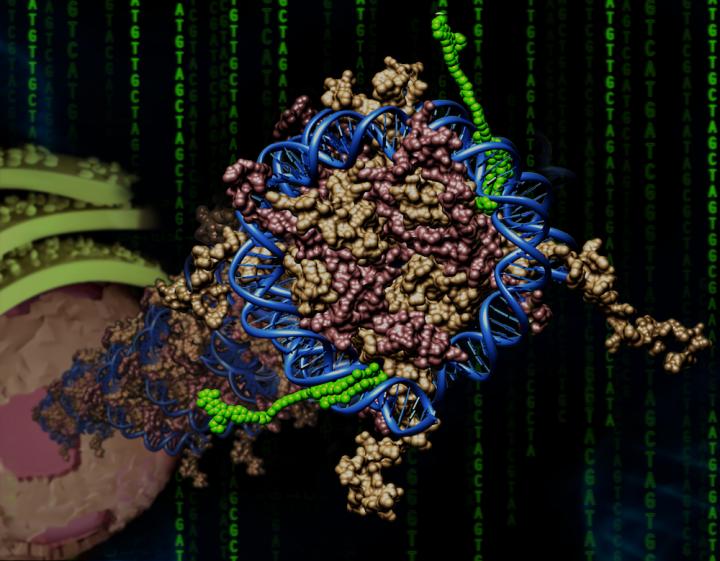
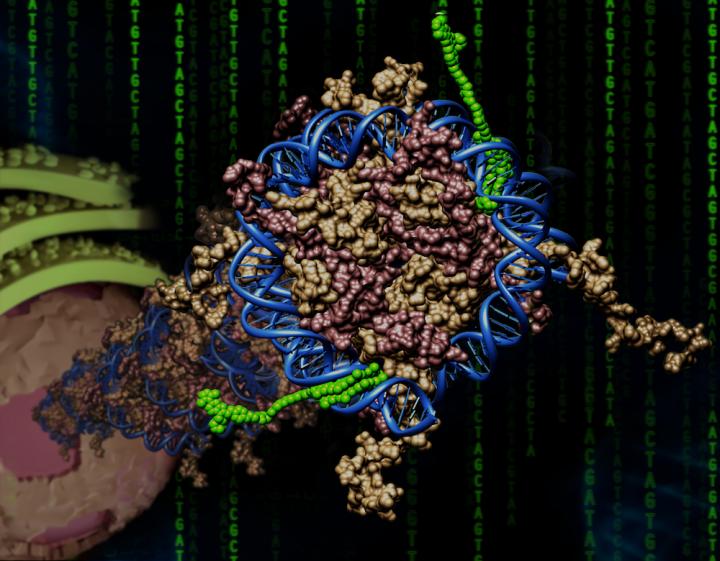
IMAGE

Credit: SaiPadma Priya

A team of researchers in Japan developed a synthetic molecular code to script gene activation. The process, described in the Journal of the American Chemical Society, could help lead to future gene-based therapies for a wide array of diseases.

In particular, the code could help combat epigenetic mutations, which change how genes express themselves and can play a critical role in neurodegenerative disorders like Parkinson's disease, Alzheimer's disease, and multiple sclerosis.

Ganesh Pandian Namasivayam and Hiroshi Sugiyama of Kyoto University's Institute for Integrated Cell-Material Sciences and their colleagues fabricated a molecular code that mimics a key process that turns on genes in the body. The code targets histones, the proteins that are responsible for packaging DNA so that it fits inside a cell's nucleus.

If you uncoiled the DNA in a single cell, it would be about two metres long. To fit inside cells, DNA is tightly wrapped around histones. When histones undergo a chemical process called acetylation, an acetyl group is added to part of their structure. This loosens DNA's attachment to the proteins, which leads to gene activation.

Scientists have been researching ways to influence histone acetylation in order to manipulate gene activation, but current methods have their shortfalls. For example, some synthetic molecules are easily degraded by enzymes in the body. Others are inconsistent in their ability to activate genes.

Junichi Taniguchi, the first author of the study, developed a molecular program that recruits a histone-acetylating enzyme to a specific part of a DNA strand. The program, called Bi-PIP, is formed of two components: a bromodomain inhibitor, which recruits a specific type of histone acetyltransferase enzyme; and a synthetic hairpin-shaped molecule that recognizes a specific DNA sequence.

The code was successful in emulating the natural histone acetylation process and led to the activation of a specific gene associated with central nervous system inside living cells. However, the researchers note that further work is needed to improve Bi-PIP's gene selectivity. This work adds to a library of small molecule genetic regulators that could form the basis for epigenomics and future gene therapies to treat multi-factorial neurodegenerative disorders.

###

For more information about this research, contact

Ganesh Pandian Namasivayam
[email protected]

DOI: 0.1021/jacs.8b01518

About Kyoto University's Institute for Integrated Cell-Material Sciences (iCeMS)

t iCeMS, our mission is to explore the secrets of life by creating compounds to control cells, and further down the road to create life-inspired super materials that confront the myriad problems that afflict modern society. In only a decade, collaborative research at iCeMS has resulted in significant cutting-edge scientific discoveries, and the creation of over 1500 unique materials. We will keep turning our inspirations into purposeful, transformative innovations for the practical benefit of society. https://www.icems.kyoto-u.ac.jp/en/

For more information about iCeMS, contact

Izumi Mindy Takamiya
[email protected]

Media Contact

Izumi Mindy Takamiya
[email protected]
81-757-539-764
@KyotoU_News

http://www.kyoto-u.ac.jp/en

Share14Tweet9Share2ShareShareShare2

Related Posts

Florida Cane Toad: Complex Spread and Selective Evolution

Florida Cane Toad: Complex Spread and Selective Evolution

February 7, 2026
New Study Uncovers Mechanism Behind Burn Pit Particulate Matter–Induced Lung Inflammation

New Study Uncovers Mechanism Behind Burn Pit Particulate Matter–Induced Lung Inflammation

February 6, 2026

DeepBlastoid: Advancing Automated and Efficient Evaluation of Human Blastoids with Deep Learning

February 6, 2026

Navigating the Gut: The Role of Formic Acid in the Microbiome

February 6, 2026
Please login to join discussion

POPULAR NEWS

  • Robotic Ureteral Reconstruction: A Novel Approach

    Robotic Ureteral Reconstruction: A Novel Approach

    82 shares
    Share 33 Tweet 21
  • Digital Privacy: Health Data Control in Incarceration

    63 shares
    Share 25 Tweet 16
  • Study Reveals Lipid Accumulation in ME/CFS Cells

    57 shares
    Share 23 Tweet 14
  • Breakthrough in RNA Research Accelerates Medical Innovations Timeline

    53 shares
    Share 21 Tweet 13

About

We bring you the latest biotechnology news from best research centers and universities around the world. Check our website.

Follow us

Recent News

Personalized Guide to Understanding and Reducing Chemicals

Inflammasome Protein ASC Drives Pancreatic Cancer Metabolism

Phage-Antibiotic Combo Beats Resistant Peritoneal Infection

Subscribe to Blog via Email

Enter your email address to subscribe to this blog and receive notifications of new posts by email.

Join 73 other subscribers
  • Contact Us

Bioengineer.org © Copyright 2023 All Rights Reserved.

Welcome Back!

Login to your account below

Forgotten Password?

Retrieve your password

Please enter your username or email address to reset your password.

Log In
No Result
View All Result
  • Homepages
    • Home Page 1
    • Home Page 2
  • News
  • National
  • Business
  • Health
  • Lifestyle
  • Science

Bioengineer.org © Copyright 2023 All Rights Reserved.