

• HOME
  • NEWS
  • EXPLORE
    • CAREER
      • Companies
      • Jobs
    • EVENTS
    • iGEM
      • News
      • Team
    • PHOTOS
    • VIDEO
    • WIKI
  • BLOG
  • COMMUNITY
    • FACEBOOK
    • INSTAGRAM
    • TWITTER
Saturday, February 7, 2026
BIOENGINEER.ORG
No Result
View All Result
  • Login
  • HOME
  • NEWS
  • EXPLORE
    • CAREER
      • Companies
      • Jobs
        • Lecturer
        • PhD Studentship
        • Postdoc
        • Research Assistant
    • EVENTS
    • iGEM
      • News
      • Team
    • PHOTOS
    • VIDEO
    • WIKI
  • BLOG
  • COMMUNITY
    • FACEBOOK
    • INSTAGRAM
    • TWITTER
  • HOME
  • NEWS
  • EXPLORE
    • CAREER
      • Companies
      • Jobs
        • Lecturer
        • PhD Studentship
        • Postdoc
        • Research Assistant
    • EVENTS
    • iGEM
      • News
      • Team
    • PHOTOS
    • VIDEO
    • WIKI
  • BLOG
  • COMMUNITY
    • FACEBOOK
    • INSTAGRAM
    • TWITTER
No Result
View All Result
Bioengineer.org
No Result
View All Result
Home NEWS Science News Biology

The prevalence of twin births in pure Spanish horses (PREs)

Bioengineer by Bioengineer
May 22, 2018
in Biology
Reading Time: 2 mins read
0
Share on FacebookShare on TwitterShare on LinkedinShare on RedditShare on Telegram
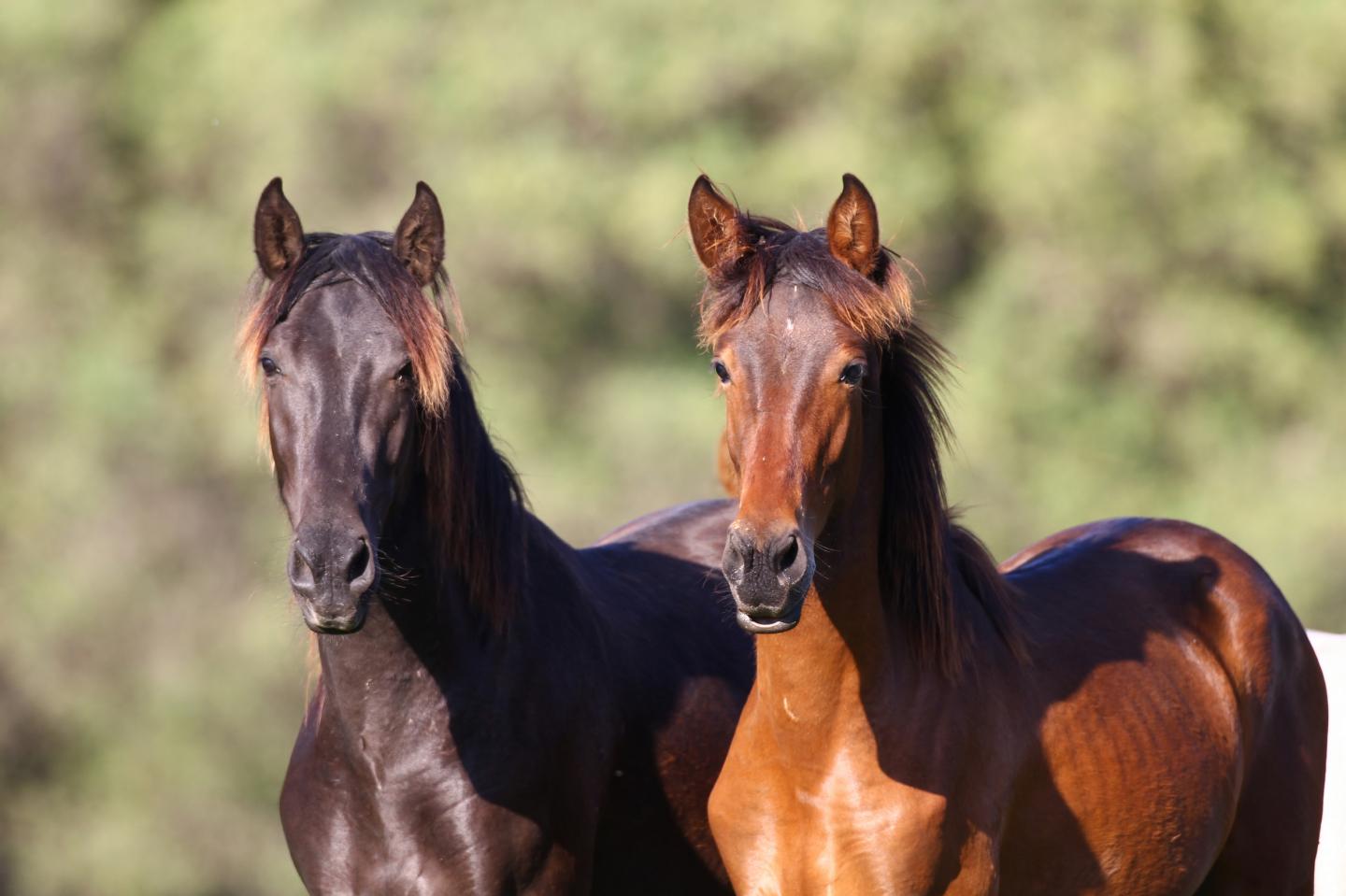
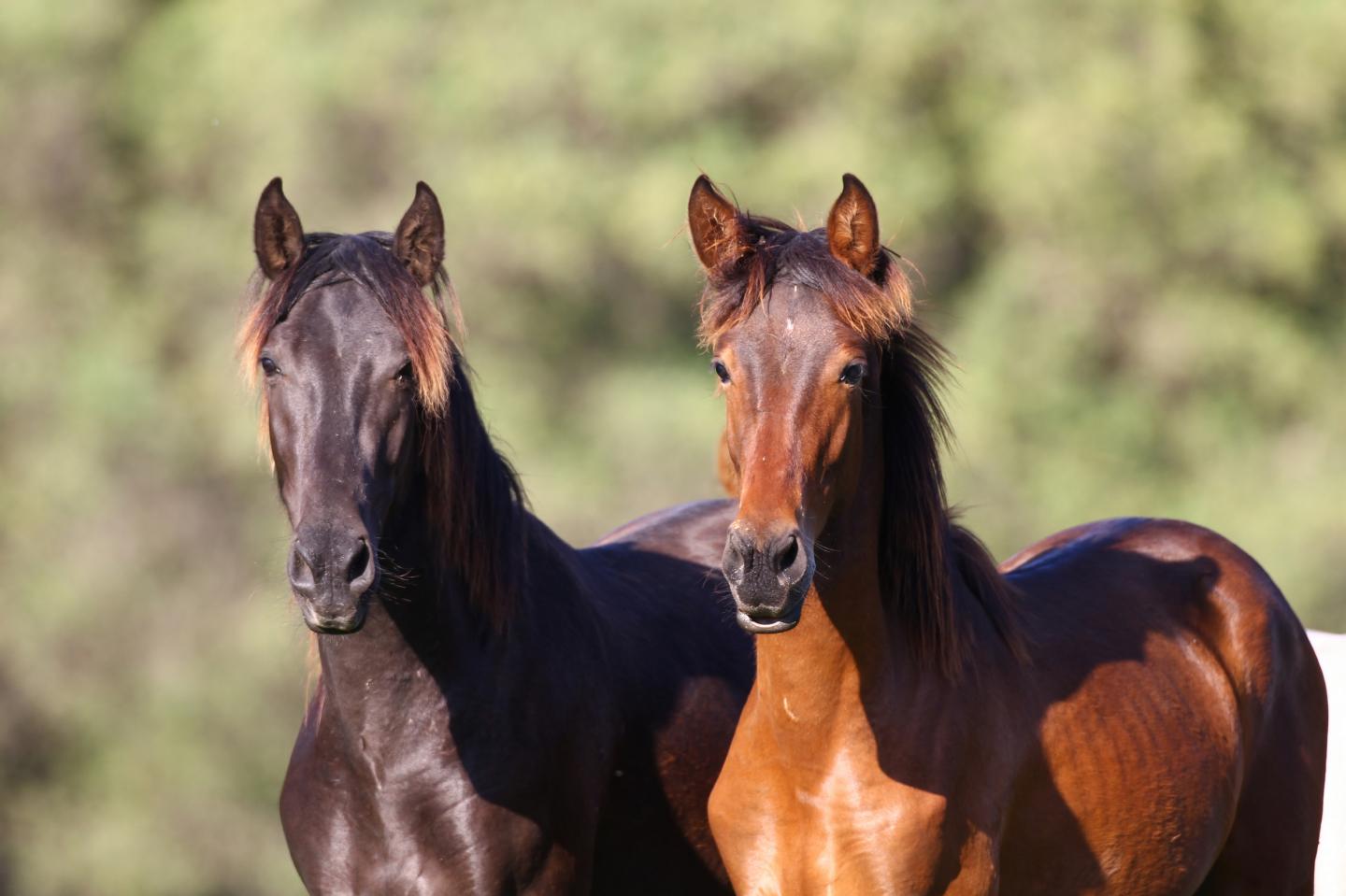
IMAGE

Credit: ANCCE

It is known that chromosomal anomalies are one of the principle genetic causes of infertility in horses. However, a great proportion of these cases still go undiagnosed, probably due to the fact that their symptomatology is non-specific and diagnosis is complex. This is the case with chimerism, which is greatly associated with twin births in domestic animals, and whose prevalence and reproductive effects are still unknown in horses.

Chimerism is a genetic disorder in which two zygotes combine after fertilisation to form one single zygote that develops normally. The resulting being therefore has two types of different cells, each with a different genetic constitution. In the majority of documented cases, the cells of different organs or different parts of the body have different DNA, as if two beings were present in one body.

In general, this disease is produced either by the exchange of hematopoietic stem cells via placental circulation between dizygotic twins (blood chimerism) or by the fusion of two embryos in the first stages of development (true chimerism).

In this context, a group of researchers from the Universities of Sevilla and Córdoba has published the first study to determine the prevalence of twin births and chimerism in a large population of PRE horses, and the results suggest that chimerism is not especially connected to infertility.

"To detect this disease, we recommend that farmers use a molecular detection tool, prepared by our research team. This fast, cheap and early detection method is an excellent diagnostic tool which can be incorporated into the veterinary care of horses, as it allows for the detection of chromosomal anomalies connected with infertility and subfertility", says Mercedes Valera, professor of the Higher Technical School of Agricultural Engineering (ETSIA) at the University of Seville.

This project, published in the international review The Veterinary Journal, was carried out in collaboration with the Veterinary Genetic Diagnosis Laboratory and the Animal Cytogenetic Laboratory at the Department of Genetics at the University of Córdoba and with the 'Ing. Fernando N. Dulout' Veterinary Genetic Institute of the Faculty of veterinary Science at the National University of La Plata in Argentina. A total of 14 twin births (with 23 live twins) and five cases of blood chimerism were analysed from a population of 21,097 PRE horses born between 2015 and 2016.

###

Media Contact

Mercedes Valera
[email protected]
@unisevilla

http://www.us.es

Original Source

https://www.sciencedirect.com/science/article/pii/S1090023318300480?via%3Dihub http://dx.doi.org/10.1016/j.tvjl.2018.02.011

Share12Tweet8Share2ShareShareShare2

Related Posts

Florida Cane Toad: Complex Spread and Selective Evolution

Florida Cane Toad: Complex Spread and Selective Evolution

February 7, 2026
New Study Uncovers Mechanism Behind Burn Pit Particulate Matter–Induced Lung Inflammation

New Study Uncovers Mechanism Behind Burn Pit Particulate Matter–Induced Lung Inflammation

February 6, 2026

DeepBlastoid: Advancing Automated and Efficient Evaluation of Human Blastoids with Deep Learning

February 6, 2026

Navigating the Gut: The Role of Formic Acid in the Microbiome

February 6, 2026
Please login to join discussion

POPULAR NEWS

  • Robotic Ureteral Reconstruction: A Novel Approach

    Robotic Ureteral Reconstruction: A Novel Approach

    82 shares
    Share 33 Tweet 21
  • Digital Privacy: Health Data Control in Incarceration

    63 shares
    Share 25 Tweet 16
  • Study Reveals Lipid Accumulation in ME/CFS Cells

    57 shares
    Share 23 Tweet 14
  • Breakthrough in RNA Research Accelerates Medical Innovations Timeline

    53 shares
    Share 21 Tweet 13

About

We bring you the latest biotechnology news from best research centers and universities around the world. Check our website.

Follow us

Recent News

Personalized Guide to Understanding and Reducing Chemicals

Inflammasome Protein ASC Drives Pancreatic Cancer Metabolism

Phage-Antibiotic Combo Beats Resistant Peritoneal Infection

Subscribe to Blog via Email

Enter your email address to subscribe to this blog and receive notifications of new posts by email.

Join 73 other subscribers
  • Contact Us

Bioengineer.org © Copyright 2023 All Rights Reserved.

Welcome Back!

Login to your account below

Forgotten Password?

Retrieve your password

Please enter your username or email address to reset your password.

Log In
No Result
View All Result
  • Homepages
    • Home Page 1
    • Home Page 2
  • News
  • National
  • Business
  • Health
  • Lifestyle
  • Science

Bioengineer.org © Copyright 2023 All Rights Reserved.
