• HOME
  • NEWS
  • EXPLORE
    • CAREER
      • Companies
      • Jobs
    • EVENTS
    • iGEM
      • News
      • Team
    • PHOTOS
    • VIDEO
    • WIKI
  • BLOG
  • COMMUNITY
    • FACEBOOK
    • INSTAGRAM
    • TWITTER
Monday, July 6, 2026
BIOENGINEER.ORG
No Result
View All Result
  • Login
  • HOME
  • NEWS
  • EXPLORE
    • CAREER
      • Companies
      • Jobs
        • Lecturer
        • PhD Studentship
        • Postdoc
        • Research Assistant
    • EVENTS
    • iGEM
      • News
      • Team
    • PHOTOS
    • VIDEO
    • WIKI
  • BLOG
  • COMMUNITY
    • FACEBOOK
    • INSTAGRAM
    • TWITTER
  • HOME
  • NEWS
  • EXPLORE
    • CAREER
      • Companies
      • Jobs
        • Lecturer
        • PhD Studentship
        • Postdoc
        • Research Assistant
    • EVENTS
    • iGEM
      • News
      • Team
    • PHOTOS
    • VIDEO
    • WIKI
  • BLOG
  • COMMUNITY
    • FACEBOOK
    • INSTAGRAM
    • TWITTER
No Result
View All Result
Bioengineer.org
No Result
View All Result
Home NEWS Science News Health

New hope for women with fistula injuries

Bioengineer by Bioengineer
May 21, 2018
in Health
Reading Time: 2 mins read
0
Share on FacebookShare on TwitterShare on LinkedinShare on RedditShare on Telegram
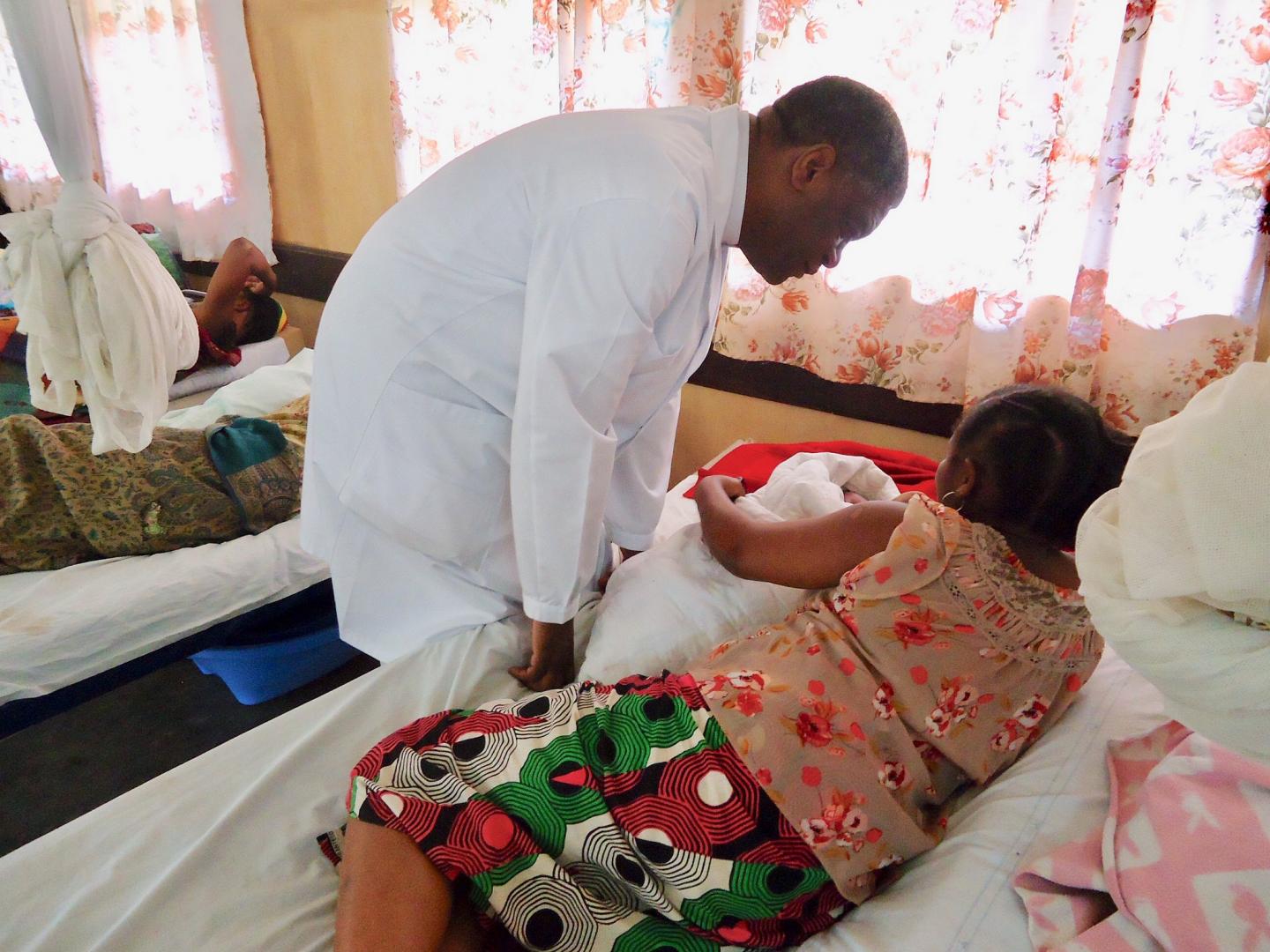
IMAGE

Credit: University of Michigan

The health care systems in the United States and other industrialized countries have outgrown many of the childbirth-related injuries that are still very problematic in poor countries.

One of those is fistula, defined as a hole between the vagina and bladder that causes constant urine leakage through the vagina. In the Democratic Republic of Congo, where treatment for fistula isn't advanced and health care resources are scarce, a fistula injury is potentially catastrophic.

Part of the problem is that doctors don't have a good way to gauge the degree of the fistula injury in order to develop the appropriate treatment plan, said Janis Miller, a professor at the University of Michigan Nursing School and one of the authors of a new study on assessing and treating this injury.

To that end, Miller and her partners in the Congo have developed a method of scoring fistula injuries that will guide clinicians in determining treatment. They can either fix the fistula themselves or refer the woman to a specialist.

The tool, called the Panzi Score, will help physicians predict the success of surgery and make a path for treatment, said study co-author Alain Mukwege, a research associate at the U-M School of Nursing.

"If a fistula happens again, there is a greater risk of failure," Mukwege said.

Often, women having difficult labors in developing countries must wait for days for medical treatment, and in the meantime, tissue begins to die. The more tissue death there is, the tougher a fistula is to repair.

The condition can be socially and physically catastrophic for women, Miller said. The women are usually socially isolated and the leakage is acidic and constant, causing horrible sores.

The study included 837 women with fistula injuries who were treated at the Panzi Hospital DRC and its outreach clinics. Fistula severity was assessed and surgical success was ascertained, and researchers analyzed the data to select fistula characteristics predictive of surgical failure.

Miller said the Panzi Score was surprisingly accurate, and she hopes it will be widely adopted.

###

Other co-authors included Denis Mukwege and Christina Amisi of Panzi Hospital and Panzi Foundation DRC, and Lisa Peters and Abigail Smith of Arbor Research.

The study, "Panzi score as a parsimonious indicator of urogenital fistula severity derived from Goh and Waaldijk classifications," appears in the International Journal of Gynecology and Obstetrics.

Media Contact

Laura Bailey
[email protected]
734-647-1848
@umich

http://www.umich.edu/

Share12Tweet8Share2ShareShareShare2

Related Posts

Flame retardant BDE-209 targets molecularly linked to ulcerative colitis

July 6, 2026

Kidney transplant outcomes in older adults studied by German researchers

July 6, 2026

Salmonella protein SopB curbs early inflammation to slow disease progression

July 6, 2026

Multi-metal cooperation drives lung cancer chemoresistance, reversed by MiADMSA

July 6, 2026
Please login to join discussion

POPULAR NEWS

  • Detection of EDCs in Breast Milk and Infant Urine Up to Six Months Highlights Early Exposure Risks

    77 shares
    Share 31 Tweet 19
  • New Drug Candidate Developed at McMaster Shows Potential for Treating Brain Cancer

    58 shares
    Share 23 Tweet 15
  • Saying Goodbye to PGY-6: Pediatric Fellowship Realities

    103 shares
    Share 41 Tweet 26
  • KTU Researchers Explore Ultrasound’s Role in Enhancing Blood Flow Beyond Diagnostics

    53 shares
    Share 21 Tweet 13

About

We bring you the latest biotechnology news from best research centers and universities around the world. Check our website.

Follow us

Recent News

Flame retardant BDE-209 targets molecularly linked to ulcerative colitis

Ultra-high frequency particle impacts mimic rockbursts to shatter hard rock

Kidney transplant outcomes in older adults studied by German researchers

Subscribe to Blog via Email

Enter your email address to subscribe to this blog and receive notifications of new posts by email.

Join 83 other subscribers
  • Contact Us

Bioengineer.org © Copyright 2023 All Rights Reserved.

Welcome Back!

Login to your account below

Forgotten Password?

Retrieve your password

Please enter your username or email address to reset your password.

Log In
No Result
View All Result
  • Homepages
    • Home Page 1
    • Home Page 2
  • News
  • National
  • Business
  • Health
  • Lifestyle
  • Science

Bioengineer.org © Copyright 2023 All Rights Reserved.