• HOME
  • NEWS
  • EXPLORE
    • CAREER
      • Companies
      • Jobs
    • EVENTS
    • iGEM
      • News
      • Team
    • PHOTOS
    • VIDEO
    • WIKI
  • BLOG
  • COMMUNITY
    • FACEBOOK
    • INSTAGRAM
    • TWITTER
Saturday, February 7, 2026
BIOENGINEER.ORG
No Result
View All Result
  • Login
  • HOME
  • NEWS
  • EXPLORE
    • CAREER
      • Companies
      • Jobs
        • Lecturer
        • PhD Studentship
        • Postdoc
        • Research Assistant
    • EVENTS
    • iGEM
      • News
      • Team
    • PHOTOS
    • VIDEO
    • WIKI
  • BLOG
  • COMMUNITY
    • FACEBOOK
    • INSTAGRAM
    • TWITTER
  • HOME
  • NEWS
  • EXPLORE
    • CAREER
      • Companies
      • Jobs
        • Lecturer
        • PhD Studentship
        • Postdoc
        • Research Assistant
    • EVENTS
    • iGEM
      • News
      • Team
    • PHOTOS
    • VIDEO
    • WIKI
  • BLOG
  • COMMUNITY
    • FACEBOOK
    • INSTAGRAM
    • TWITTER
No Result
View All Result
Bioengineer.org
No Result
View All Result
Home NEWS Science News Health

New genes found that determine how the heart responds to exercise

Bioengineer by Bioengineer
May 17, 2018
in Health
Reading Time: 2 mins read
0
Share on FacebookShare on TwitterShare on LinkedinShare on RedditShare on Telegram

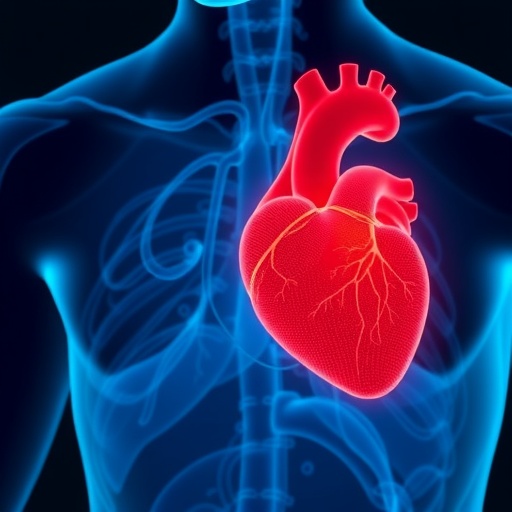
A new study by researchers at Queen Mary University of London and University College London (UCL) has discovered 30 new gene locations that determine how the heart responds to and recovers from exercise.

The study, published in the journal Nature Communications, was conducted using the genetic and electrocardiogram data of 67,000 people from UK Biobank.

The findings could be used to improve the identification of people with impaired heart rate during recovery and those at higher risk of heart disease mortality.

The difference in heart rate response to exercise was as much as 3.15 beats per minute, depending on the genetic risk score of an individual, while the difference in heart rate response to recovery differed by as much as 10.4 beats per minute.

Lead researcher Patricia Munroe, Professor of Molecular Medicine at Queen Mary's William Harvey Research Institute said: "Our findings advance our knowledge on key pathways controlling heart rate response to exercise and recovery, information which may be valuable in the future for cardiovascular risk prediction."

Co-lead researcher Pier Lambiase, Professor of Cardiology at UCL said: "This first study by our "Electrogenomics" group is a wonderful example of the power of the collaboration between UCL Electrophysiology & QMUL Genomics, opening new avenues to dissect the mechanistic links between heart control and cardiovascular outcomes."

The results have implications to target new therapies to treat abnormal heart rhythms and potentially increase heart health.

###

Notes to editors

Research paper: 'Thirty loci identified for heart rate response to exercise and recovery implicate autonomic nervous system', by Ramirez et al, Nature Communications. doi:10.1038/s41467-018-04148-1

Media Contact

Joel Winston
[email protected]
44-020-788-27943
@QMUL

http://www.qmul.ac.uk

http://dx.doi.org/10.1038/s41467-018-04148-1

Share13Tweet7Share2ShareShareShare1

Related Posts

Exploring Decision-Making in Dementia Caregivers’ Mobility

February 7, 2026

Succinate Receptor 1 Limits Blood Cell Formation, Leukemia

February 7, 2026

Palmitoylation of Tfr1 Drives Platelet Ferroptosis and Exacerbates Liver Damage in Heat Stroke

February 7, 2026

Oxygen-Enhanced Dual-Section Microneedle Patch Improves Drug Delivery and Boosts Photodynamic and Anti-Inflammatory Treatment for Psoriasis

February 7, 2026
Please login to join discussion

POPULAR NEWS

  • Robotic Ureteral Reconstruction: A Novel Approach

    Robotic Ureteral Reconstruction: A Novel Approach

    82 shares
    Share 33 Tweet 21
  • Digital Privacy: Health Data Control in Incarceration

    63 shares
    Share 25 Tweet 16
  • Study Reveals Lipid Accumulation in ME/CFS Cells

    57 shares
    Share 23 Tweet 14
  • Breakthrough in RNA Research Accelerates Medical Innovations Timeline

    53 shares
    Share 21 Tweet 13

About

We bring you the latest biotechnology news from best research centers and universities around the world. Check our website.

Follow us

Recent News

Florida Cane Toad: Complex Spread and Selective Evolution

Exploring Decision-Making in Dementia Caregivers’ Mobility

Succinate Receptor 1 Limits Blood Cell Formation, Leukemia

Subscribe to Blog via Email

Enter your email address to subscribe to this blog and receive notifications of new posts by email.

Join 73 other subscribers
  • Contact Us

Bioengineer.org © Copyright 2023 All Rights Reserved.

Welcome Back!

Login to your account below

Forgotten Password?

Retrieve your password

Please enter your username or email address to reset your password.

Log In
No Result
View All Result
  • Homepages
    • Home Page 1
    • Home Page 2
  • News
  • National
  • Business
  • Health
  • Lifestyle
  • Science

Bioengineer.org © Copyright 2023 All Rights Reserved.