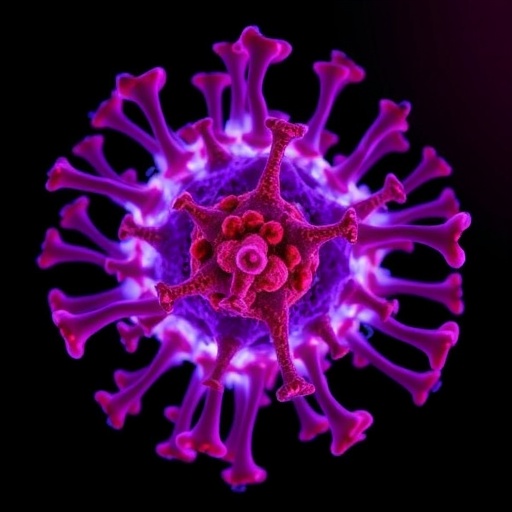
Bacteria and other microorganisms display structures from sugar molecules on their surfaces. These sugar structures play an important role for immune defense. "They enable the immune system to recognize invaders that do not belong in the body," explains Hedda Wardemann from the German Cancer Research Center (DKFZ) in Heidelberg. "Antibodies specifically attach to these structures and neutralize the pathogen."
Based on the sugar structures on their surface, bacteria can be classified in subgroups. As a rule, an antibody eliminates only one subgroup and does not protect against other microbes. However, in studies with the bacterium Klebsiella pneumoniae, researchers led by Wardemann have now been the first to find that the immune system also produces antibodies that recognize and neutralize various microorganisms.
More than a third of all humans are colonized by rod-shaped bacteria of a species called Klebsiella, which is found primarily on the nasal mucosa and in the gut. In healthy individuals, Klebsiella pneumoniae is completely harmless. But in people with weakened immune systems, it can replicate excessively and cause life-threatening diseases. In addition, Klebsiella pneumoniae is a frequent cause of hospital-acquired infections and is increasingly resistant to antibiotics.
In their study, the investigators obtained antibodies against the bacterium from the blood of healthy individuals. "The antibodies protected against various subgroups of Klebsiella pneumoniae," Wardemann reports. "But they were not restricted to this particular pathogen and also recognized other bacteria and even certain yeasts and viruses."
A closer look at the sugar-derived structures on the germs' surfaces revealed how they can do so. All microorganisms to which the Klebsiella antibodies were able to attach displayed a small structure from a sugar called mannose. Forming antibodies that recognize this sugar structure on a variety of microorganisms allows the immune system to efficiently fend off various pathogenic agents – using only a single type of molecule.
It has been unknown so far that the immune system can produce these "universal antibodies" against Klebsiella pneumoniae and other microorganisms. "Potential therapeutic use of antibodies is gaining importance because resistance to antibiotics is becoming ever more frequent," said Wardemann.
In Germany, an estimated 400,000 to 600,000 people each year contract infections while hospitalized; about 10,000 to 15,000 people die from these infections. A proportion of the hospital-acquired infections is caused by germs that are resistant to antibiotics, frequently by Klebsiella pneumoniae. Therapeutic antibodies produced in the lab might help patients combat the infection. In high-risk groups such as patients with weakened immune systems, the antibodies might also be used preventively. Their ability to recognize and eliminate a variety of pathogens is pivotal for their effectiveness. "A patient with acute septicemia – blood poisoning caused by bacteria – must be treated quickly", said Wardemann.
First examinations have already shown the effectiveness of Klebsiella antibodies: "In mice, the antibodies were capable of neutralizing various subgroups of Klebsiella, thus protecting the animals," Wardemann reports. "In a next step, we will have to do further tests with the antibodies to show their clinical value in humans."
###
Tim Rollenske, Valeria Szijarto, Jolanta Lukasiewicz, Luis M Guachalla, Katarina Stojkovic, Katharina Hartl, Lukas Stulik, Simone Kocher, Felix Lasitschka, Mohammed Al-Saeedi, Jutta Schröder-Braunstein, Moritz von Frankenberg, Gereon Gaebelein, Peter Hoffmann, Sabrina Klein, Klaus Heeg, Eszter Nagy, Gabor Nagy and Hedda Wardemann. Cross-specificity of protective human antibodies against Klebsiella pneumoniae LPS O-antigen. Nature Immunology 2018, DOI: 10.1038/s41590-018-0106-2
A picture is available for download: http://www.dkfz.de/de/presse/pressemitteilungen/2018/bilder/Klebsiella_pneumoniae_NIAID_Wikimedia.jpg
Caption: The common pathogen Klebsiella pneumoniae
Note on use of images related to press releases
Use is free of charge. The German Cancer Research Center (Deutsches Krebsforschungszentrum, DKFZ) permits one-time use in the context of reporting about the topic covered in the press release. Images have to be cited as follows: "Niaid, Wikimedia".
Distribution of images to third parties is not permitted unless prior consent has been obtained from DKFZ's Press Office (phone: ++49-(0)6221 42 2854, E-mail: [email protected]. Any commercial use is prohibited.
The German Cancer Research Center (Deutsches Krebsforschungszentrum, DKFZ) with its more than 3,000 employees is the largest biomedical research institute in Germany. At DKFZ, more than 1,000 scientists investigate how cancer develops, identify cancer risk factors and endeavor to find new strategies to prevent people from getting cancer. They develop novel approaches to make tumor diagnosis more precise and treatment of cancer patients more successful. The staff of the Cancer Information Service (KID) offers information about the widespread disease of cancer for patients, their families, and the general public. Jointly with Heidelberg University Hospital, DKFZ has established the National Center for Tumor Diseases (NCT) Heidelberg, where promising approaches from cancer research are translated into the clinic. In the German Consortium for Translational Cancer Research (DKTK), one of six German Centers for Health Research, DKFZ maintains translational centers at seven university partnering sites. Combining excellent university hospitals with high-profile research at a Helmholtz Center is an important contribution to improving the chances of cancer patients. DKFZ is a member of the Helmholtz Association of National Research Centers, with ninety percent of its funding coming from the German Federal Ministry of Education and Research and the remaining ten percent from the State of Baden-Württemberg.
Contact:
Dr. Sibylle Kohlstädt
Press and Public Relations
German Cancer Research Center
Im Neuenheimer Feld 280
D-69120 Heidelberg
T: +49 6221 42 2843
F: +49 6221 42 2968
Email: [email protected]
Media Contact
Sibylle Kohlstädt
[email protected]
@DKFZ
http://www.dkfz.de
http://dx.doi.org/10.1038/s41590-018-0106-2