

• HOME
  • NEWS
  • EXPLORE
    • CAREER
      • Companies
      • Jobs
    • EVENTS
    • iGEM
      • News
      • Team
    • PHOTOS
    • VIDEO
    • WIKI
  • BLOG
  • COMMUNITY
    • FACEBOOK
    • INSTAGRAM
    • TWITTER
Friday, April 3, 2026
BIOENGINEER.ORG
No Result
View All Result
  • Login
  • HOME
  • NEWS
  • EXPLORE
    • CAREER
      • Companies
      • Jobs
        • Lecturer
        • PhD Studentship
        • Postdoc
        • Research Assistant
    • EVENTS
    • iGEM
      • News
      • Team
    • PHOTOS
    • VIDEO
    • WIKI
  • BLOG
  • COMMUNITY
    • FACEBOOK
    • INSTAGRAM
    • TWITTER
  • HOME
  • NEWS
  • EXPLORE
    • CAREER
      • Companies
      • Jobs
        • Lecturer
        • PhD Studentship
        • Postdoc
        • Research Assistant
    • EVENTS
    • iGEM
      • News
      • Team
    • PHOTOS
    • VIDEO
    • WIKI
  • BLOG
  • COMMUNITY
    • FACEBOOK
    • INSTAGRAM
    • TWITTER
No Result
View All Result
Bioengineer.org
No Result
View All Result
Home NEWS Science News Biology

A new drug shows preclinical efficacy in Rett syndrome

Bioengineer by Bioengineer
May 14, 2018
in Biology
Reading Time: 2 mins read
0
Share on FacebookShare on TwitterShare on LinkedinShare on RedditShare on Telegram
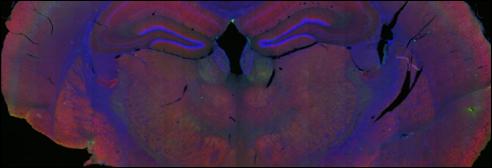
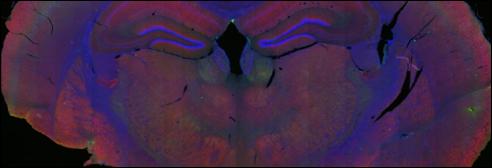
IMAGE

Credit: IDIBELL

A new article published in the Cell Reports describes how a new drug is able to reduce the symptoms and activate the dormant neurons characteristic of Rett Syndrome in preclinical models. The study, led by Dr. Manel Esteller, Director of the Epigenetics and Cancer Biology Program (PEBC) of the Bellvitge Biomedical Research Institute (IDIBELL), ICREA Researcher and Professor of Genetics of the University of Barcelona, and Dr. Sonia Guil, researcher at the same IDIBELL group, has been possible thanks to the support from the Catalan and Spanish associations of the Rett Syndrome, the Carla Regatta, a Verkami crowfunding campaign, the Jérôme Leujene Foundation and the Dischrom project funded by EU.

Rett Syndrome is the second most frequent cause of intellectual disability in women, only after Down Syndrome. The main genetic cause of Rett Syndrome is the appearance of mutations in the embryo affecting the MECP2 gene, a regulator of the expression of other genes in the genome. There is no specific pharmacological treatment for the disease, so current efforts are focused on trying to control its most serious manifestations, such as epileptic and respiratory crises.

"We knew for some years that the brains of Rett syndrome girls were inflamed, so we decided to test whether a drug that inhibits a central neuroinflammatory protein called glycogen synthase kinase-3B (GSK3B) could reverse part of the symptoms. As with any experimental treatment, we started with a preclinical model of the disease, studying it in mice that have the same MECP2 deficiency as in human Rett syndrome" says Dr. Manel Esteller.

"The results have been very promising; agent SB216763 has been able to lengthen the life of the animals, significantly reducing tremors, breathing difficulties and mobility limitations. But what is really remarkable is that the inhibition of GSK3B also causes an "awakening" of the sleeping neurons of the syndrome: these brain cells are now beginning to regain contact between them and communication between neuronal synapses increases", explains the IDIBELL researcher, and he concludes: "Our findings provide a new way of improving the quality of life of these patients and now it is the neurologists' job to demonstrate their applicability in patients with Rett Syndrome. In any case, we have to be aware that the mutation in the MECP2 gene is still there, and only by correcting it would we arrive at a definitive treatment of the disease."

###

Media Contact

Gemma Fornons
[email protected]
34-638-685-074
@idibell_en

Inicio

Original Source

http://www.idibell.cat/modul/news/en/1076/a-new-drug-shows-preclinical-efficacy-in-rett-syndrome http://dx.doi.org/10.1016/j.celrep.2018.04.010


Share13Tweet8Share2ShareShareShare2

Related Posts

Brain Power May Hold the Key to Predicting Cognitive Decline

Brain Power May Hold the Key to Predicting Cognitive Decline

April 2, 2026
Insights into CD4+ T-Cell Depletion and Pulmonary Infections in Critically Ill Immunocompromised Patients

Insights into CD4+ T-Cell Depletion and Pulmonary Infections in Critically Ill Immunocompromised Patients

April 2, 2026

Advanced Sensors Reduce Costs in Genetic Disorder Research

April 2, 2026

Advancing Blood Purification: Innovations Beyond Traditional Dialysis

April 2, 2026
Please login to join discussion

POPULAR NEWS

  • blank

    Revolutionary AI Model Enhances Precision in Detecting Food Contamination

    96 shares
    Share 38 Tweet 24
  • Imagine a Social Media Feed That Challenges Your Views Instead of Reinforcing Them

    1007 shares
    Share 398 Tweet 249
  • Promising Outcomes from First Clinical Trials of Gene Regulation in Epilepsy

    51 shares
    Share 20 Tweet 13
  • Popular Anti-Aging Compound Linked to Damage in Corpus Callosum, Study Finds

    44 shares
    Share 18 Tweet 11

About

BIOENGINEER.ORG

We bring you the latest biotechnology news from best research centers and universities around the world. Check our website.

Follow us

Recent News

Biomarker Analysis Tracks AZD2811 in SCLC Trial

Health Promotion Boosts Leisure in 80+ Elderly

Nutrient and Heavy Metal Analysis of Nigerian Infant Formula

Subscribe to Blog via Email

Enter your email address to subscribe to this blog and receive notifications of new posts by email.

Join 78 other subscribers
  • Contact Us

Bioengineer.org © Copyright 2023 All Rights Reserved.

Welcome Back!

Login to your account below

Forgotten Password?

Retrieve your password

Please enter your username or email address to reset your password.

Log In
No Result
View All Result
  • Homepages
    • Home Page 1
    • Home Page 2
  • News
  • National
  • Business
  • Health
  • Lifestyle
  • Science

Bioengineer.org © Copyright 2023 All Rights Reserved.